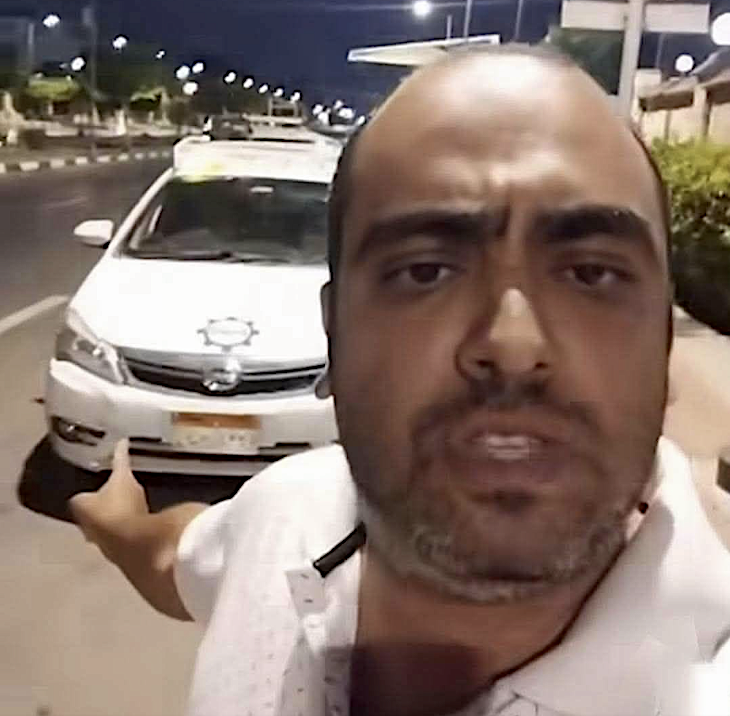

Coptic Solidarity urges the Egyptian government to immediately release Romany Gharib Adly Azer, a Coptic Egyptian taxi driver and social-media commentator who has been detained since June 18, 2026, in Supreme State Security Case No. 4832/2026.
Azer’s detention followed an incident at Cairo International Airport, where he said that, after dropping off a passenger, a police officer at a security checkpoint instructed him to transport another individual. When Azer declined, he reported that his driver’s license and national identification card were confiscated and that he was subsequently prevented from entering the airport. Azer later posted a video publicly complaining about the treatment he had received. Rather than prompting an investigation into his complaint, the incident was followed by his arrest and placement in State Security detention.
Azer now faces accusations of “publishing false news” and using social-media platforms to “disseminate terrorist ideas.” During a August 10, 2026 hearing concerning renewal of his pretrial detention, it was disclosed that investigators had also relied on an older satirical social-media post in which Azer appeared riding a donkey and joked that, because gasoline prices had become so expensive, the donkey would become his future means of transportation. That post was reportedly cited in the investigation as evidence related to the dissemination of “terrorist ideas.”
The use of peaceful criticism, satire, and a citizen’s complaint regarding alleged police misconduct as grounds for terrorism-related accusations raises serious concerns about freedom of expression, proportionality, and the misuse of prolonged pretrial detention.
Coptic Solidarity calls on the Egyptian authorities to immediately and unconditionally release prisoner of conscience Romany Gharib Adly Azer and to end the abusive use of terrorism and national-security charges against peaceful expression. Criticism of government policies, satire, and complaints about alleged police misconduct are not acts of terrorism, and labeling them as such does not make them so. Using counter-terrorism provisions to justify prolonged pretrial detention and prosecution for such expression violates fundamental freedoms and turns laws intended to combat genuine terrorism into instruments for silencing peaceful critics.