
By Orthodoxia News Agency –
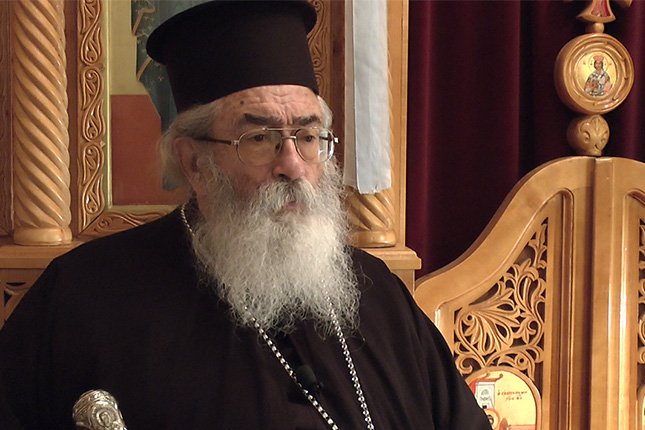
“Shadowy circles are seeking to diminish my voice because they know that I will never consent to anything that would jeopardize the Monastery’s existence,” former Archbishop of Sinai Damianos emphasizes in a statement concerning the rapidly unfolding developments surrounding the historic Monastery of St. Catherine on Mount Sinai, where he served for 65 years—first as a monk and subsequently for 52 years as Abbot.
Archbishop Damianos maintains that certain circles have targeted him in an effort to serve the government’s narrative. He has also sent a formal legal notice to the newspaper To Vima concerning an article implicating him.
“The Monastery’s existence is inconceivable without its inalienable right to ownership. And because we are beings of both matter and spirit, we need material resources to pray—resources that ensure our very existence,” he stresses.
The elderly Archbishop emphasizes that the proposed agreement concerns not only the Sinai Brotherhood:
“It concerns the entire Greek people, who must be informed and made to realize that the governments of Greece and Egypt have reached an understanding and are pursuing a common objective.”
Archbishop Damianos says that the Monastery finds itself caught up in an agreement that, according to information received, must be signed, although its contents remain unknown. His statement also refers to the recent agreement between Greece and Bulgaria concerning the exchange of the remains of Tsar Samuel for sacred artifacts stolen from monasteries and churches in Macedonia.
The Archbishop denounces the unbearable pressure being exerted on the monks to sign an agreement. He declares that Greek diplomacy has failed and calls for the agreement’s contents to be made public.
“As the Greek government should also have done concerning the handover of Samuel’s remains: it should have asked first, rather than simply announcing something when, to this day, no one knows exactly what was signed. The Greek Prime Minister must personally rise to the occasion rather than arrogantly disregarding the sacred ideals of the Greek people. The Foreign Minister, searching for scapegoats, is turning against me today. Tomorrow, if the Sinai Brotherhood continues to resist firmly and refuses to sign the agreement, will he turn against them as well?” he asks.
Full Statement by Former Archbishop of Sinai Damianos
With profound sorrow, I observe that in recent days an orchestrated campaign of character assassination has been unfolding against me. Personally, this does not affect me. My conscience remains clear, and God knows my deeds.
What troubles me immensely, however, is that this attack is being used to mislead and misinform the Greek people, with the aim of weakening my voice—a voice shaped by 65 years of service, during which, balancing different cultures and ways of thinking and respecting the unwritten laws of the desert, I kept the Greek flag and the flag of Orthodoxy flying high.
Those flags flew proudly above the Byzantine walls of Sinai, while modern-day “Ephialtes” are indifferent to whether they are lowered, as national ideals give way to powerful business interests.
As explicitly stated in the formal legal notice I sent to the newspaper To Vima, I have never acknowledged ownership by the Egyptian state, nor have I made any admission to that effect in court.
The Monastery’s existence is inconceivable without its inalienable right to ownership. And because we are beings of both matter and spirit, we need material resources to pray—resources that ensure our very existence.
The defamatory articles being circulated serve the narrative of the Greek government, which has allied itself and joined forces with the Egyptian government.
The question is clear: Is this collaboration intended to benefit and safeguard the historic Monastery of Sinai, or to sell it out?
We find ourselves caught up in an agreement that—as we are informed—must be signed, without knowing its contents.
Media reports suggest that the text of the agreement has allegedly been communicated to His All-Holiness Ecumenical Patriarch Bartholomew and His Beatitude Archbishop Ieronymos of Athens. With the prudence and wisdom that distinguish them, do they endorse it?
As I said earlier, shadowy circles are seeking to diminish my voice because they know that I will never consent to anything that would jeopardize the Monastery’s existence.
The issue of the agreement concerns not only the Sinai Brotherhood. It concerns the entire Greek people, who must be informed and made to realize that the governments of Greece and Egypt have reached an understanding and are pursuing a common objective.
The question is critical:
Did the Greek government negotiate in good faith or in bad faith?
When we speak of the return of stolen treasures from the Monastery of Eikosifinissa, the Monastery of St. John the Baptist, and other sacred artifacts from Bulgaria, is this how we treat our national heritage?
Do we accept without protest the return of one-hundredth of what was stolen, and even then in a stripped-down condition?
I call upon the Greek people to defend the Monastery of Sinai and its priceless artifacts, whose value is beyond calculation.
Throughout the former Ottoman Empire, all the dependencies of the Sinai Monastery enjoyed the same protected status—not only with respect to their religious rights, as the Ahtiname has been interpreted, but also with respect to their property ownership under its provisions.
Similarly, in Kavala, the Imaret and the house of Muhammad Ali were treated by the Greek state and the Greek people with full respect for Egyptian rights, recognizing them as belonging to an Egyptian legal entity.
The fathers of the Sinai Monastery fully understand the historic burden resting on their shoulders, as they face unbearable pressures and threats.
Since it is now abundantly clear that Greek diplomacy has failed, this agreement—given its supranational character—must be made public so that the Greek people can decide.
Historical responsibility cannot rest solely on individuals; it must also be collective.
The Greek government should have acted in the same way concerning the handover of Samuel’s remains: it should have asked first, rather than simply announcing something when, to this day, no one knows exactly what was signed.
The Greek Prime Minister must personally rise to the occasion rather than arrogantly disregarding the sacred ideals of the Greek people.
The Foreign Minister, searching for scapegoats, is turning against me today. Tomorrow, if the Sinai Brotherhood continues to resist firmly and refuses to sign the agreement, will he turn against them as well?
________________