
By Coptic Solidarity –
An Egyptian State Security investigation into detained Coptic man Romany Gharib Adly Azer has taken a new twist. During a hearing Aug.10 to consider renewal of his pretrial detention, his defense revealed that investigators have cited an older satirical social-media post—in which Azer appeared riding a donkey and joked about soaring gasoline prices—as evidence of “disseminating terrorist ideas.”
Azer remains detained in Supreme State Security Case No. 4832/2026, facing charges of “publishing false news and using social-media platforms to disseminate terrorist ideas.” His lawyers, Said Fayez office, argued during the renewal session that the posts attributed to their client amount to nothing more than the satirical and critical expression routinely used by Egyptians to comment on public conditions and government decisions.
The example disclosed by the defense is particularly striking.
Following an increase in gasoline prices, Azer had posted a picture of himself riding a donkey, joking that, with fuel becoming so expensive, this would be his means of transportation in the coming period.
According to his lawyers, this post was invoked during the investigation as material involving the dissemination of terrorist ideas.
The irony is compounded by the circumstances that originally brought Azer into conflict with the authorities.
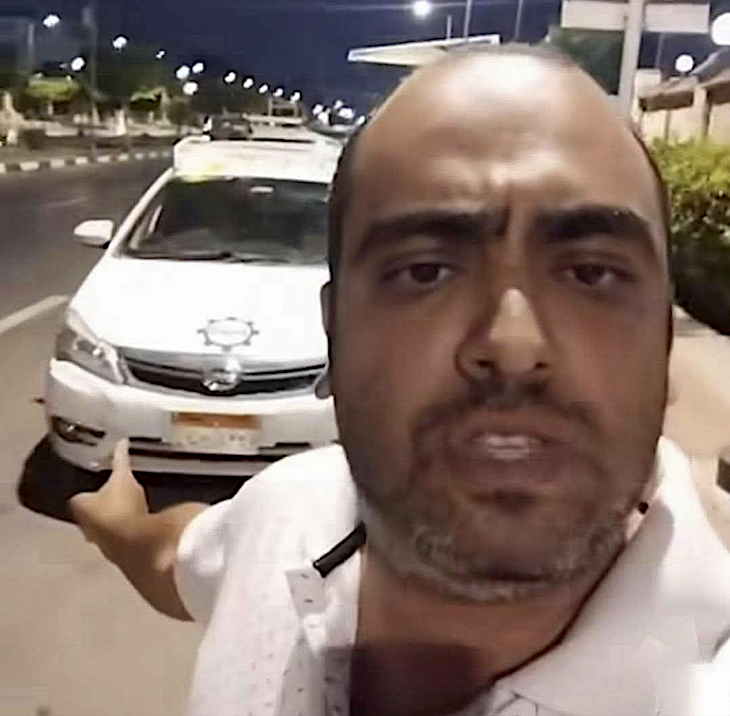
Azer, a taxi driver who also regularly posts humorous and commentary videos on social media, was arrested on June 18 after a very different incident. He had publicly complained about his treatment by a police officer at Cairo Airport. Azer said that after driving a passenger to the airport, he was asked at a security checkpoint to give another person a ride; when he declined, his driving license and ID were confiscated, and he was prevented from entering the airport. He subsequently posted a video complaining about the officer’s conduct and what he considered arbitrary treatment.
That complaint was the immediate background to his arrest. Yet, rather than his allegation of mistreatment leading to scrutiny of the incident he complained about, Azer himself ended up in State Security detention.
And now, authorities have reached further back into the video blogger’s social-media output and produced the older donkey-and-gasoline satire as part of a terrorism-related accusation.
The Complaint Disappears; the Joke Becomes Evidence
That sequence is central to the case.
A citizen publicly complains that he has been mistreated by a police officer. His complaint is not acted upon. He is arrested instead. Once he is placed in a Supreme State Security case, an older humorous post criticizing higher fuel prices is retrieved and treated as evidence of disseminating terrorist ideas.
The defense statement is understandably cautious. It formally leaves the determination of criminal responsibility to prosecutors and the courts and expresses confidence that the authorities will balance security requirements against freedom of expression. But the lawyers also warn that interpreting satire or criticism as terrorist content should be subjected to the highest degree of scrutiny because of the grave consequences for freedom of expression.
Their broader warning is telling. Azer’s continued detention, they argue, sends a harsh message to ordinary Egyptians from social backgrounds similar to his own: a citizen who expresses anger, mocks an economic decision, or speaks publicly about having suffered mistreatment or injustice may find himself facing accusations as grave as belonging to a terrorist organization or disseminating terrorist ideas.
Azer’s case validates warning. Humor and satire have long been an ordinary Egyptian means of expressing frustration with hardship and authority. Here, however, a Coptic taxi driver and video blogger who complained of police mistreatment finds himself in State Security detention, while an old joke about coping with higher fuel prices is turned into evidence of “terrorist ideas.”
______________________