
By Coptic Solidarity-
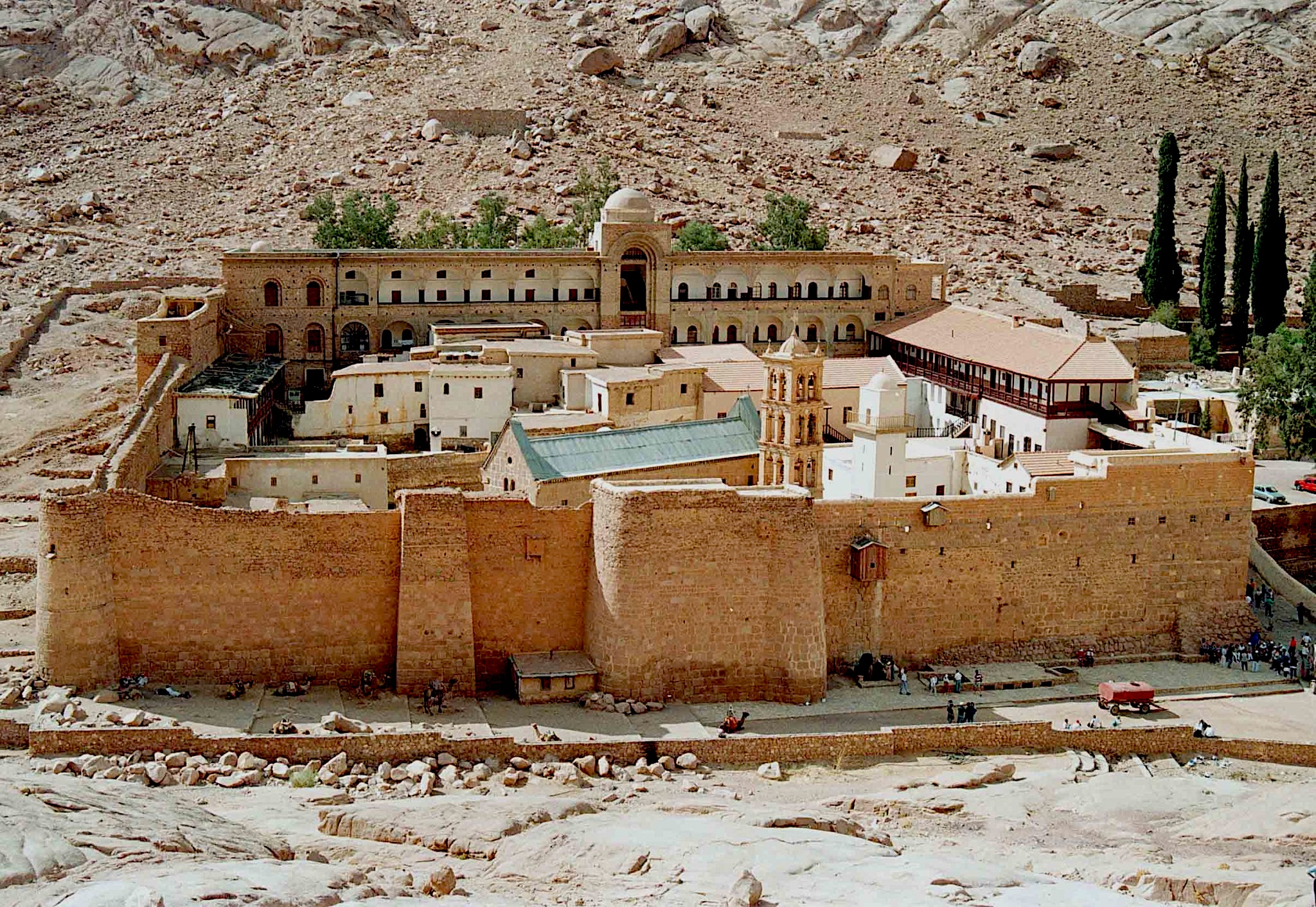
The United States has now publicly declared that it “seeks to protect” St. Catherine’s Monastery, in the clearest official statement from Washington since Deputy Secretary of State Michael Rigas visited the Monastery at the end of August.
Responding to a question from the Athens-Macedonian News Agency (ANA-MPA), a U.S. State Department spokesperson stated:
“The United States recognizes the historical and religious significance of Saint Catherine’s Monastery, the world’s oldest continuously operating monastery, and seeks to protect it.”
The statement was reported by Kathimerini and subsequently by a number of Greek outlets. To Vima’s Washington correspondent also obtained a written response directly from the State Department, reporting the formulation:
“The United States recognizes and seeks to protect St. Catherine’s historic and religious significance as the world’s oldest continuously operating monastery.”
The significance of the statement lies not merely in Washington recognizing the importance of the sixth-century Monastery, but in the State Department saying explicitly that the United States “seeks to protect it.” The statement comes while the ownership and legal status of the Monastery and its properties remain unresolved following the May 28, 2025 Egyptian court judgment and while negotiations continue between the Sinaitic Brotherhood and the Egyptian state.
Greek City Times went further in its analysis of the U.S. position. It reported that Washington had indicated that protecting the Monastery “is not limited to preserving its physical structures, but also extends to safeguarding its historic and spiritual identity.” The report concluded that the latest U.S. statement signals that Washington is closely watching the issue and is prepared to support efforts to ensure that “the historic status quo and religious identity” of St. Catherine’s are preserved.
A Growing Pattern of American Involvement
The statement follows a succession of visible American interventions concerning St. Catherine’s.
On July 18, Massad Boulos, President Donald Trump’s senior adviser for Arab and African affairs, met Archbishop Symeon of Sinai in Cairo. According to the account subsequently recalled in the ANA-MPA report, Boulos conveyed President Trump’s personal interest in preserving the Monastery’s “historic status quo” and expressed his intention to support efforts to safeguard its historical and spiritual identity.
That was followed in late August by the visit of Deputy Secretary of State Michael Rigas to St. Catherine’s. Rigas arrived while negotiations over the Monastery’s future were at a particularly sensitive stage.
Greek reporting on August 30 explicitly connected his presence with those negotiations. According to reporting originating with Ta Nea, Egypt had transmitted its latest proposals to the Sinaitic Brotherhood in early August, and the Brotherhood was expected to send its response after Rigas left the Monastery. The same report described Rigas as the second senior American official, after Boulos, to meet Archbishop Symeon and express the U.S. President’s interest in the Monastery’s future.
The proposed arrangement being discussed is potentially far-reaching. Greek reporting describes a formula under which the Brotherhood would retain perpetual religious possession and use while the Egyptian state would acquire or retain substantial ownership rights and an important role for its antiquities authorities. The negotiations also encompass Archbishop Symeon’s Egyptian nationality and official recognition, the residency status of the monks, recognition of the Brotherhood’s rules, and the future legal relationship between the Monastery and the Egyptian state.
Raising the Stakes?
These developments mark a significant shift. St. Catherine’s is no longer an issue Egypt can manage solely through bilateral negotiations with Greece or through litigation and negotiations with the Monastery. The United States has now publicly placed itself in the equation.
The progression is clear: President Trump expressed his interest in preserving the Monastery’s “historic status quo”; Massad Boulos conveyed that position directly to Archbishop Symeon; Deputy Secretary Michael Rigas subsequently traveled to St. Catherine’s while negotiations were at a critical stage; and the State Department has now declared publicly that the United States “seeks to protect” the Monastery.
What Washington ultimately does remains to be seen. But its words have raised the stakes. Protecting St. Catherine’s cannot be reduced to preserving its buildings, manuscripts or continued liturgical activity while the Egyptian state acquires control over the institution and its property. The real test will be whether U.S. engagement helps preserve the historic legal status, property rights and institutional independence that have enabled St. Catherine’s to survive for fifteen centuries.