
By Coptic Solidarity –
The Egyptian Ministry of Interior’s annual leadership reshuffle has once again highlighted the near-complete absence of Coptic Christians from the senior ranks of one of the country’s most powerful state institutions.
The Ministry announced dozens of appointments, including assistant ministers, directors of security, heads of general departments, criminal investigation chiefs, and other senior positions. As is customary, many names were published in abbreviated form, making independent identification difficult.
To assess the religious composition of the reshuffle, Coptic Solidarity compiled the names of 44 publicly identifiable senior appointees from the official announcements and undertook additional verification of those whose abbreviated names initially appeared inconclusive. That verification included identifying full names and examining publicly available biographical information and local congratulatory announcements.
Not a single Coptic officer was identified among the 44 senior appointments.
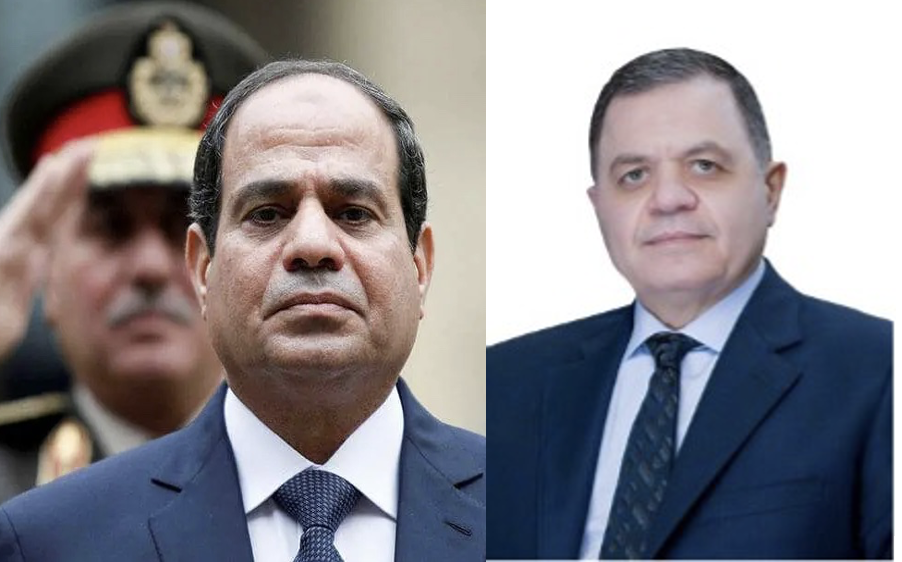
Significantly, the reshuffle was announced only after Interior Minister Mahmoud Tawfik presented its details to President Abdel Fattah el-Sisi during an official meeting. The appointments therefore reflected decisions that had been reviewed at the highest level of the Egyptian state before being made public. Consequently, the continued absence of Coptic representation from the Ministry’s senior leadership cannot reasonably be viewed as an administrative oversight or an isolated personnel decision; it forms part of a pattern of appointments implemented with the knowledge of the country’s political leadership.
The list of all 44 names, in Arabic, is attached to facilitate independent verification by researchers, journalists, and interested observers.
The finding is consistent with a pattern that has persisted for decades. Although Coptic Christians constitute an estimated 10 to 15 percent of Egypt’s population, they remain virtually absent from the upper command structure of the Ministry of Interior.
More importantly, the latest reshuffle should not be viewed as an isolated event. Senior appointments are made from an existing pool of career officers who have spent decades progressing through the ranks. Consequently, the absence of Copts among today’s assistant ministers and senior generals cannot be explained by this year’s promotion decisions alone. Rather, it reflects a much deeper structural imbalance in recruitment, career advancement, and promotion over many years.
In other words, the reshuffle is not the cause of the imbalance; it is its most visible manifestation.
Nor is the phenomenon unique to the Ministry of Interior. Similar patterns have long been observed across several of Egypt’s most influential state institutions.
In the diplomatic corps, ambassadorial appointments have consistently produced only token Coptic representation despite the appointment of dozens of ambassadors each year. Earlier this month, the Ministry of Foreign Affairs announced 41 new ambassadorial appointments to major capitals—including Washington, Ottawa, Beijing, Berlin, Brasília, Oslo, and Abuja—without assigning a single Coptic ambassador to any of those strategically important posts.
The judiciary presents a similar picture. Recent appointments to the Administrative Prosecution and the State Lawsuits Authority included only 8 Copts among 739 new judicial appointees, representing approximately 1.1 percent of the total. Comparable concerns have long been raised regarding recruitment and promotion within other judicial bodies.
Likewise, observers have for many years noted the almost complete absence of Copts from the senior command of the armed forces, despite their demographic weight within Egyptian society.
Viewed together, these developments suggest that the issue extends beyond individual ministries or annual reshuffles. Rather, they point to a recurring pattern across institutions responsible for national security, justice, and foreign policy. While the Egyptian government continues to emphasize equality and citizenship in its public discourse, representation of Coptic Christians within the state’s most influential institutions remains strikingly disproportionate to their share of the population.
Methodological note: Because the Ministry’s announcements abbreviated several officers’ names, each potentially ambiguous case was independently verified using publicly available biographical sources before the above conclusion was reached. The attached appendix lists the 44 publicly identifiable senior appointees, in Arabic, to facilitate independent verification.