
By Coptic Solidarity –
One year after the United States redesignated Nigeria as a Country of Particular Concern (CPC) over severe violations of religious freedom, Christian communities continue to suffer killings, abductions, destruction of churches, and mass displacement, despite increased American diplomatic engagement.
On November 12, 2026, the House Foreign Affairs Subcommittee on Africa held a hearing entitled “One Year Later: Assessing Nigeria’s Efforts to Protect Christians and Secure the Middle Belt.”
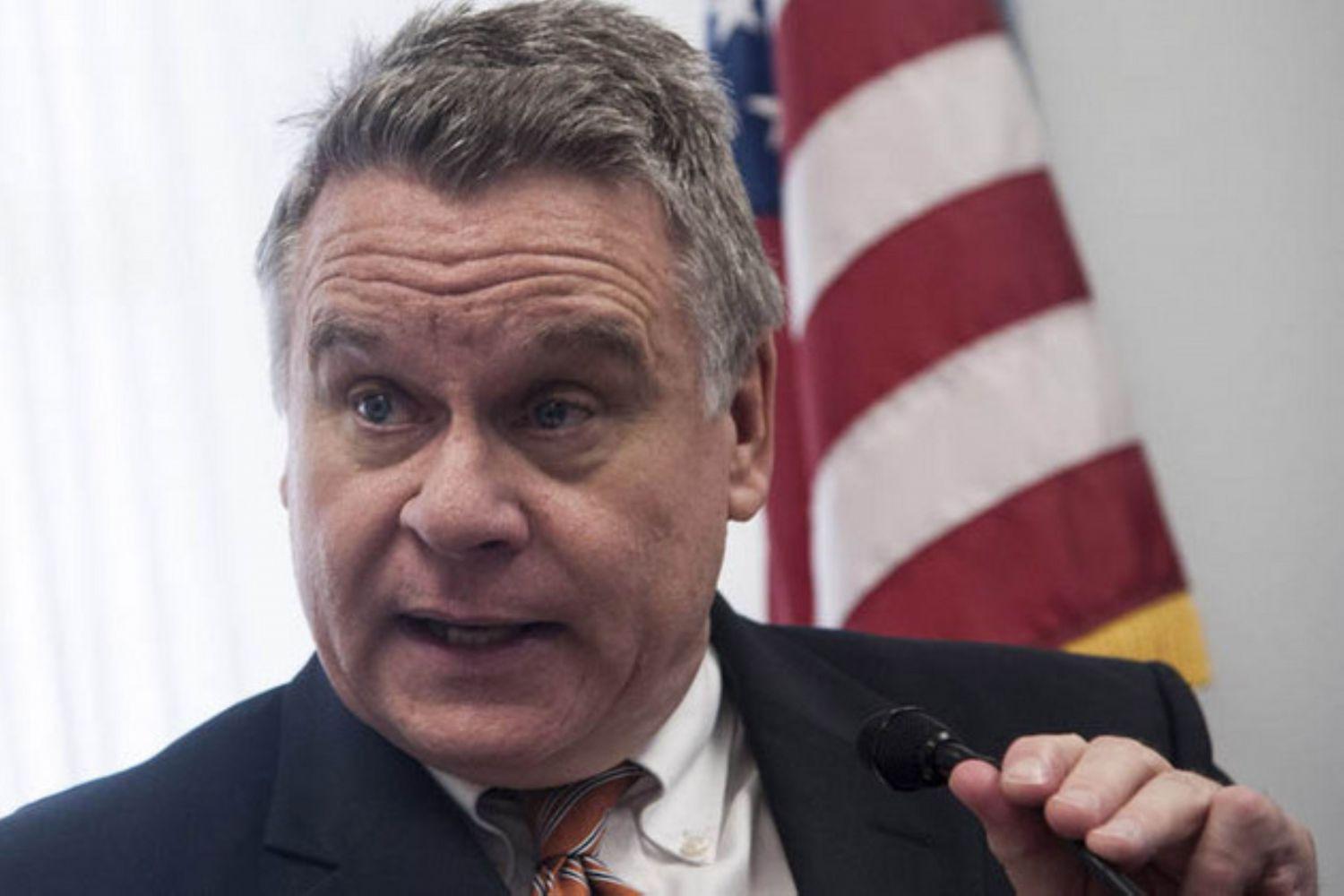
Chaired by Congressman Chris Smith (R-NJ), the hearing was the fourteenth he has presided over concerning the persecution of Christians in Nigeria, reflecting more than a decade of sustained congressional attention to the issue.
The hearing featured two senior State Department officials—Frank Garcia, Assistant Secretary for African Affairs, and Riley Barnes, Assistant Secretary for Democracy, Human Rights, and Labor—as well as Nina Shea, director of the Hudson Institute’s Center for Religious Freedom; Ryan Brown, CEO of Open Doors US; and Oge Onubogu, director of the Africa Program at the Center for Strategic and International Studies (CSIS).
The State Department Explicitly Acknowledges Religious Targeting
Particularly significant was the State Department’s unequivocal recognition of the religious dimension of the violence, which has frequently been portrayed primarily in terms of intercommunal tensions, competition over land and resources, or general insecurity.
In his testimony, Assistant Secretary Riley Barnes stated that Fulani ethnic militias carry out attacks that “directly target Christian populations.” He cited numerous eyewitness accounts indicating that perpetrators used religious language and deliberately selected Christians for murder and kidnapping.
Barnes also referred to data showing an 18 percent nationwide increase in civilian deaths, with Plateau State experiencing a particularly alarming increase of 161 percent from 2025 to 2026.
Another important aspect of his testimony concerned Nigeria’s continuing enforcement of blasphemy laws.
Sharia penal codes are enforced in 12 Nigerian states, and Nigeria is among eight countries worldwide where alleged blasphemy can carry the death penalty. Barnes stressed that prosecutions for perceived insults to Islam violate Nigeria’s obligations to protect freedom of expression and religion.
He confirmed that Washington is pressing Nigerian authorities to repeal such laws or, at a minimum, cease enforcing them. The United States is also seeking the release of Yahaya Sharif-Aminu, a Sufi Muslim singer sentenced to death on blasphemy charges.
The Scale and Disproportionate Impact of the Violence
Nina Shea testified that Nigeria remains the world’s deadliest country for Christians killed for faith-related reasons, accounting for 72 percent of such killings worldwide, according to Open Doors.
She distinguished between the Nigerian government’s military campaigns against internationally recognized terrorist organizations, including Boko Haram and Islamic State affiliates, and its inadequate response to armed Fulani militias attacking predominantly Christian rural communities in the Middle Belt.
Shea described a recurring pattern of organized attacks, inadequate protection, and widespread impunity, resulting in the displacement of more than one million people. Although recent arrests of suspected militia leaders represent an encouraging development, she stressed that sustained diplomatic pressure remains essential.
Ryan Brown presented particularly revealing statistics drawn from research by the Observatory for Religious Freedom in Africa.
Between October 2019 and September 2025, approximately 10,928 Christian civilians and 1,919 Muslim civilians were killed in Nigeria’s North Central region. During the same period, more than 4,700 Christians and 3,650 Muslims were abducted.
When adjusted for the respective religious populations, Christians in Benue State were 7.3 times more likely than Muslims to be killed in 2025. In 2024, the ratio was nearly 20 to one.
Brown also highlighted the difficulties facing displaced Christian communities, including the occupation of abandoned farmland by armed groups, obstacles to returning home, and reports of religious discrimination in displacement settings.
While acknowledging the multiple factors underlying Nigeria’s security crisis, he stressed that the evidence clearly establishes religious identity as a significant factor in the vulnerability of Christian communities.
Oge Onubogu offered a broader assessment of the crisis, emphasizing the interaction of religious, ethnic, territorial, economic, and political factors. She acknowledged that Christians have been deliberately targeted in certain attacks, while stressing that Muslim communities have also suffered devastating violence and that counterterrorism successes alone cannot guarantee civilian security.
From CPC Designation to Action and Accountability
Assistant Secretary Frank Garcia outlined the measures undertaken since President Donald Trump’s October 31, 2025, redesignation of Nigeria as a Country of Particular Concern under the International Religious Freedom Act.
These include the establishment of a US–Nigeria Joint Working Group, which met in Abuja in January and Washington in August 2026, assistance to police units responsible for protecting vulnerable communities, expanded cooperation to identify perpetrators, and measures to disrupt financial networks supporting terrorist attacks.
The State Department has also committed $9 million to programs supporting early-warning mechanisms, legal assistance for individuals accused of blasphemy, and documentation of religious-freedom violations.
American officials acknowledged, however, that the progress reported by Nigerian authorities remains insufficient.
Congressman Smith reiterated the need for stronger diplomatic pressure, tying US assistance to demonstrable progress, targeted sanctions against perpetrators, and humanitarian assistance for affected communities.
He also highlighted the proposed Nigeria Religious Freedom and Accountability Act of 2026 (H.R. 7457), which seeks to translate the CPC designation into concrete policy measures.
Nina Shea urged the administration to maintain Nigeria’s CPC designation until the violence subsides and displaced communities can safely return to their homes.
Significance Beyond Nigeria
The November 12 hearing has implications well beyond Nigeria. It illustrates the importance of recognizing the specifically religious character of persecution, even when it occurs within a complex environment of political, economic, and security problems.
Equally significant is the attention given not only to violence perpetrated by nonstate actors but also to the responsibility of governments that fail to protect vulnerable citizens, tolerate impunity, or themselves enforce laws violating fundamental religious freedoms.
The hearing underscores the role of sustained congressional oversight in ensuring that religious-freedom commitments are translated into diplomatic engagement, policy instruments, and measurable demands for accountability.
As Assistant Secretary Barnes emphasized, it is the Nigerian government that bears the responsibility for demonstrating actual progress.
Finally, it is important to note that the ultimate measure of success is whether persecuted communities can live, worship, and return to their homes in safety and freedom.