
By Amb. Alberto M. Fernandez* – MEMERI –
The terrorist attacks on September 11, 2001, were a close-run thing. Not so much because of the danger of disruption by the Americans but because much of Al-Qaeda’s Shura Council itself was uneasy about the plot. This was not due to any love of the Americans or squeamishness but because of strategic concerns (and because they did not want to abuse the hospitality of their Taliban hosts). Some Jihadist veterans did not like Bin Ladin’s vanity: “I think our brother has caught the disease of screens, flashes, fans, and applause” one hostile email from Abu Khalid Al-Suri and Abu Musab Al-Suri warned of Bin Ladin.
Today Al-Qaeda, as a leadership cadre has a much lower profile even while some Al-Qaeda branches, specifically in the African Sahel and in the Horn of Africa, are still powerful and growing. The rift between Al-Qaeda and its unruly, brutal offspring, the Islamic State (IS, or ISIS), has never healed and they sometimes fight each other. IS also has a much lower profile in terms of leaders than it used to, although it too is flourishing in its work in Africa, particularly in its specialty of slaughtering African Christians.
Westerners are still inspired by Jihadism, despite the seemingly diminished capacity of the groups’ leadership and the (relative) decrease in their propaganda. Only last month, 34-year-old American Jessica Bowie, a convert to Islam five years ago, was arrested for plotting an ISIS-inspired terrorist attack. In 2025, 117 people were arrested in Spain on charges related to Islamist terrorism, the highest number from any of the EU states in 2025. The Hamas attack on Israel of October 7, 2023, generated more enthusiasm, as far as activism is concerned, in the West than it did in the East, if for no other reason than there is greater freedom for such agitation in the West than there is in the police states of the Muslim world. Youth radicalization, to a “salad bar” of varied radical options, is a global phenomenon.
We forget, at our peril, that Al-Qaeda, unlike the Islamic State, was relatively flexible and pragmatic in its choice of allies and tactics. Al-Zawahiri privately criticized the beheading videos coming out of Iraq, believing that such things should be done off camera. In another letter, he warned against targeting religious minorities – Sikhs, Hindus, and Christians – in Pakistan. He saw both as distracting from the main lines of effort in confronting the United States and winning over the Muslim masses.
Despite eventually fighting and killing other Muslims, Al-Qaeda saw itself as part of a larger, political and ideological project. The specific group and leader may rise or fall, but the larger project remains intact to this day. The revolutionary goal was the same, that Islam should be defended and that it should be, at least, dominant if not victorious. Bin Ladin himself was especially interested in seeing the two greatest defeats of Islam, as he saw it, reversed in Palestine and Spain. Abdullah Azzam said something similar.
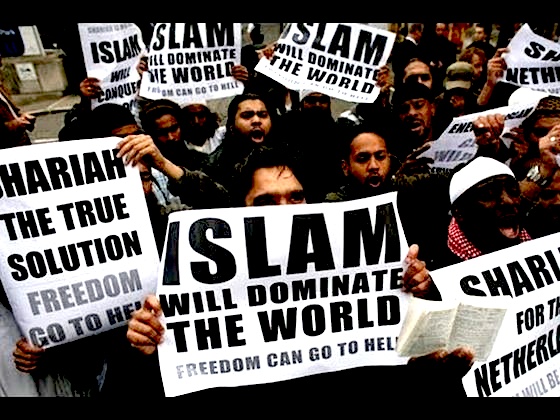
If we look at the broad scope of Islamism worldwide, it is obvious that much has changed over the past quarter century. While there is a serious uptick in Jihadist violence in Africa, Salafi-Jihadism is weaker in the Arab world overall even though an Islamist militant group seized power in Syria in December 2024. If Islamism is making major political and societal strides anywhere right now, that would be in the West and it is not happening through terror – although Islamist terror still exists – but through migration and politics.
Ayman Al-Zawahiri went from the ideological extremism of the Muslim Brotherhood to the regional violent extremism of Egyptian Islamic Jihad and then to the global scope of Al-Qaeda. Today, the equation is reversed as the Islamic “revolution” is demographic, mostly legal and local, in terms of numbers and percentages in the West that lead to greater power, including enhanced political power. This is not to say that all or most Muslims in the West are Islamists, far from it. Most are, like most non-Muslims in the West, bystanders, largely passive participants in unfolding dramas driven by a focused and engaged political minority.
The broad goals of the violent revolutionaries of September 11th, 2001 and the activists of today do overlap in a type of modern Asabiyya or group feeling that seeks to promote and enlarge the power of Islam (as interpreted by the Islamists themselves) by whatever means necessary. Al-Zawahiri the Muslim Brother turned Jihadist may have felt that he had no other options in Egypt. In the West, you do have options, especially if temporarily, cynically, allied with the political left.
It is deeply ironic that Islamic Supremacism (or Islamic Nationalism) advanced in the West mostly unchallenged over the past quarter century while liberal elites simultaneously demonized “Christian Nationalism” and, especially since October 7, Zionism (which is, after all, Jewish Nationalism). Runaway immigration, especially Muslim immigration, has turbocharged the polar factionalism trending in the West which, coupled with economic crises and loss of faith in the legitimacy of the system, threatens to bring new levels of civil strife to Europe and North America.
Bin Ladin wanted to bring about a type of global “Islamic Moment” and it has finally come about in ways he did not quite expect (although Islamists at the time boasted about how the 9/11 attacks had led to many conversions to Islam in the West). We in the West are in a sort of twilight struggle for meaning that many of us also do not quite comprehend. Only last month, the head of an influential Qatar-funded Muslim cleric organization made the connection: Without the Hamas attacks of October 7, Muslim political leaders like Mamdani in New York City and El-Sayed in Michigan would not have risen. Terror led to political success. A non-Muslim making such an expansive claim would have been regarded, at best, as an ignorant alarmist.
Rather than being some sort of dated, retrograde backwater, the Middle East pathologies that reigned for decades, and among which political Islam grew and festered, have now been implanted or reconfigured in the West: identity politics, disinformation, antisemitism. 9/11 and subsequent events accelerated this process. This all happens right at the time that the West, and the world, are confronting other, unrelated existential crises: the birth dearth, the debt bomb, and the economic and social dislocation caused by new technologies including artificial intelligence. The fateful fuse lit by Al-Qaeda a quarter century ago has now joined a wider conflagration.
________________________
Read full article at:
(*) Amb. Alberto M. Fernandez is Vice President of MEMERI