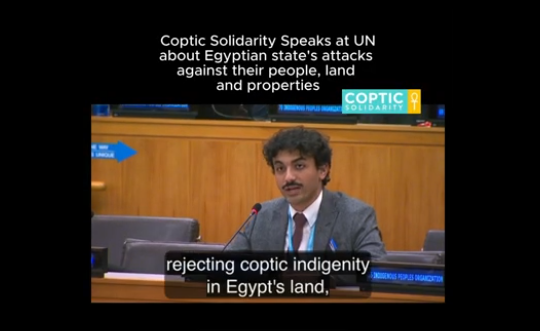

Last month, Coptic Solidarity brought the concerns of Egypt’s Coptic Christian community directly to the United Nations during the 24th session of the UN Permanent Forum on Indigenous Issues (UNPFII) in New York.
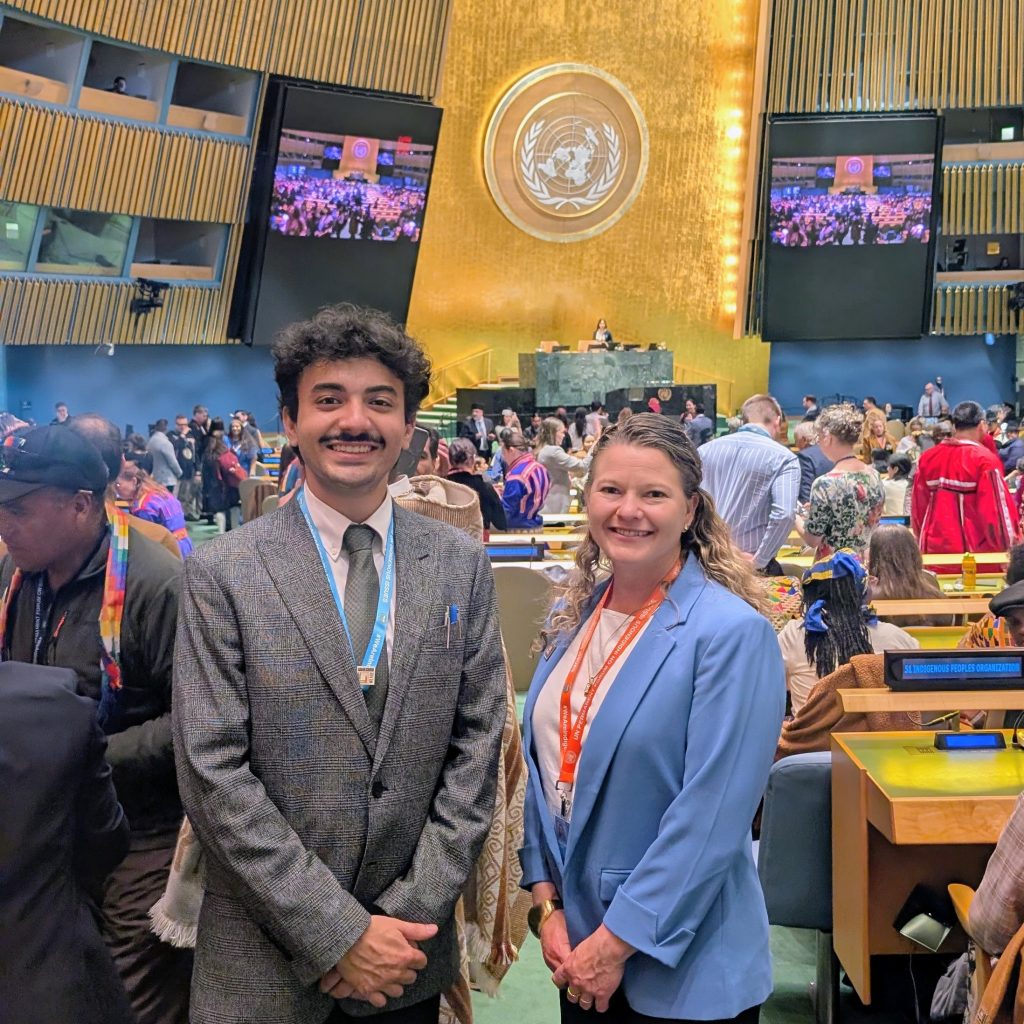
Lindsay Rodriguez – Director of Development & Advocacy
For years, the Egyptian government has sought to project an image of religious harmony while downplaying the discrimination, exclusion, and systemic challenges faced by Copts. Our presence at the United Nations helps ensure that the international community hears a more accurate account of conditions on the ground.
During our visit, we met with representatives of several countries, UN officials, and human rights advocates to discuss a range of pressing issues affecting Copts in Egypt, including:
- The arbitrary detention of Coptic converts and researchers, including Said Abdelrazek and Dr. Augustinos Samaan
- The abduction and forced conversion of Coptic women and girls, including the ongoing case of Silvana Atef
- Systematic discrimination that denies Copts equal citizenship
- Threats to historic churches, monasteries, and Christian-owned properties
As part of the Forum, Coptic Solidarity delivered an official intervention emphasizing that the Copts are Egypt’s indigenous Christian community and that protecting their religious and cultural heritage is essential to preserving their identity and continued presence in their ancestral homeland.
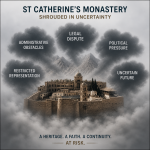
Our remarks highlighted concerns over legal and administrative threats to Saint Catherine’s Monastery, as well as the demolition of church walls and Christian properties in various parts of Egypt.
You can watch our full intervention at the United Nations.
A Timely Reminder: The Holy Family Trail Bill
Shortly after our intervention, a proposed law governing Egypt’s Holy Family Trail was introduced in Parliament without prior consultation with the Coptic Orthodox Church.
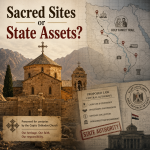
The draft legislation would create a new authority with broad powers over lands, facilities, and revenues associated with churches and monasteries along the Trail. It would also authorize investment partnerships and commercial activities tied to some of Christianity’s most sacred sites in Egypt.
These developments underscore the importance of the concerns we raised at the United Nations.
The issue is not opposition to development or tourism. Rather, it is the need to ensure that churches and monasteries—living places of worship maintained by the Church for centuries—are not reduced to commercial assets or placed under increasing state control. The Holy Family Trail proposal has raised exactly these concerns among many Copts and legal experts.
Why This Matters
Egypt’s Christian heritage is an integral part of the country’s identity and of global Christianity.
When historic monasteries, churches, and sacred lands are threatened, the rights and continuity of the Coptic community are also at risk.
Our participation at the United Nations is part of Coptic Solidarity’s ongoing effort to ensure that these concerns are brought before the international community and that the voices of Copts are heard at the highest levels.