
By Coptic Solidarity –
The demolition of agricultural land affiliated with the Monastery of Archangel Gabriel in Fayoum has sparked controversy and raised questions over the consistency of state enforcement, following the removal of long-cultivated land and the injury of a monk during the operation.
Long-Standing Dispute Over Land Status
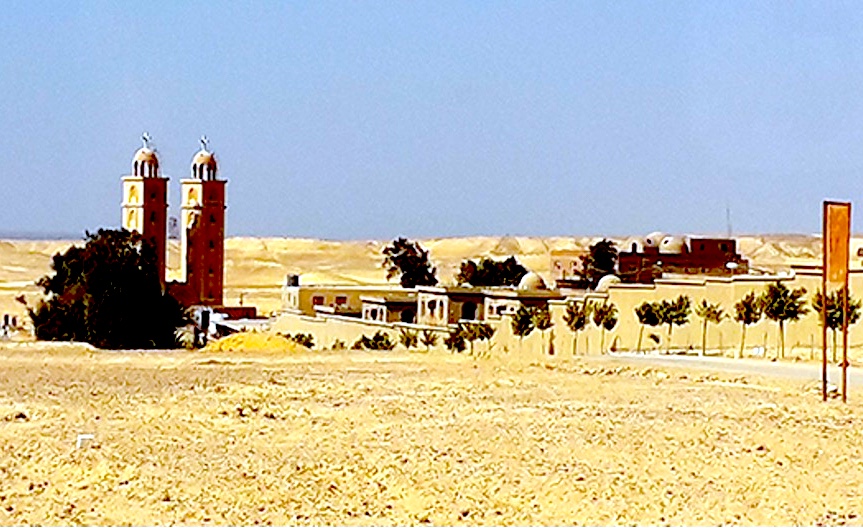
The incident concerns a farm located outside the monastery walls in the Naqloun area, near the village of Qalamshah, within the jurisdiction of New Fayoum City. The land, estimated at approximately 41 feddans, had been cultivated by the monastery’s monks for over two decades.
According to available information, the monastery had previously submitted requests to legalize its status under Egyptian law, including applications dating back to 2005 and 2017. These requests reportedly remained unresolved at the time of the demolition.
Under Egyptian regulations, individuals or entities cultivating desert land for a prolonged period (typically 15 years) may seek ownership regularization, subject to approval by the competent authorities.
Demolition Campaign amid Security Presence
The demolition was carried out by the New Urban Communities Authority, under the Ministry of Housing, pursuant to official removal orders targeting alleged encroachments on state-owned land. The operation formed part of broader state efforts to reclaim public land.
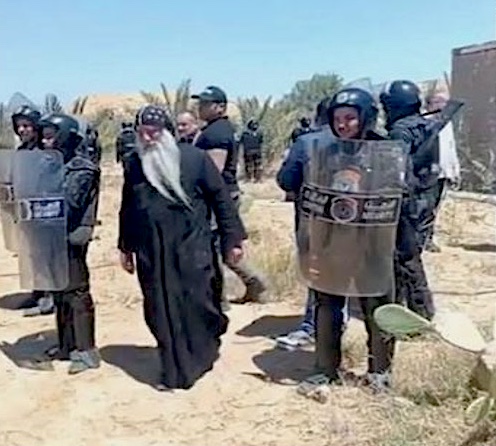
Security forces from the Fayoum Security Directorate were deployed to oversee the execution, accompanied by officials from the Authority. Prior to reaching the monastery’s farm, authorities had implemented demolition orders on neighboring plots measuring 28, 31, and 7 feddans, owned by private individuals.
When authorities moved to enforce the demolition order concerning the monastery’s farm (issued on September 2, 2025), a number of monks objected, citing their pending legalization requests. This led to limited verbal confrontations, which were subsequently contained without escalation into violence.
Church sources indicated that the relevant diocese had been informed in advance of the operation, and representatives were present on site to help manage tensions and facilitate compliance.
Injury of a Monk
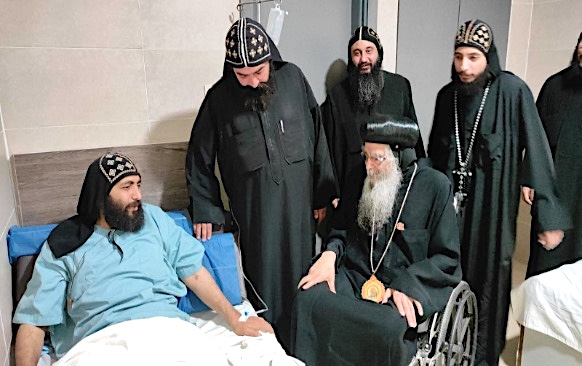
During the execution of the demolition, a monk identified as Domadios sustained a foot fracture after being struck by demolition equipment. The injury was described as accidental, occurring amid movement and congestion at the site. He was transferred to hospital for treatment, with reports indicating that the sandy ground helped mitigate the severity of the impact.
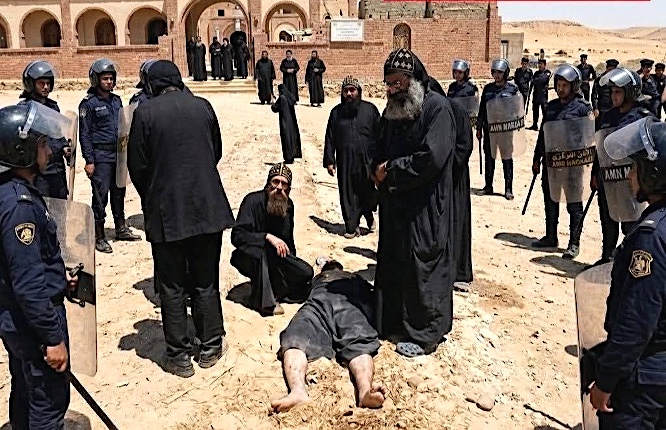
In an official statement, the Coptic Orthodox Diocese of Fayoum confirmed that the demolition was carried out pursuant to a ministerial decision concerning agricultural land outside the monastery’s walls. The statementknowledged that initial objections had been raised but noted that all parties ultimately complied and the removal was completed.
The Diocese—visibly seeking appeasement of Coptic public opinion—urged caution regarding information circulated on social media, warning against unverified claims that could undermine public order.
Monastery Statement: Legal Process and Pending Regularization
In a separate official statement, the Monastery of Archangel Gabriel rejected what it described as incomplete or misleading portrayals of the incident circulating on social media, and set out a detailed legal account of its position.
The monastery emphasized that it has consistently acted within the framework of Egyptian law, affirming its respect for state institutions and its commitment to pursuing all the legal procedures related to the regularization of the land’s status”. According to the statement, the monastery initiated formal regularization procedures following the enactment of Law No. 144 of 2017, submitting applications through local administrative bodies before jurisdiction over the land was transferred to the New Fayoum City Authority in 2021.
The monastery emphasized that it has consistently acted within the framework of Egyptian law, affirming its respect for state institutions and its commitment to pursuing all legal procedures related to the regularization of the land’s status.
It further noted that, despite cultivating the land and investing significant resources over many years, its regularization requests were ultimately rejected without final resolution of its legal position. The monastery stated that it renewed its applications on February 23, 2026, under Law No. 168 of 2025, thereby establishing what it described as a new legal basis requiring suspension of demolition measures pending review of the updated file.
The statement also disclosed that a formal legal notice had been submitted on March 31, 2026, requesting expedited review of the case and a halt to demolition until a final determination is reached. It argued that proceeding with demolition under such circumstances risks not only material losses but also undermines the legal conditions required for land regularization, notably the requirement that the land remain under cultivation.
While reaffirming its recognition of the state’s authority to protect public land, the monastery called for a balanced application of the law that takes into account pending legal claims and established factual situations. It concluded by stressing that it has adhered to legal channels at every stage and will continue to pursue its rights through the courts.
Concerns Over Selective Enforcement
The incident has drawn criticism from observers, who question why the monastery’s applications to regularize ownership under existing regulations remained unaddressed, and why demolition orders affecting its land were enforced while other nearby plots with reportedly similar legal status were left untouched.
Calls have been made for an investigation into what has been described as “selective enforcement,” with advocates stressing that equal application of the law is essential to maintaining public confidence.
Following the incident, Bishop Anba Abram of Fayoum visited the monastery and later the injured monk in hospital, expressing support and discussing the situation with the monastic community.
Monastery representatives indicated that they intend to continue pursuing legal avenues, including renewing regularization requests, challenging administrative decisions before the administrative courts, and submitting grievances to the relevant authorities.