
By CIHRS –
In Euro-Mediterranean Partnership, International Advocacy Program, Parliament & the European Union July 30, 2026.
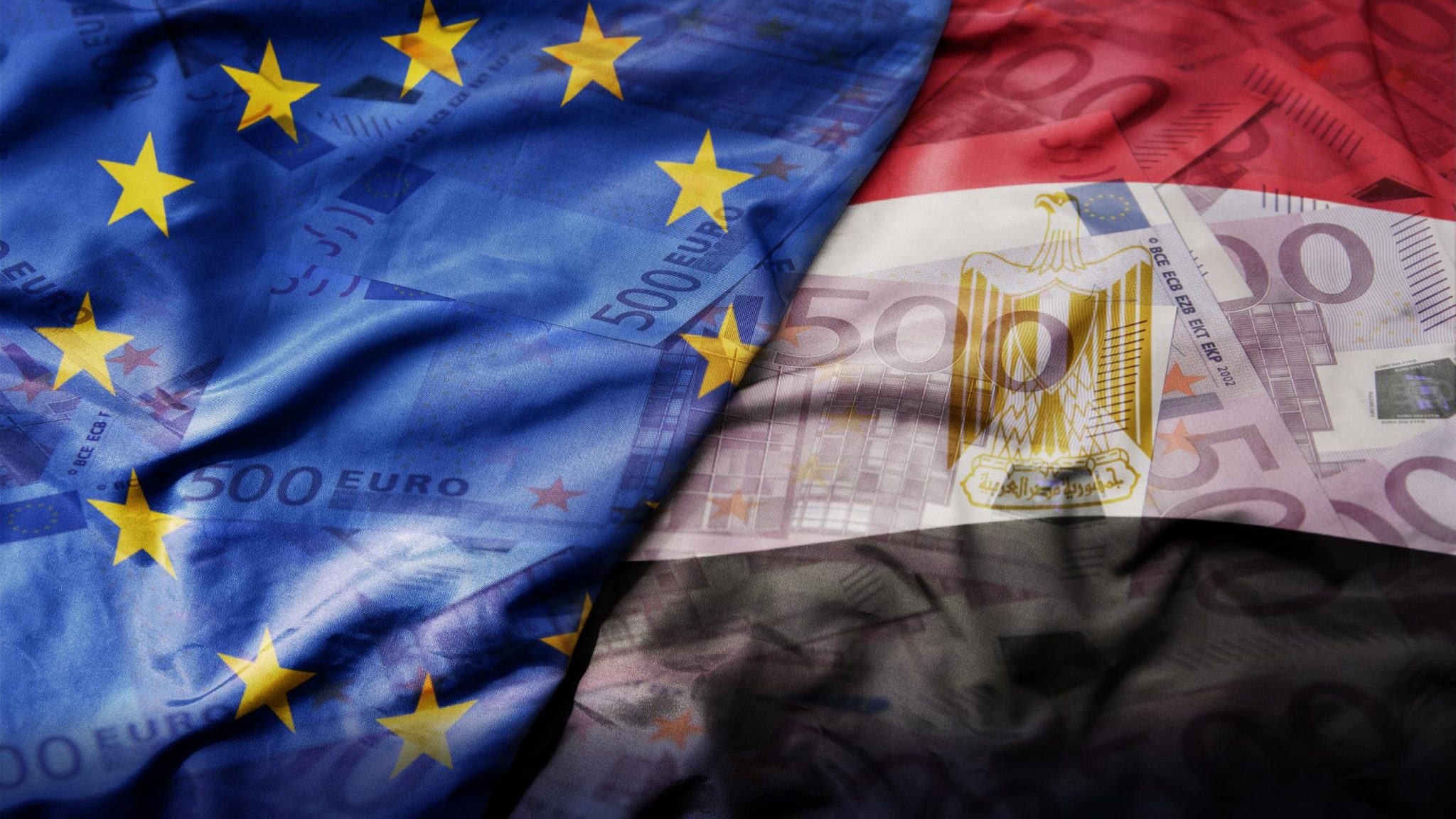
The European Union should urgently explain why it has decided to release a second €1.5 billion payment to Egypt under its macro-financial assistance (MFA) programme, said the undersigned organizations. Under the rules governing this financial support, Egypt must take “concrete and credible steps” towards democracy, the rule of law and human rights before funds can be disbursed. Yet, despite Egypt’s worsening human rights record and the absence of meaningful democratic reforms, the EU is once again bypassing its own rules and providing a financial lifeline to an authoritarian government responsible for systematic repression.
The European Commission assessment for the disbursement reportedly concluded that “Egypt met all the conditions for this instalment”, including “some concrete and credible steps towards effective democratic mechanisms, including a multi-party parliamentary system, upholding the rule of law, and ensuring respect for human rights.” Yet no EU assessment of Egypt’s fulfilment of this “political precondition” for the 24 July disbursement has been published.
In June, 15 Egyptian regional and international NGOs concluded that Egypt has made no tangible progress on human rights, democracy or the rule of law (the “political precondition” for this MFA operation) since its 2025 approval – nor in fact, since the 2024 launch of the EU-Egypt Strategic and Comprehensive Partnership. On the contrary, we found that Egypt’s human rights situation has deteriorated over that period.
The disbursement decision was first signalled by European Commission President Ursula von der Leyen after meeting Egyptian President Al-Sisi at the G7 summit on 16 June. She announced on X that “€1.5 billion to be issued this month to further support Egypt’s reform agenda” but did not explain which reforms justified the payment. There was no indication that the European Parliament (EP) and EU Council had been informed of the assessment behind this decision.
In an apparently contradictory statement, Commissioner for the Mediterranean Dubravka Šuica commented on X the next day that “Advancing reforms remains fundamental to our financial support” and that “Partnerships work best when cooperation and human rights go hand in hand.”
The first instalment of funds disbursed to Egypt within this MFA operation in January 2026 came with an EU press release stating Egypt had “fulfilled all the required conditions for the disbursement” and “the country has taken concrete and credible steps towards respecting effective democratic mechanisms, including a multi-party parliamentary system, upholding the rule of law, and ensuring respect for human rights”.
Yet the Commission’s Information Note (non-public) to the EP and Council detailing the assessment made for that disbursement included a weak evaluation of Egypt’s fulfilment of the “political precondition”. It cited the country’s engagement with the EU and UN about human rights, various commitments and reports, as well as “ongoing work” on “legislative reforms”. It did not list any concrete human rights, rule of law or democracy improvements on the ground and observed “There is a need of enforcement and implementation beyond statements of intent or legislative processes.”
That is very much an understatement. The harsh closure of public space and the political sphere, mass arbitrary arrests and detention, and the systematic suppression of peaceful dissent have continued undermining the rule of law and cementing authoritarian control. Democracy remains absent at all levels of governance in Egypt; there has been no effort to tackle the security bodies’ impunity and restore accountability and access to justice. Emergency-style measures and misuse of counterterrorism legislation have facilitated the widespread crackdown on freedoms of association, peaceful assembly and of the media using enforced disappearance, torture, and punitive mass arbitrary detention in abysmal and often life-threatening conditions. Refugees and asylum-seekers, already facing a hostile environment and being scapegoated for Egypt’s economic crises, have faced a sharp uptick of police raids, mass arbitrary arrests and unlawful deportations denounced by UN experts, and a documented increase of deaths in detention. This has led to a climate of fear and extreme precarity among refugee communities and pushes some to flee toward Libya and Europe or to return to countries at war.
If the Commission wishes to maintain any credibility about its intention to uphold conditions of funding agreements, it ought to disclose the evaluation process which led to this disbursement decision. The EU should also urgently review its practice of implementation of MFA decisions and take the necessary measures to ensure requirements are fully and properly met.
Signatories:
- Cairo Institute for Human Rights Studies (CIHRS)
- Egyptian Front for Human Rights
- EuroMed Rights
- Law and Democracy Support Foundation (LDSF)
- ANKH Association
- Sinai Foundation for Human Rights (SFHR)
- International Federation for Human Rights (FIDH)
- CIVICUS
- Egyptian Human Rights Forum (EHRF)
- Refugees Platform In Egypt (RPE)
- Committee to Protect Journalists (CPJ)
- Minority Rights Group
- EgyptWide for Human Rights