
Jihad Is Back in Fashion—Literally
As the West frets over “Deus vult” imagery, Muslim clothing advertises a truly disturbing message.
At a time when Western media warn that “Deus vult” memes—pictures of Crusader knights accompanied by the words “God wills it”—are alarming, “far-right” indicators of “Christian extremism,” consider the rather different martial imagery currently being marketed to a Muslim shop owner in Egypt.
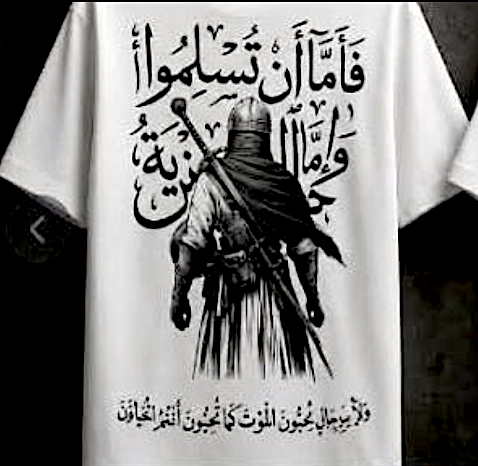
This shirt depicts an armed jihadist, sword prominently displayed, with the words: “Either you submit [to Islam] or the jizya…”
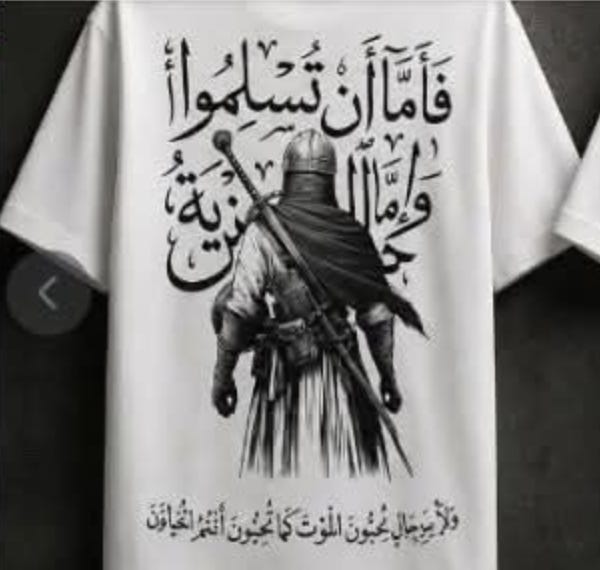
Jizya is the tribute imposed on non-Muslims living under Islamic rule (in keeping with Koran 9:29). More importantly, the slogan evokes the standard jurisprudence of jihad—the kind Muslim apologists insist is a figment of our imagination: before fighting non-Muslims, the “infidels” are to be invited to embrace Islam; if they refuse, where applicable, they are offered submission under Muslim rule and payment of the jizya; if they refuse that, they are to be fought to the death.
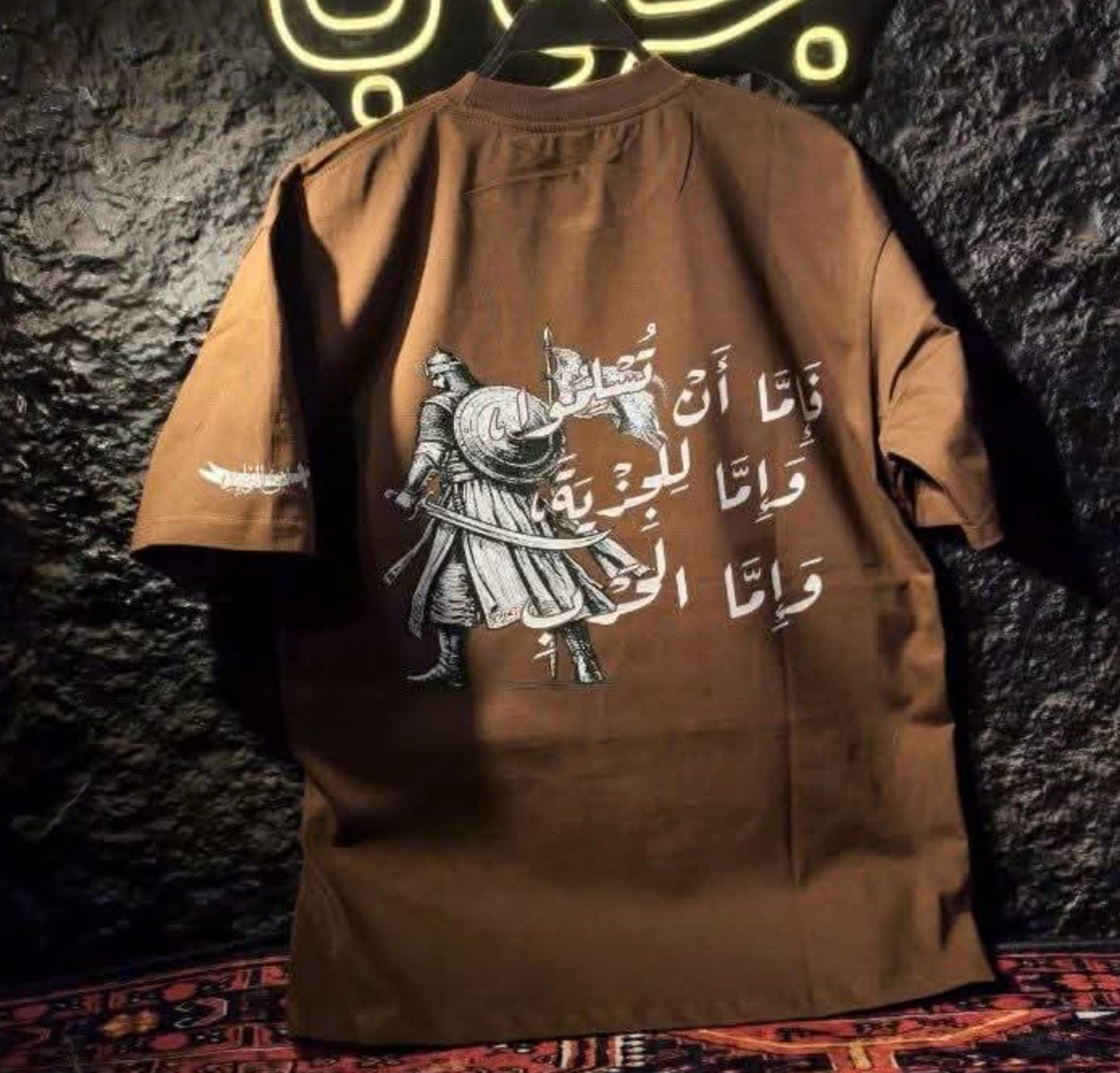
The shirt below is even more explicit: it reads “Either you submit [to Islam], or the jizya, or war.”
The shirt below depicts the same imagery and declares: “We love death as you love life.”
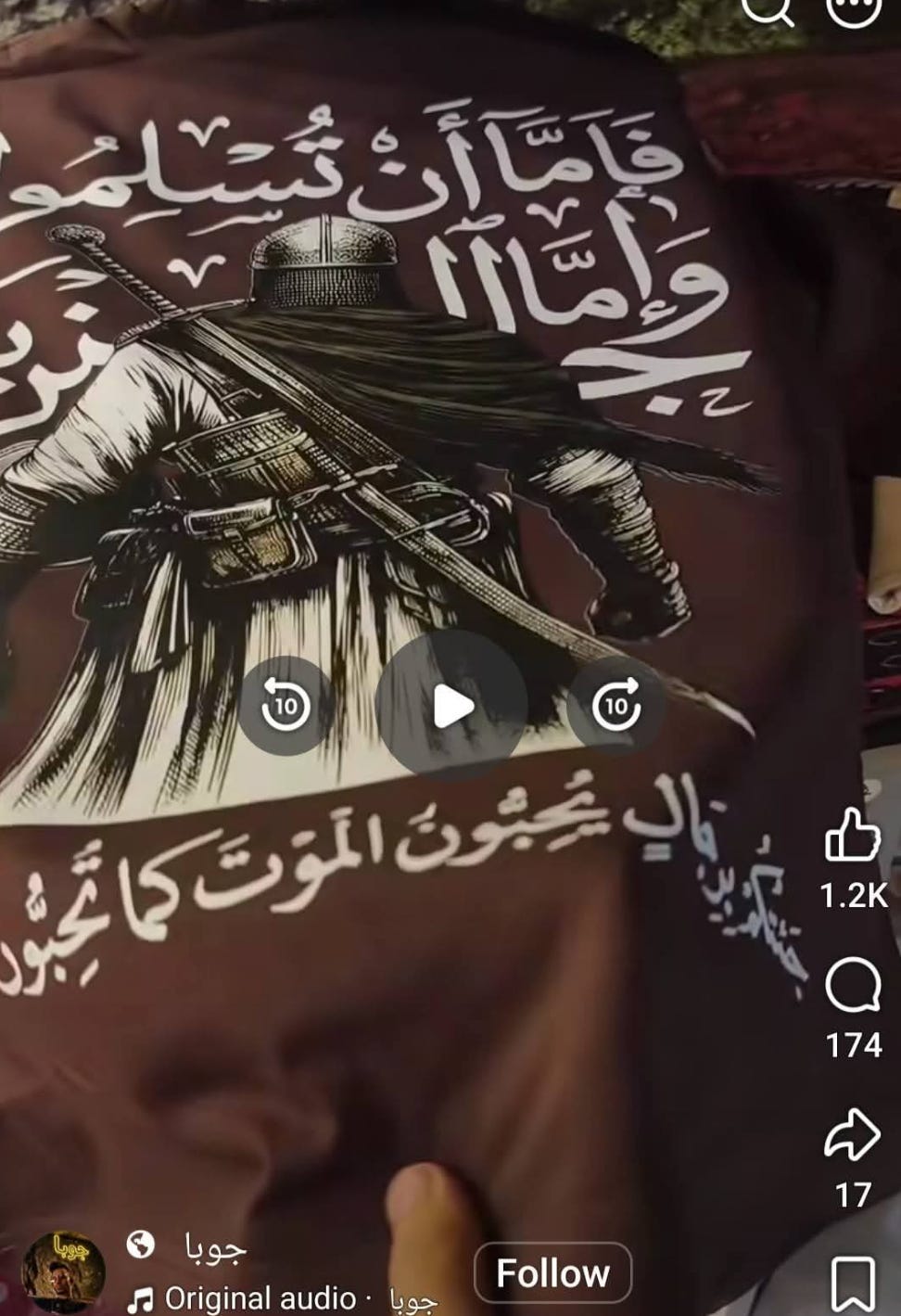
This, of course, is an old adage widely attributed to some of Islam’s earliest heroes. They would try to demoralize their opponents by boasting that they, as self-sacrificing Muslims, “love death,” whereas their non-Muslim counterparts—regularly depicted in Islamic sources as worldly hedonists—“love life.”
The one below is of the celebrated jihadist, Khalid bin al-Walid—dubbed the “Sword of Allah” for his savagery in warfare.
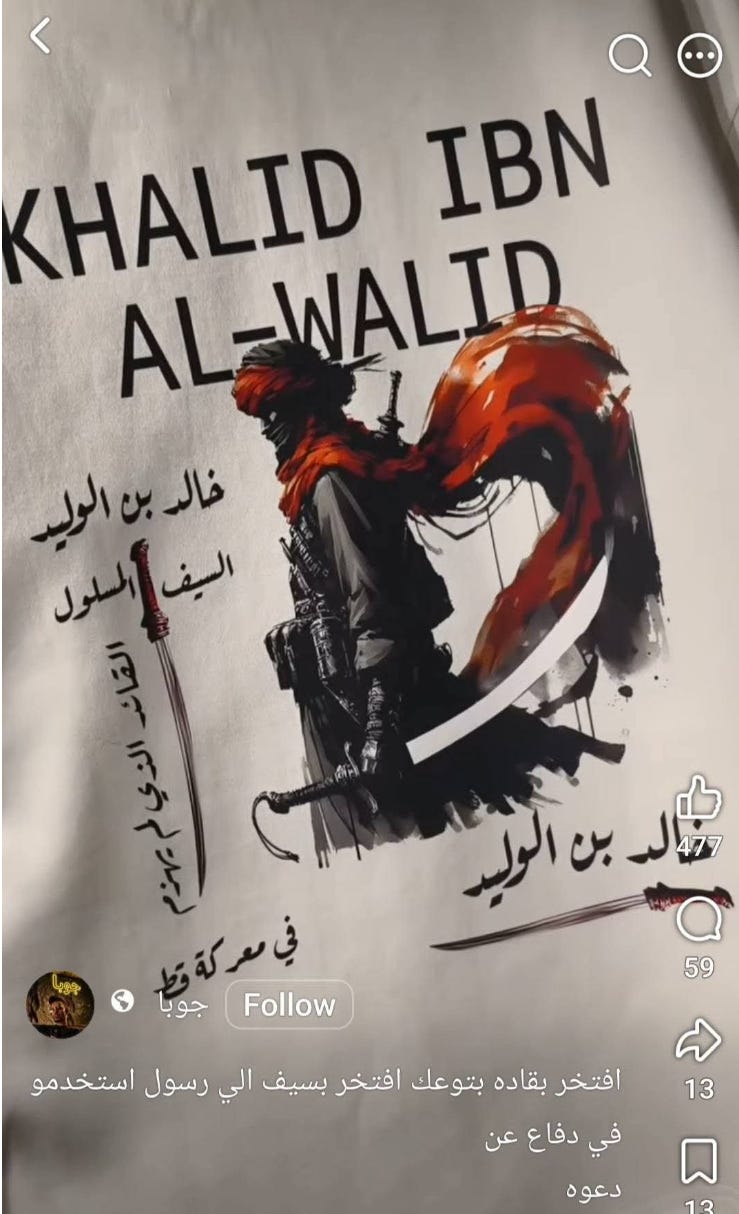
Prior to the battle of Yarmuk, Khalid boasted before the Christians that “we Arabs are in the habit of drinking blood, and we are told the blood of the Romans is the sweetest of its kind, so we came to shed your blood and drink it.”
He also accused a fellow Muslim of apostasy, apparently to “marry”—that is rape—his attractive wife, and afterwards cooked his dinner atop of the apostate’s severed head.
Such are Islam’s “heroes.”
At any rate, compare these jihadist slogans with the supposedly terrifying “Deus vult.”
The phrase simply means “God wills it.” It became associated with the First Crusade and today sometimes accompanies memes depicting Crusader knights. Because of those historical associations, such imagery is routinely condemned in the West as extremist, hateful, or threatening.
But notice the difference.
“Deus vult” does not say convert, submit, or die. It does not prescribe a subordinate status for unbelievers. It does not proclaim a love of death.
Not to mention that the Crusades themselves arose in the context of centuries of Muslim conquest of formerly Christian territories and the ongoing persecution of Christians and destruction of their churches.
The Muslim shirts require considerably less context. Their message is printed right on them:
Islam or jizya. We love death as you love life. Atrocity committing Muslims are our heroes.
Such are the differences, spelled out for the world to see, between Crusades and Jihads.
__________________