
Egypt’s Theocratic Governance Backsliding: More Risks for Citizenship Rights
Washington, D.C. June 7–9, 2026
Coptic Solidarity convened its 14th Annual Conference in Washington, D.C., bringing together Members of Congress, U.S. government officials, policy experts, scholars, religious freedom advocates, and leaders from across the Coptic community. Centered on the theme “Egypt’s Theocratic Governance Backsliding: More Risks for Citizenship Rights,” the conference examined how the increasing entrenchment of religion within Egypt’s governing institutions continues to undermine equal citizenship, religious freedom, and the rule of law.
Conference Overview
The conference explored the findings of Coptic Solidarity’s latest report, Erosion of Citizenship in Egypt: State-Managed Religious Governance and Institutional Islamization, while also addressing broader regional challenges affecting indigenous religious communities throughout the Middle East and North Africa. Discussions focused on Egypt’s legal and political framework, threats to religious and cultural heritage, the misuse of blasphemy laws, transnational Islamist movements, and practical policy recommendations for advancing freedom of religion or belief.
In addition to Policy Day at the U.S. Capitol Visitor Center, the conference included Coptic Solidarity’s Annual General Assembly, and the official launch of CoptWatch, a new initiative dedicated to documenting sectarian violence and discrimination against Copts through systematic, evidence-based reporting.
Conference Highlights
- More than 30 distinguished speakers participated throughout the conference.
- Bipartisan Members of Congress reaffirmed their support for religious freedom and equal citizenship for Egypt’s Coptic Christians.
- Senior officials from the U.S. Department of State and National Security Council discussed current U.S. policy priorities related to religious freedom and regional security.
- Panelists highlighted growing threats to indigenous religious and cultural heritage, including concerns surrounding St. Catherine’s Monastery.
- Coptic Solidarity officially launched CoptWatch, a new platform designed to strengthen documentation, accountability, and advocacy through systematic reporting of sectarian incidents in Egypt.
Monday, June 8 – Policy Day
US Capitol Visitor Center, Room 201
Opening Remarks – Ghada Melek, Executive Committee Member, Coptic Solidarity, on behalf of Caroline Doss, president of Coptic Solidarity.
Melek thanked the speakers, Members of Congress, sponsors, and attendees whose support made the event possible. She reflected on the growing importance of sustained advocacy at a time when Egypt continues to experience increasing restrictions on equal citizenship and freedom of religion or belief.
Messages of Support
Throughout the conference program, attendees viewed a series of recorded messages from Members of Congress and international religious leaders who were unable to participate in person but wished to express their support for Coptic Solidarity’s work and the broader cause of religious freedom. These video remarks, delivered by U.S. Representatives Josh Gottheimer (D–NJ), Don Beyer (D–VA), and Jim McGovern (D–MA), as well as Cardinal Louis Raphaël Sako.
Congressman Josh Gottheimer reaffirmed his longstanding support for Egypt’s Coptic Christian community and highlighted his sponsorship of H. Res. 776, which condemns attacks and discrimination against Coptic Christians. He praised Coptic Solidarity’s advocacy efforts and encouraged continued bipartisan engagement to promote religious freedom and equal citizenship.
Cardinal Louis Raphaël Sako Chaldean Patriarch of Baghdad (retired):
Cardinal Sako reflected on the shared challenges confronting indigenous Christian communities throughout the Middle East. He emphasized the importance of preserving the region’s ancient Christian heritage while encouraging continued international solidarity on behalf of vulnerable religious minorities.
U.S. Representative Don Beyer (D–VA):
Congressman Don Beyer welcomed conference participants and reaffirmed his commitment to protecting freedom of religion or belief around the world. He commended Coptic Solidarity’s advocacy and encouraged continued engagement with policymakers to ensure that religious persecution remains an important component of U.S. foreign policy.
U.S. Representative Jim McGovern (D–MA):
As Co-Chair of the Tom Lantos Human Rights Commission, Congressman Jim McGovern emphasized that genuine religious freedom cannot exist where one religion receives constitutional preference over others. Comparing Egypt’s constitutional framework with the protections guaranteed by the First Amendment of the United States Constitution, he argued that institutional favoritism inevitably results in unequal treatment for religious minorities.
McGovern strongly criticized Egypt’s continued use of blasphemy laws and called for the immediate release of prisoners of conscience, including Said Abdelrazek and Dr. Augustinos Samaan. He also condemned the widespread reliance on customary reconciliation sessions following sectarian violence, arguing that such practices undermine the rule of law by allowing perpetrators to avoid criminal accountability. He concluded by encouraging advocates to continue defending freedom of conscience as a universal human right.
Isaac Six – Senior Advisor, Office of International Religious Freedom, U.S. Department of State
Representing the U.S. Department of State’s Office of International Religious Freedom, Isaac Six discussed both the progress and continuing challenges affecting religious freedom in Egypt. Framing his remarks within the context of America’s upcoming 250th anniversary, he emphasized that religious liberty is a foundational right that enables the exercise of other fundamental freedoms, including free speech and peaceful assembly.
Six acknowledged several positive developments over the past fifteen years, including a significant decline in large-scale sectarian violence and continued progress in the legalization of churches under Egypt’s 2016 church construction law. At the same time, he stressed that important challenges remain, pointing to the continued misuse of blasphemy laws, the legal obstacles faced by religious converts seeking to update official identity documents, and the lengthy administrative delays surrounding church construction and licensing, particularly in Upper Egypt. He concluded by encouraging Egypt to apply its laws fairly and consistently to all citizens and reaffirmed the State Department’s commitment to monitoring these issues.
Walid Phares – Foreign Policy Analyst:
Mr. Phares reflected on the evolution of the modern Coptic advocacy movement and its growing international influence. He described three defining experiences that shaped his understanding of the Coptic struggle, including his upbringing in Lebanon, his work on Middle East policy, and his involvement in the establishment of Coptic Solidarity International. These experiences, he argued, demonstrated that preserving the Coptic narrative is essential not only for the community itself but also for policymakers seeking to understand the region’s complex religious and political landscape. Phares concluded by encouraging Copts around the world to remain engaged in civic life, continue building effective advocacy organizations, and work toward greater legal and political recognition in their respective countries.
Amy Fallas, Ph.D. – Chancellor’s Postdoctoral Fellow, University of California, Davis:
Dr. Fallas examined the historical foundations of unequal citizenship in modern Egypt, arguing that many of today’s structural inequalities are rooted in political and legal decisions made during the twentieth century. She highlighted three pivotal developments—the 1911 Coptic Congress, the 1919 Egyptian Revolution, and the 1923 Constitution—which together established a political culture that emphasized national unity while discouraging recognition of the distinct challenges faced by religious minorities.
Dr. Fallas explained that this legacy continues to shape government policy today. Rather than addressing sectarian discrimination directly, successive governments have often framed calls for equality as threats to national cohesion, allowing longstanding disparities in public representation and equal opportunity to persist.
Drawing on recent developments, she also discussed a January 2026 presidential decree concerning religious holidays, arguing that although it was presented as an effort to promote equality, it instead created new administrative inequalities by privileging certain Christian denominations while excluding others. She concluded that genuine citizenship reform will require acknowledging sectarian discrimination as a systemic issue rather than treating individual incidents as isolated exceptions.
Coptic Solidarity Year in Review– Lindsay Rodriguez, Director of Development & Advocacy, Coptic Solidarity:
Rodriguez presented an overview of Coptic Solidarity’s advocacy accomplishments over the previous year, demonstrating how the organization’s work has expanded across congressional advocacy, international engagement, strategic litigation, public awareness campaigns, and research.
She highlighted several major initiatives undertaken since the 2025 conference, including publication of Erosion of Citizenship in Egypt: State-Managed Religious Governance and Institutional Islamization, advocacy surrounding the preservation of St. Catherine’s Monastery, continued international efforts on behalf of prisoners of conscience such as Said Abdelrazek and Dr. Augustinos Samaan, expanded engagement with the United Nations and international religious freedom mechanisms, and preparations for the launch of CoptWatch.
Rodriguez also reflected on Coptic Solidarity’s growing coalition of congressional partners, international organizations, and grassroots supporters, emphasizing that sustained advocacy has strengthened the organization’s ability to influence public policy and elevate the concerns of Egypt’s Coptic community within international human rights discussions. She concluded by reaffirming Coptic Solidarity’s commitment to pursuing equal citizenship, religious freedom, and accountability through research, education, and strategic advocacy.
Danny Burmawi- Chief Executive, Ideological Defense Institute:
Danny Burmawi examined the ideological foundations of contemporary Islamist movements and discussed how extremist ideologies continue to influence governance, public discourse, and religious freedom throughout the Middle East. He argued that effectively addressing persecution requires confronting not only acts of violence but also the ideological narratives that normalize discrimination against religious minorities.
Burmawi encouraged policymakers and advocates to recognize the connection between ideological extremism and restrictions on equal citizenship, emphasizing that long-term religious freedom depends upon protecting pluralism, strengthening civil society, and challenging the ideas that sustain intolerance.
Session: Indigenous Heritage Under Threat: Protecting Sacred Sites and Cultural Identity in the Middle East and North Africa
Session Chair: Raymond Ibrahim
Speaker: Richard Foltin – Fellow for Religious Freedom, Freedom Forum
Speaker: Pari Ibrahim – Executive Director, Free Yezidi Foundation
The conference’s first panel explored the growing threats facing the indigenous religious and cultural heritage of the Middle East and North Africa, emphasizing that attacks on sacred sites are not merely assaults on buildings, but deliberate attempts to erase the history, identity, and continued presence of ancient religious communities.
Mr. Raymond Ibrahim framed the discussion by examining the historical experiences of indigenous Christians and other religious minorities, noting that many contemporary challenges are rooted in longstanding systems that treated non-Muslim communities as second-class citizens. The panel argued that these historical patterns continue to influence government policies affecting religious minorities today.
Mr. Foltin examined the relationship between religious freedom and the preservation of cultural heritage, emphasizing that protecting sacred sites should be understood as a fundamental human rights obligation rather than simply an issue of historic preservation. He warned that when governments assume control over religious heritage without adequately protecting the rights of the communities that created and sustained those sites, they risk undermining both religious liberty and cultural continuity.
Drawing on Coptic Solidarity’s recent advocacy surrounding St. Catherine’s Monastery, panelists discussed the broader implications of state control over historic religious sites. They argued that disputes involving the monastery represent more than an isolated property conflict, serving instead as a broader test of whether indigenous religious communities can retain meaningful stewardship over their historic institutions.
Ms. Pari Ibrahim, Executive Director of the Free Yezidi Foundation, shared the Yazidi community’s experience following ISIS’s 2014 genocide, describing the systematic destruction of cemeteries, shrines, and places of worship as an intentional effort to erase Yazidi civilization. She explained that the loss of cultural heritage extends far beyond physical destruction, threatening the survival of a community’s collective memory, identity, and connection to its ancestral homeland.
Throughout the discussion, speakers drew parallels among the experiences of Copts, Yazidis, Assyrians, Armenians, and other indigenous peoples whose religious and cultural heritage continues to face pressure from conflict, discrimination, and state policies. They emphasized that protecting these communities requires preserving not only their physical security but also the sacred places, historical narratives, and cultural traditions that define their identities.
The panel concluded by encouraging greater cooperation among indigenous communities and human rights organizations to advocate for stronger international protections. Speakers highlighted opportunities to engage policymakers, international institutions, and religious freedom networks in defending vulnerable heritage sites and ensuring that the preservation of cultural identity remains an integral component of human rights advocacy.
Session: Copts and the Egyptian State: Law, Society, and the Coptic Question
Session Chair: Mark Basta – Public Affairs & Policy Advisor, Coptic Solidarity
Speaker: Raed Jarrar – Advocacy Director, Democracy for the Arab World Now
Speaker: Mona Oraby, PhD. – Associate Professor of Political Science, Howard University
Speaker: David Schenker – Taube Senior Fellow, Washington Institute for Near East Studies
One of the conference’s most substantive discussions examined the relationship between Egypt’s legal and political institutions and the status of Coptic Christians within the modern Egyptian state. Moving beyond questions of individual acts of discrimination, the panel explored the structural factors that continue to shape unequal citizenship and limit religious freedom.
Dr. Mona Oraby presented findings from more than a decade of research into Egyptian administrative law, arguing that the legal recognition sought by many Copts has historically centered not on removing religion from public life, but on securing equal treatment within existing state institutions. She explored the complex role of religious affiliation on Egypt’s national identity cards, explaining that these documents have simultaneously reinforced state control over religious identity while serving as an important means through which minority communities preserve legal recognition.
Raed Jarrar situated the challenges facing Coptic Christians within Egypt’s broader authoritarian political system, arguing that restrictions affecting religious minorities form part of a larger pattern of repression targeting civil society, political opposition, and independent voices. He emphasized that the United States possesses significant leverage through its military assistance to Egypt and outlined several policy tools—including conditions on security assistance, congressional oversight, and stronger implementation of international religious freedom mechanisms—that could encourage meaningful reform.
David Schenker examined the current U.S.–Egypt relationship, observing that religious freedom concerns increasingly compete with broader regional security priorities. While acknowledging the strategic importance of the bilateral relationship, he encouraged advocates to continue engaging Congress and the executive branch to ensure that human rights and religious freedom remain central components of U.S. policy toward Egypt.
During the discussion, panelists also addressed questions regarding religious designation on national identity documents, equal citizenship under Egypt’s constitutional framework, and the practical challenges of pursuing legal reform within an environment where religion remains deeply embedded in state institutions. Although speakers approached these issues from different perspectives, they agreed that meaningful progress requires addressing the structural relationship between religion and governance rather than focusing solely on individual cases of discrimination.
Keynote Address: Countering Theocratic Governance and Advancing Religious Freedom by Nancy Dahdouh –Director for Counterterrorism, Global Jihadi Movement–Sunni Threats, National Security Council
Ms. Dahdouh delivered the conference keynote address, examining the relationship between Islamist movements, religious persecution, and U.S. national security policy. Speaking from both her professional experience and her family’s personal history of persecution in Egypt, she emphasized that protecting religious freedom requires confronting the ideological movements that undermine pluralism and equal citizenship.
Dahdouh opened her remarks by reading from the White House proclamation recognizing Global Coptic Day, underscoring the Administration’s recognition of the Coptic community’s historic contributions and the continuing importance of defending religious liberty around the world.
She discussed the Administration’s efforts to combat transnational Islamist organizations, explaining that evidence recovered following the October 7, 2023 Hamas attacks had strengthened understanding of relationships between Hamas and various Muslim Brotherhood organizations. She noted that several national chapters of the Muslim Brotherhood—including Egypt’s—had since been designated as Foreign Terrorist Organizations, with additional reviews continuing.
During the discussion, Dahdouh addressed the regional influence of Islamist networks, foreign government support for extremist organizations, and the importance of ensuring that counterterrorism policy also advances the protection of vulnerable religious minorities. She concluded by emphasizing that legislative action provides the strongest long-term protection for these policies and encouraged continued engagement between civil society organizations and Congress.
Congressional Perspectives:
Throughout the day, Members of Congress from both political parties reaffirmed their commitment to advancing international religious freedom and equal citizenship for Egypt’s Coptic Christians. Their remarks reflected growing bipartisan recognition that religious liberty remains a fundamental human right and an important component of U.S. foreign policy.
U.S. Representative Brad Sherman (D–CA):
Congressman Brad Sherman focused on practical strategies for strengthening congressional advocacy on behalf of Egypt’s Coptic community. He discussed ongoing concerns surrounding the protection of St. Catherine’s Monastery, forced conversions, sectarian violence, and discriminatory laws affecting Coptic Christians.
Rather than limiting advocacy to general discussions of religious freedom, Sherman encouraged supporters to pursue concrete legislative objectives, including expanding congressional support for H. Res. 776. He emphasized that sustained constituent engagement—including voter outreach, organized communication with congressional offices, and continued follow-up—remains essential for ensuring that religious freedom in Egypt continues to receive attention in Congress.
U.S. Representative French Hill (R–AR)
Congressman French Hill welcomed participants and reaffirmed his longstanding support for Egypt’s Coptic Christian community. As the sponsor of H. Res. 776, he emphasized that religious freedom remains a fundamental human right and encouraged continued collaboration between Congress and civil society organizations working to advance accountability and equal citizenship in Egypt.
Hill also recognized Coptic Solidarity’s growing role as a trusted resource for Members of Congress seeking reliable information and policy recommendations regarding religious freedom in Egypt and throughout the Middle East.
U.S. Representative Gus Bilirakis (R–FL)
Co-Chair, International Religious Freedom Caucus
Congressman Gus Bilirakis reaffirmed his longstanding commitment to defending international religious freedom and emphasized that freedom of religion or belief is a universal human right deserving of sustained bipartisan support. He encouraged the United States to remain actively engaged in promoting religious liberty abroad and to continue advocating on behalf of persecuted religious communities.
Rep. Bilirakis also drew attention to the growing concerns surrounding St. Catherine’s Monastery, emphasizing the importance of protecting one of the world’s oldest continuously inhabited Christian monasteries and preserving the religious and cultural heritage of indigenous Christian communities. He called upon the international community to continue advocating for equal rights and stronger protections for Egypt’s Coptic Christians and other vulnerable religious minorities throughout the region.
Session: Egypt’s Theocratic Turn: Implications for Citizenship, Rights, and Stability
Session Chair: Lindsay Rodriguez – Director of Development & Advocacy, Coptic Solidarity
Speaker: Joe Adam George – Research Lead, Middle East Forum
Speaker: Brother Rachid – Author & Host of With Clarity Weekly TV Program
Speaker: Nissar Hussain – Apostate Survivor, UK
Building upon the conference’s earlier discussions of law and governance, this panel examined how the growing integration of religion into state institutions affects citizenship, democratic governance, and regional stability. Panelists approached the issue from diverse personal and professional perspectives while sharing a common concern that governments which privilege a single religious identity inevitably place minority communities at greater risk.
Joe Adam George examined recent political developments in Canada and argued that increasing state management of religion has contributed to shrinking civic space, weakening independent institutions, and limiting meaningful religious pluralism. He encouraged policymakers to recognize that equal citizenship and long-term stability are mutually reinforcing rather than competing objectives.
Brother Rachid reflected on his own experience as a Christian convert from Islam and discussed broader patterns of religious persecution throughout the Middle East and North Africa. Drawing on his work documenting restrictions on religious freedom in Algeria and elsewhere, he argued that blasphemy laws, limitations on religious conversion, and restrictions on public worship continue to undermine the fundamental right to freedom of belief across the region.
Nissar Hussain shared his personal testimony as a British convert from Islam who survived a violent attack because of his Christian faith. Reflecting on his experiences, he emphasized the importance of defending freedom of conscience as a universal human right while encouraging governments to protect individuals who choose to change or publicly express their religious beliefs without fear of violence or persecution.
Throughout the discussion, panelists emphasized that theocratic governance affects far more than religious minorities alone. By concentrating political legitimacy within a single religious framework, governments weaken democratic institutions, limit individual liberties, and reduce opportunities for peaceful coexistence among diverse communities. They encouraged policymakers to continue supporting reforms that strengthen equal citizenship, protect freedom of religion or belief, and promote pluralistic societies throughout the region.
Session: Protecting Freedom of Belief: Global Hotspots and Policy Solutions
Session Chair: Hayvi Bouzo – Co-founder & Executive Director, Yalla; Co-founder & Executive Director Middle East 24
Speaker: Sean Nelson – Senior Counsel, Global Religious Freedom, Alliance Defending Freedom International
Speaker: Tom Harb – Co-Chair of American Mideast Coalition for Democracy
Speaker: Loay Alshareef – Peace Activist and Abraham Accords Peace Advocate
The conference concluded its Policy Day by broadening the discussion beyond Egypt to examine global threats to freedom of religion or belief and practical strategies for advancing international religious freedom.
Moderator Hayvi Bouzo opened the session by reflecting on the continued persecution of religious minorities across the Middle East, emphasizing that violence, forced displacement, and restrictions on religious practice remain common experiences for many indigenous communities. She encouraged participants to view these challenges within a broader regional context while recognizing the shared interests of organizations working to defend religious freedom.
Sean Nelson discussed the continued misuse of blasphemy laws around the world, highlighting how such legislation is frequently used to criminalize peaceful religious expression and silence minority communities. Drawing upon current international cases—including Egypt’s prosecution of Dr. Augustinos Samaan—he argued that governments should repeal laws that punish individuals for peacefully expressing or changing their religious beliefs.
Tom Harb emphasized the importance of strengthening democratic institutions capable of protecting equal citizenship regardless of religion or ethnicity. He argued that lasting religious freedom depends upon fostering genuine coexistence grounded in equal rights and mutual respect rather than political systems that privilege one religious community over another.
Peace activist Loay Alshareef concluded the discussion by encouraging greater moral clarity in confronting the persecution of Christians and other religious minorities around the world. While acknowledging encouraging developments in several countries seeking to promote greater interfaith understanding, he stressed that governments and civil society must remain willing to speak honestly about ongoing violations of religious freedom wherever they occur.
The panel concluded by reaffirming that protecting freedom of religion or belief requires coordinated international engagement, credible documentation, sustained legislative advocacy, and continued collaboration among governments, religious leaders, and civil society organizations. These themes echoed throughout the conference and served as a fitting conclusion to a day dedicated to advancing equal citizenship, accountability, and human dignity.
Congressional Action Day
Tuesday June 9, 2026
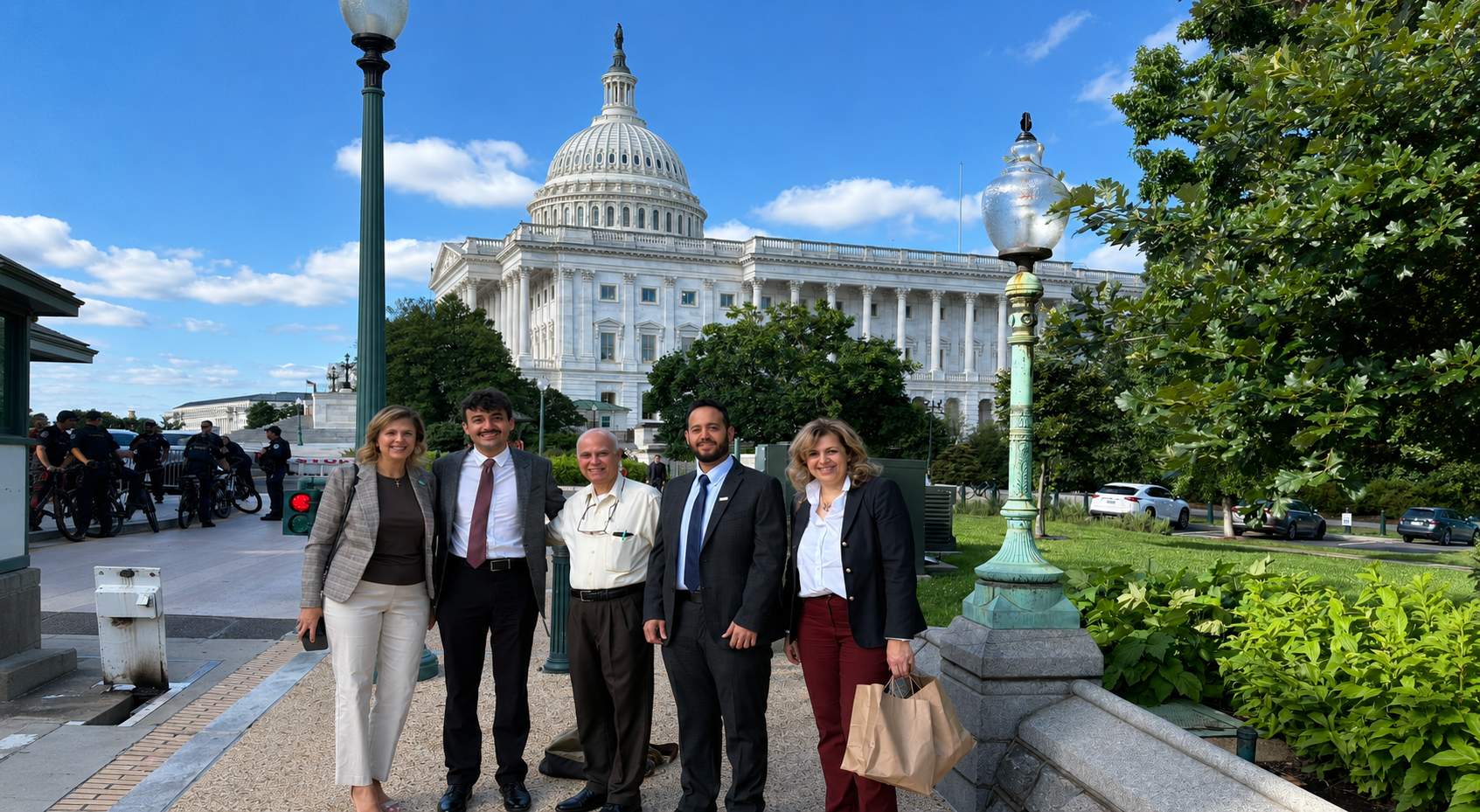
The conference concluded with a focus on action. On the morning of June 9, participants gathered on Capitol Hill for the official launch of CoptWatch, Coptic Solidarity’s new human rights documentation platform. Following the briefing, Coptic Solidarity staff, volunteers, and supporters conducted advocacy meetings with congressional offices, translating the conference’s discussions into practical engagement with policymakers and reinforcing support for religious freedom, equal citizenship, and accountability in Egypt.
Launching CoptWatch: Building the Evidence Base for Advocacy
Cannon House Office Building, Room 440
Lindsay Rodriguez introduced the briefing explaining that since Coptic Solidarity’s founding in 2010, the organization has documented countless incidents of discrimination, sectarian violence, and religious persecution. While these individual cases have informed reports and advocacy campaigns, the absence of a centralized documentation platform has made it difficult to identify long-term trends and patterns. CoptWatch was developed to address that need by transforming individual incidents into systematically verified evidence capable of supporting research, legislative engagement, and public awareness.
Video Remarks by MP Garnett Genuis
Canadian Member of Parliament Garnett Genuis, recorded a video for the event which congratulated Coptic Solidarity on the launch of CoptWatch and emphasized the importance of credible documentation in advancing human rights.
Genuis observed that documentation transforms individual experiences into evidence capable of informing policymakers, supporting advocacy campaigns, and promoting accountability. He noted that systematic documentation not only preserves the historical record but also strengthens efforts to recognize patterns of persecution and develop effective public policy responses.
Building a Sustainable Documentation Platform – Mark Basta, Public Affairs & Policy Advisor, Coptic Solidarity
Mark Basta, who led the development of CoptWatch, described the platform as far more than a database or online repository. Instead, he presented it as a long-term documentation infrastructure designed to collect, verify, preserve, and analyze evidence of anti-Coptic hostility in a consistent and transparent manner.
CoptWatch is not just a website or repository,” Basta explained. “It is an attempt to build documentation infrastructure that is sustainable—a consistent way to gather scattered evidence, verify it, preserve it, and make it usable for researchers, advocates, journalists, policymakers, and community members
Mark Basta
Basta explained that CoptWatch serves three interconnected purposes: to document, to analyze, and to support. By systematically recording incidents of discrimination and violence, the platform seeks to increase public awareness, strengthen policy engagement, and provide credible evidence that can support future advocacy efforts.
He outlined the three foundational components of the platform’s methodology: a conceptual framework defining what constitutes anti-Coptic hostility, a rigorous methodology for evaluating and verifying reported incidents, and a comprehensive coding system that ensures each documented case is recorded consistently. Together, these elements address one of the greatest challenges facing Coptic rights advocacy—the fragmentation and underreporting of violations affecting Copts across Egypt.
Basta also introduced the concepts of anti-Coptic hostility and Coptophobia, describing them as structural and societal patterns of discrimination, coercion, incitement, restrictions on freedom of religion or belief, and violence directed against individuals or institutions because of their actual or perceived Coptic identity. He explained that the database will eventually document incidents dating back to the 1970s, providing researchers and policymakers with an unprecedented historical record of anti-Coptic discrimination.
From Methodology to Practice – Astrid Castro & Larissa Lenkey
Coptic Solidarity interns Larissa Lenkey and Astrid Castro demonstrated how CoptWatch’s methodology is implemented in practice.
Lenkey explained that the project relies upon internationally recognized standards for digital and open-source investigations, including the Berkeley Protocol on Digital Open Source Investigations. She emphasized that every stage of documentation is guided by principles of impartiality, verification, privacy, and the commitment to “do no harm,” ensuring that victims are protected while maintaining the credibility of the database.
Castro demonstrated how incidents are translated into structured data through an event-based documentation model. She explained how each verified case is evaluated, categorized, and coded to capture both the circumstances of individual incidents and broader manifestations of anti-Coptic hostility. This systematic approach allows isolated reports to become part of a larger body of evidence capable of revealing long-term trends and informing future research.
Reflection Panel: Why Documentation Matters
Session Chair: Mark Basta
Panelists:
- Speaker: Dr. Kyle Wisdom Ph.D. – Deputy Director, International Institute for Religious Freedom
- Speaker: Dylan Schexnaydre – Policy Analyst, USCIRF
- Speaker: Grace Gerardi – Legislative Assistant, US Rep. Jim McGovern Co-Chair, Tom Lantos Human Rights Commission
The briefing concluded with a discussion examining the practical value of human rights documentation for legislative advocacy, public policy, and international religious freedom efforts.
Representing the U.S. Commission on International Religious Freedom (USCIRF), Dylan Schexnaydre praised CoptWatch as an important complement to existing documentation efforts, noting that comprehensive, verified data enables researchers, advocates, and policymakers to better understand patterns of religious persecution. He emphasized that credible documentation requires careful verification, corroboration through multiple sources, and transparency regarding methodology—qualities that he viewed as central strengths of CoptWatch.
Dr. Kyle Wisdom, Deputy Director of the International Institute for Religious Freedom, commended Coptic Solidarity for developing a rigorous methodology capable of supporting long-term advocacy. Reflecting on the relationship between data and personal testimony, he observed:
“We tell stories truly, but thoughtful, collected data, when presented fairly with integrity, can complement those stories.”
Kyle Wisdom, Ph.d.
He explained that reliable documentation enables organizations to move beyond anecdotal evidence by identifying patterns that can inform reports, legislative briefings, advocacy campaigns, and policy recommendations. Over time, he noted, systematically collected data becomes an increasingly valuable resource for understanding the scope and causes of religious persecution.
Representing the office of Congressman Jim McGovern, Grace Gerardi emphasized that credible documentation plays a critical role in congressional advocacy. She explained that lawmakers rely upon trusted organizations to provide verified information capable of informing legislation, oversight, and accountability efforts. As international human rights reporting has become increasingly limited in recent years, she observed that initiatives such as CoptWatch fill an important gap by providing reliable evidence while adhering to strong ethical standards that protect victims and avoid amplifying harmful or misleading information.
In closing the discussion, Mark Basta reflected on the panelists’ observations and reiterated that ethical, systematic documentation represents one of the most effective tools available for strengthening advocacy on behalf of Egypt’s Coptic community. The launch of CoptWatch, he concluded, marks the beginning of a long-term effort to ensure that anti-Coptic hostility is not only documented but also transformed into evidence capable of informing research, influencing policy, and advancing accountability.
Looking Forward
The launch of CoptWatch represented one of the most significant achievements of Coptic Solidarity’s 14th Annual Conference. Building upon more than fifteen years of advocacy, research, and documentation, the platform provides a sustainable foundation for future human rights reporting while strengthening the organization’s ability to support policymakers, researchers, journalists, and advocates with credible, evidence-based analysis.
As participants throughout the briefing observed, protecting religious freedom requires more than documenting individual stories—it requires preserving reliable evidence capable of revealing patterns, informing public policy, and promoting accountability. Through CoptWatch, Coptic Solidarity has taken an important step toward ensuring that the experiences of Egypt’s Coptic community are documented with the rigor necessary to advance lasting change.
Conference Outcomes
Strengthening Bipartisan Congressional Engagement
The conference featured participation from Members of Congress representing both political parties, reaffirming bipartisan support for religious freedom, equal citizenship, and accountability for human rights violations in Egypt. These engagements further strengthened Coptic Solidarity’s relationships on Capitol Hill and reinforced congressional awareness of issues affecting Egypt’s Coptic Christian community.
Advancing Evidence-Based Advocacy
The launch of CoptWatch marked a significant step forward in Coptic Solidarity’s advocacy by creating a sustainable platform for documenting and analyzing anti-Coptic hostility. The project will strengthen future research, legislative engagement, and public education through systematic, evidence-based documentation.
Building International Partnerships
The conference brought together policymakers, scholars, and advocates representing diverse religious communities from across the Middle East and North Africa. These discussions reinforced opportunities for continued collaboration in defending indigenous peoples, protecting religious heritage, and promoting freedom of religion or belief.
Elevating Emerging Leaders
The conference also highlighted the contributions of Coptic Solidarity’s internship program, whose participants played an important role in developing and presenting the CoptWatch platform. Their work demonstrated the organization’s commitment to cultivating the next generation of researchers and advocates.
Advancing the Mission
The 14th Annual Conference reaffirmed that achieving equal citizenship for Egypt’s Coptic Christians requires sustained advocacy, credible research, and strong partnerships. While important progress has been made, significant challenges remain in advancing religious freedom, protecting indigenous heritage, and promoting accountability for human rights violations.
Building on the momentum of the conference, Coptic Solidarity will continue working with policymakers, international partners, and civil society while expanding CoptWatch as a long-term resource for documentation, research, and advocacy. Together, these efforts will strengthen the pursuit of equal citizenship and freedom of religion or belief for Copts and other vulnerable religious communities throughout the Middle East.