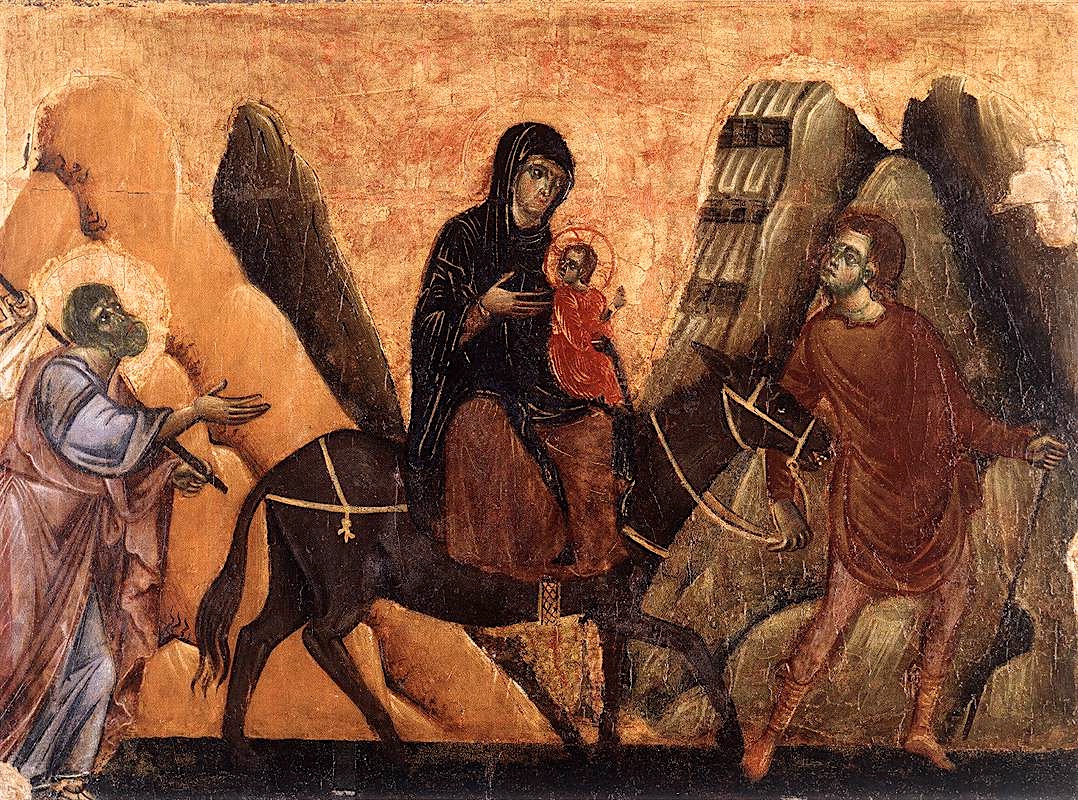

By Nader Shoukry – Watani –
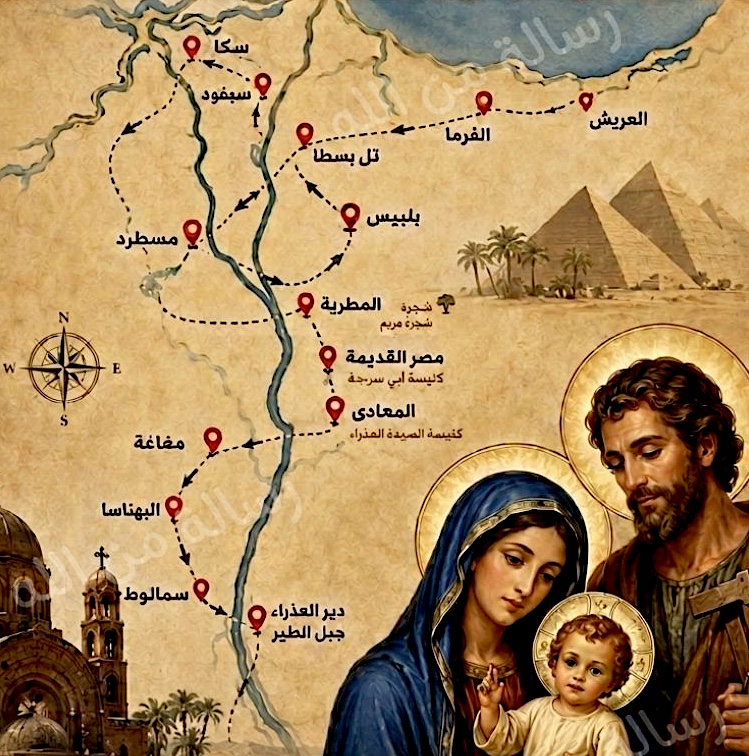
For years, the Egyptian state, in cooperation with the Coptic Church, has sought to transform the Holy Family Trail project into one of the world’s most important spiritual tourism initiatives. The project is not merely about archaeological sites, churches, or monasteries; it forms part of Egypt’s identity and carries a civilizational and spiritual message rooted in thousands of years of history.
It was therefore natural for the project to receive broad attention. The route includes 25 principal locations spread across more than 3,500 kilometers, covering eight governorates. It has long been viewed as a national project capable of attracting millions of tourists, supporting the Egyptian economy, and reinforcing Egypt’s image as the land that welcomed the Holy Family.
But, as often happens with successful or promising projects, parties have begun approaching the initiative not out of a desire to preserve or develop it, but rather to secure a share of the “cake.”
When Spiritual Tourism Becomes a Business Deal
This is where the real crisis emerges—revealed by the proposed law concerning the administration of the Holy Family Trail, which has sparked anger and concern among those closely involved with the project.
The first major question is this: how can a draft law directly concerning churches, monasteries, and sites affiliated with the Coptic Church be introduced without consulting the Church or discussing it with its representatives?
The Church is not a marginal party in this project; it is the very foundation upon which the entire trail is built. It is illogical for laws governing the administration of these sites to be discussed without the participation of those responsible for them and most familiar with their spiritual nature and particular sensitivities.
How, then, could the draft pass from the Speaker of Parliament to the Tourism Committee without the Church even being informed?
The problem does not stop at excluding the Church. It extends to the substance of the bill itself, whose provisions reveal a distinctly commercial and investment-oriented approach rather than a genuine effort to preserve religious and spiritual heritage.
According to Article 3 of the proposed law, the authority overseeing the project would derive its resources from state allocations, revenues generated through investment in lands and facilities under its control, entrance fees and service charges collected at the Trail’s locations, as well as grants, donations, and subsidies. The law also opens the door to the establishment of joint-stock companies and investment projects.
This naturally raises a critical question: is the objective truly to promote spiritual tourism, or to create a new economic entity that controls the project’s lands and revenues?
Even more alarming are provisions that could allow control over lands and facilities connected to church sites. Article 6 states that ownership or authority over non-archaeological tourist lands and facilities located within the Trail’s areas may be transferred from the governorates to the new authority by decision of the Prime Minister. This provision is linked to Article 4, which classifies the authority’s assets as public funds and grants it powers of administrative seizure under Law No. 308 of 1955.
The proposed transfer of authority over lands and tourist facilities within the Trail’s scope raises serious concerns, particularly because many of these lands are directly connected to churches, monasteries, or Coptic communities.
This creates legitimate fears that sacred places could gradually be transformed into investment zones governed primarily by calculations of profit and loss, potentially undermining the spiritual atmosphere and quiet character of these sites.
Behind the Language of “Development” and Investment
The proposal to impose entrance fees on churches and monasteries also raises highly sensitive concerns. These sites are not museums or entertainment venues, but active places of worship where prayers and religious rites are conducted daily. Some serve local congregations that regularly attend them. Turning such places into ticketed destinations risks provoking both social and ecclesiastical tensions while distorting the project’s original purpose.
Another troubling aspect is the proposed authority’s ability to establish joint-stock companies or enter into partnerships with investors. One of the law’s provisions authorizes the authority to establish companies independently or in partnership with others, or to participate in existing companies.
Past experiences with major projects make this provision particularly concerning, especially amid fears that cliques and networks of interests may emerge seeking to monopolize the project or redirect it toward private interests rather than the public good.
These are only some examples of the bill’s provisions, not an exhaustive list. The fact that such legislation could be drafted while ignoring the Church—or while claiming the Church’s approval, or merely planning to consult it afterward—reveals the seriousness of what lies between the lines. The concern is that the Holy Family Trail could be transformed from a national and ecclesiastical project into a business enterprise serving private interests.
Protecting the Sacred from Commercialization
In reality, the Holy Family Trail project does not need additional authorities, councils, or committees as much as it needs practical implementation on the ground, genuine coordination between the state and the Church, and respect for the sacred nature of these sites.
The state has already taken important steps in developing infrastructure and restoring several locations along the route, while the Church itself has borne a significant share of restoration and development efforts through its own resources. What is needed now is to continue this cooperation in a spirit of partnership, not domination or appropriation.
A project of this scale cannot succeed through laws drafted behind closed doors or through attempts to control lands, donations, and revenues. Success requires a genuine national vision that respects the sanctity of the sites and places Egypt’s interests above narrow personal or economic considerations.
Tourists who come to visit the Holy Family Trail will not only visit churches. They will also visit the Egyptian Museum, the pyramids, temples, and numerous other tourist destinations. This means the success of the project would benefit Egypt’s economy and tourism sector as a whole.
For these reasons, preserving the spiritual character and historical identity of the Trail is not merely a Church demand; it is a national necessity aimed at protecting one of Egypt’s most important religious and tourism projects.
Ultimately, the central question remains: do we truly want a project that serves Egypt and preserves the sanctity of the Holy Family Trail? Or are we witnessing yet another attempt to turn one of the country’s holiest files into a new source of profit under the banner of “development” and “investment”?
Anger Over Ambiguities in Ownership and Administrative Provisions
Coptic circles are witnessing growing anger and concern following the circulation of details regarding the proposed Holy Family Trail law, amid fears that some of its provisions could reduce the Church’s role in managing the historical and religious sites associated with the route.
Among those commenting on the issue is legal counselor Hany Ramsis—a lawyer before Egypt’s Court of Cassation and Supreme Administrative Court and a specialist in Coptic affairs—who stated that the current wording of the draft law grants the proposed authority broad and unclear powers regarding lands, administration, and financial resources, without clearly defining the limits of its jurisdiction or the nature of its relationship with the Church, which officially exercises the administrative, historical, and spiritual authority over the ecclesiastical sites.
Ramses added that the Holy Family Trail bill, in its current form, raises a number of legal and administrative questions concerning the Church’s role and the scope of authority of the body proposed to manage the project.
He stressed that the core concern is not the creation of an independent authority affiliated with the Prime Minister’s office, but rather the fact that the proposed legislation, throughout its provisions, effectively ignores the Church, despite its primary jurisdiction over these religious sites and places of worship.
The churches and monasteries associated with the Holy Family Trail are not abandoned sites whose heritage is merely being revived, nor museums being established anew. They are living places of worship that have remained active since their establishment during the era of Queen Helena, mother of Emperor Constantine, and continue to fulfill their spiritual and religious role to this day.
Ramses raised several questions concerning the provisions of the draft law.
Referring to Article 6—which states that authority over non-archaeological tourist lands and facilities located within the Trail’s designated areas may be transferred from the governorates to the proposed authority by decision of the Prime Minister—he asked:
- What exactly constitutes the lands surrounding the sacred sites?
- What are the limits of the archaeological buildings?
- What about the remaining areas of church or monastery properties?
- Could the authority’s jurisdiction extend to existing Church-owned properties?
- What guarantees exist to prevent overlapping jurisdictions or overly broad future interpretations of these provisions?
Ramses further noted that one of the most troubling aspects of the proposed legislation is that the Church—which constitutes the historical, spiritual, and institutional foundation of the entire project—appears only as a single representative within a very large administrative structure, rather than as a genuine partner in decision-making within the governing board.
He emphasized that the issue is not a conflict between the state and the Church, but rather the need to reach a balanced framework that safeguards the state’s right to develop, organize, and manage the Holy Family Trail project, while also preserving the historical, administrative, and financial rights of the churches connected to these sacred sites for thousands of years.
Any successful national project, he argued, must be based on a clear partnership of responsibilities between the principal custodians of the sites—the Coptic Orthodox Church—and other partners capable of contributing additional expertise.
Ramses also raised what he described as the central question: is there truly a need for an entirely new law regulating the Holy Family Trail, and what practical value would it add on the ground?
He noted that there are already state institutions carrying out their respective functions, including the Ministry of Tourism, the Tourism Promotion Authority, the Ministry of Local Development, the executive bodies of the governorates, the Ministry of Planning, and the Ministry of Interior, which plays a key role in organizing and securing the Trail’s locations.
There are also existing legally protected ownership structures, some belonging to the Church and others privately owned by citizens. The state already possesses sufficient legal powers and administrative tools to balance the interests of all parties without creating new entities likely to generate administrative disputes or overlapping jurisdictions.
From this perspective, Ramses argued that an important question must now be asked: is the true objective merely organizational, or are we witnessing an attempt to restructure the administration of this file in a way that could create more crises than solutions?
The real success of any national project, he concluded, does not lie in expanding bureaucratic structures and powers, but in building genuine consensus that respects both the Church and state institutions—including ministries, the private sector, and civil society—while preserving the Church’s constitutional rights and preventing any perception that those rights are being bypassed.
He pointed in this regard to Article 3 of the Egyptian Constitution, which states:
“The principles of the laws of Egyptian Christians and Jews are the principal source of legislation governing their personal status affairs, religious affairs, and the selection of their spiritual leaders.”
_______________________________
Translated from:
https://www.wataninet.com/2026/05/%D9%85
https://www.wataninet.com/2026/05/غضب-قبطي-من-مشروع-قانون-مسار-العائلة-