
By Coptic Solidarity –
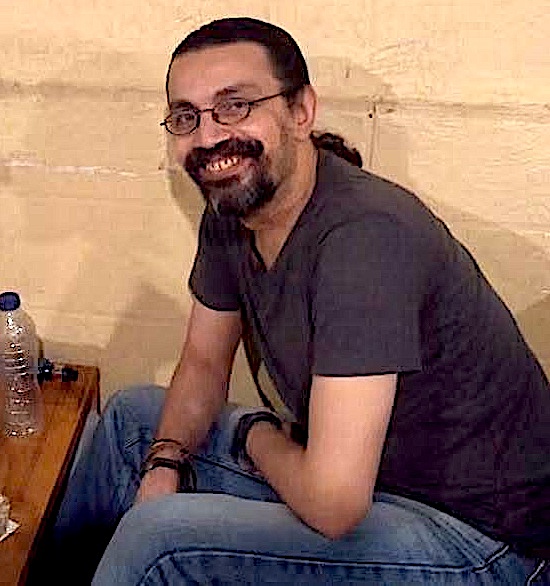
Egyptian writer and social commentator Bassem Al-Janoubie has been missing since Sunday, August 16. No Egyptian authority has publicly acknowledged detaining him, and neither his whereabouts nor the legal basis for any possible detention has been disclosed. His family has made no public statement.
Some longtime friends have nevertheless expressed concern about his situation, particularly given his chronic heart condition. They indicated that further public comment was being withheld pending the outcome of “efforts currently under way, in the hope that things will end well.” Such carefully worded comments provide no details about those efforts or with whom they are being made, but suggest that people close to Al-Janoubie may know more about his situation than they are presently prepared to disclose.
Criticism of the Government’s Handling of Damietta
Against that background, attention has turned to a series of unusually sharp Facebook posts Al-Janoubie published shortly before his disappearance concerning the recent Damietta Port incident and, more specifically, the government’s handling of information about it.
Al-Janoubie’s posts combined his own analysis of the drone reportedly involved with unusually direct criticism of official secrecy surrounding the incident. He accused Egypt’s security and military establishment of operating according to a “doctrine of secrecy and non-disclosure” and repeatedly demanded publication of the results of the official investigation. His own provisional analysis questioned where the drone had come from and how it had reached Damietta, while explicitly acknowledging that definitive answers depended on information held by the Egyptian authorities.
In another post, Al-Janoubie attacked the government’s response to media coverage of the incident and accused officials of attempting to control discussion rather than provide information. He criticized the Ministry of Foreign Affairs for treating an incident involving an international port, foreign vessels and international commercial interests as a purely Egyptian matter. Foreign media, he argued, should be answered with information rather than attempts to silence reporting.
He went further in attacking the broader practice of prosecuting speech as “false news,” describing imprisonment in response to public questioning as an authoritarian practice. In unusually blunt language, he accused the government of using the security apparatus as an instrument of “punishment, repression, and intellectual and informational terror.”
When some commenters subsequently suggested that he delete his earlier post after the government confirmed that a drone had been involved, Al-Janoubie refused. Instead, he argued that the official disclosure raised further questions requiring answers from the military: how had the drone reached the area, who was responsible, and what did the incident say about the effectiveness of Egyptian defenses?
Al-Janoubie disappeared shortly afterward.
Neither Opposition Activist nor Coptic Advocate
Al-Janoubie was not generally known as an opposition or anti-government activist. A writer, researcher and cultural commentator, he has addressed a broad range of social, political and religious subjects rather than engaging in sustained opposition activity.
A Copt himself—his full name is Bassem Wahba Makary Riskalla—Al-Janoubie has also frequently been an outspoken critic of aspects of the Coptic Church and its leadership. Earlier reporting identified him as a liberal Coptic voice involved in debates over Church traditions and reform. He therefore fits neither the profile of a conventional political opposition activist nor that of a Coptic advocacy figure.
That background makes the sequence of events all the more striking: a writer not known for sustained anti-government activism published unusually sharp criticism of the authorities over a sensitive security incident and disappeared shortly afterward. Whether the two events are connected remains unknown.
What should not remain unknown is where Bassem Al-Janoubie is. If he has been detained, Egyptian authorities should disclose the place and legal basis of his detention, permit access to his family and lawyers, and identify any charges against him. If he is not in state custody, the authorities should clarify what is known about his disappearance and take steps to establish his whereabouts.
Update: Lawyers Confirm Circumstances of Al-Janoubie’s Disappearance
A statement subsequently issued by the law office of Said Fayez, Al-Janoubie’s legal counsel and acting with his family’s authorization, provided further details about his disappearance. According to the statement, all contact with Al-Janoubie abruptly ceased between approximately 10 and 11 p.m. on Sunday, August 16, when his mobile phone was switched off. After 24 hours without contact, his family and friends initially feared that he might have suffered a medical emergency.
His lawyers then went with his family to his apartment in Haram, Giza. They found no signs of disturbance and said its contents appeared normal. Al-Janoubie was not there, however, and his computer was missing. His other personal belongings remained near the apartment door, with the exception of his mobile phone, vape and wristwatch. The lawyers subsequently checked with Health Ministry authorities but found no record that he had been admitted to a hospital.
On August 18, the lawyers formally wrote to the President of the Republic, the Prosecutor General and the Minister of Interior, reporting Al-Janoubie’s disappearance and asking the authorities to establish his whereabouts and safety. As of the statement’s publication, the law office said it had received no official or confirmed information that he had been arrested or detained by any authority, and its inquiries had uncovered no record of a police report filed against him.
The lawyers asked that, if Al-Janoubie is being held by an official body, his family and counsel be informed of his whereabouts and legal status and that he be afforded access to a lawyer and the legal guarantees applicable to detention and investigation. The statement emphasized that the law office was not accusing any particular authority, but was seeking to locate its client, establish his safety and determine his legal status.
Update-2: Interior Ministry Acknowledges Arrest—But Leaves Five-Day Disappearance Unexplained
At noon Cairo time on August 21, Egypt’s Ministry of Interior Interior acknowledged that Bassem Al-Janoubie had been arrested, ending days during which his family, friends and lawyers had been unable to establish his whereabouts.
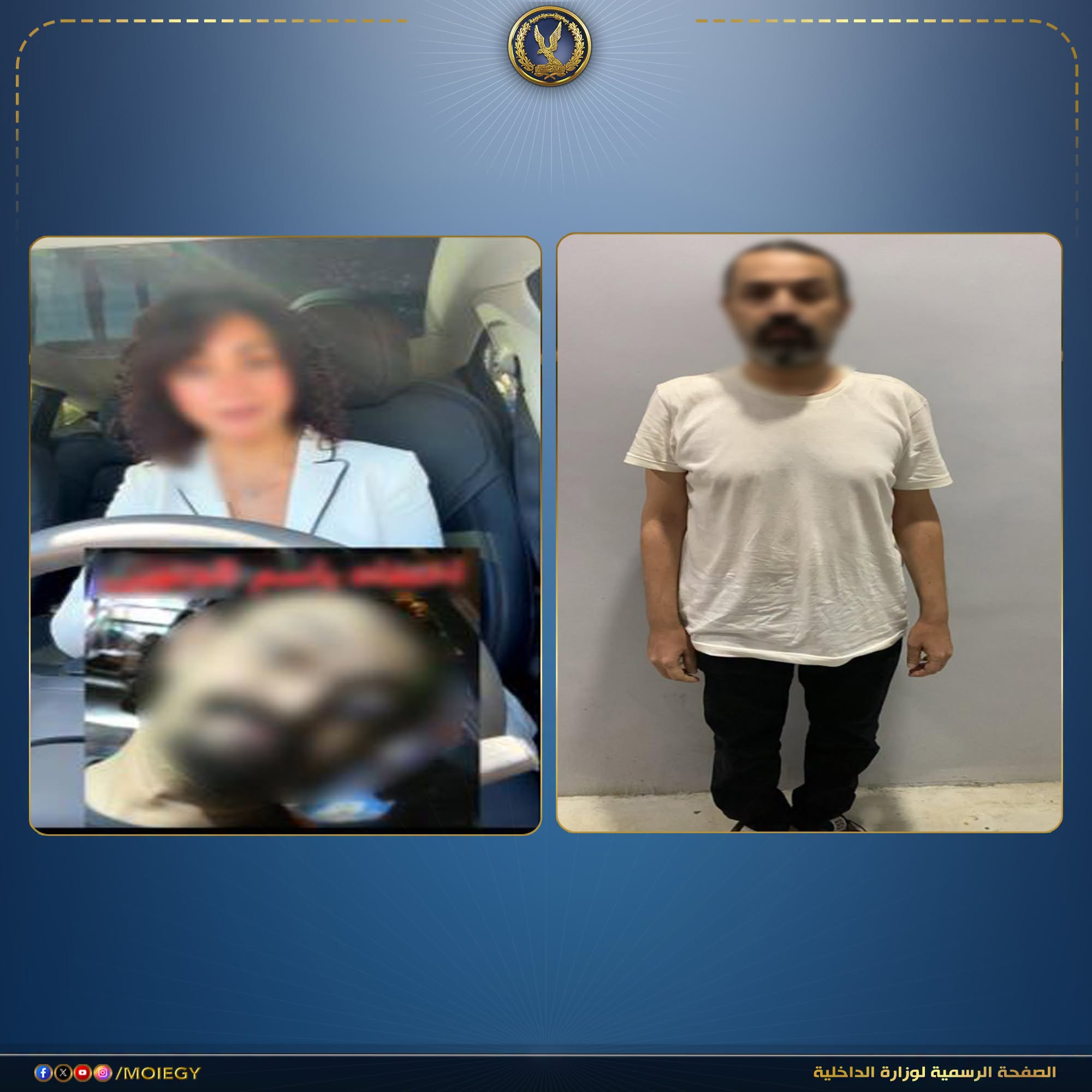
In a statement issued in response to a video circulating on social media alleging that security forces had arrested a man “without legal justification,” the Ministry denied that account. It said that a lawyer acting on behalf of an unnamed bishop in Minya Governorate had filed a complaint accusing Al-Janoubie of defaming the bishop through two social-media pages he administered.
The only traceable such complaint (by Bishop Aghathon) was filed two years ago..
According to the Ministry, Al-Janoubie—whom it did not name, identifying him only as the administrator of the two pages and a resident of the Haram Police District in Giza, although his photograph accompanied the statement—was subsequently arrested and, when confronted, “admitted committing the incident as described.” The statement added that legal procedures had been taken and that he was “being presented to the Public Prosecution.”
The statement, however, leaves unanswered the most troubling aspect of the case. Al-Janoubie had been unreachable since approximately 10–11 p.m. on August 16.
The Interior Ministry statement does not say when Al-Janoubie was arrested, where he has been held, what happened to him between his disappearance on August 16 and his acknowledged detention, why his family and lawyers were not informed of his whereabouts, or why their attempts to locate him produced no information. Nor does it explain why, five days after he disappeared, he was only then being presented to the Public Prosecution.
Those omissions are particularly striking given the offense the Ministry itself says prompted his arrest: a complaint by a bishop alleging “defamation on social media.” Such allegations do not, under normal Egyptian legal procedure or established practice, inherently require the immediate arrest and detention of the accused. Still less do they explain holding him for several days without his family or lawyers being informed of his whereabouts or able to contact him. Whatever the merits of the bishop’s complaint, nothing disclosed by the Ministry explains why Al-Janoubie could not simply have been summoned for questioning, or why an essentially nonviolent complaint concerning social-media speech resulted in his disappearance from all contact.
The Ministry’s acknowledgment answers one question: Bassem Al-Janoubie is in state custody. But it creates another, potentially more serious one: how could a man allegedly wanted over an ordinary complaint of insult and defamation be taken into custody and effectively disappear for five days, completely cut off from his family and lawyers, before the authorities acknowledged holding him and announced that he was being presented to prosecutors?