
By Coptic Solidarity –
For Immediate Release
(Washington, D.C.) March 23, 2026 – Standard Newswire
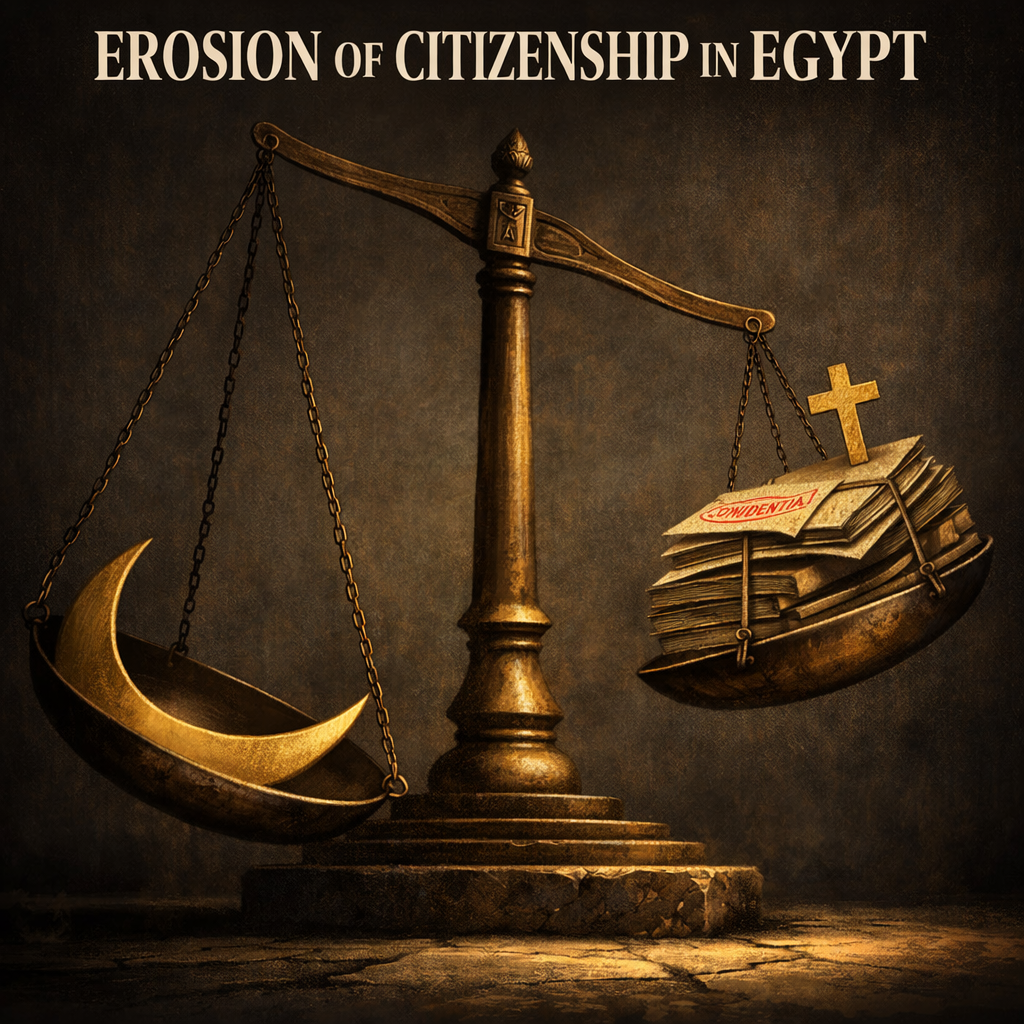
A new report released by Coptic Solidarity, Erosion of Citizenship in Egypt: State-Managed Religious Governance and Institutional Islamization under President Abdel-Fattah el-Sisi, documents a significant transformation in the relationship between religion and the state in Egypt—raising serious concerns about equal citizenship, religious freedom, and long-term social cohesion.

The report finds that, over the past decade, Egyptian authorities have moved beyond the symbolic use of religion in politics toward a more structured integration of Sunni Islamic institutions into the machinery of governance. Institutions such as Al-Azhar, the Ministry of Awqaf, and Dar al-Ifta have expanded their role across sectors including education, public administration, and public policy, contributing to what the report describes as a system of “state-managed religious governance.”
While Egypt’s Constitution formally guarantees equality before the law and freedom of belief, the report highlights a widening gap between these principles and institutional realities. Legal provisions, including the designation in the Constitution of Islamic law as the principal source of legislation, along with administrative practices, increasingly embed religious identity within governance structures, shaping access to rights and public participation. Among the key issues identified are the continued enforcement of blasphemy laws, restrictions on religious conversion—particularly for those seeking to leave Islam—and regulatory constraints affecting Christian churches and historic institutions.

The report also examines the growing role of religious education, including the expansion of the Al-Azhar system and the integration of religious narratives into public-school curricula. At the same time, Islamic norms are becoming more visible in public life, reinforced by state media, official discourse, and everyday administrative practices.
A particularly notable case highlighted in the report concerns the historic Monastery of Saint Catherine in Sinai, where recent legal and administrative actions have raised concerns about the preservation of long-recognized property rights and institutional autonomy.
“The developments documented in this report point to a broader structural shift,” said Coptic Solidarity. “Religious identity is no longer treated as a private matter but increasingly functions as a governing category, shaping both legal outcomes and social expectations.”
The report concludes that Egypt is moving toward what can be described as a form of state-managed quasi-theocracy, in which religious authority remains formally subordinate to the state but is deeply embedded within its institutions. This dynamic, it argues, risks entrenching structural inequalities and narrowing the space for pluralism.
Coptic Solidarity calls on policymakers, international partners, and human-rights organizations to assess Egypt’s trajectory not only through official narratives of moderation and coexistence, but also through the legal and administrative practices that shape everyday realities on the ground.