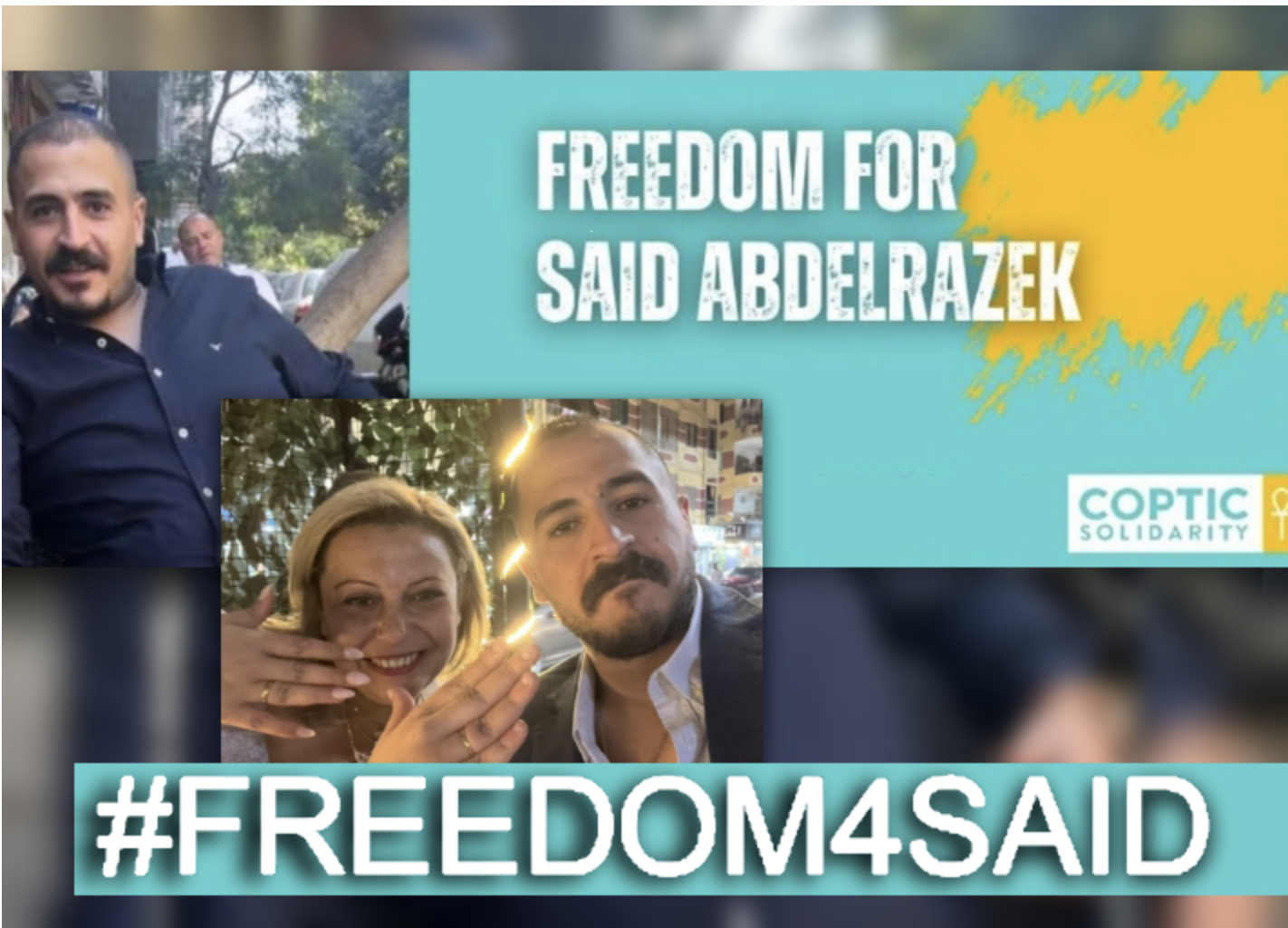

More than 35,000 people worldwide have signed Coptic Solidarity’s petition calling for the immediate release of Said Abdelrazek, an Egyptian Christian convert being prosecuted before Egypt’s First Criminal Terrorism Circuit Court. The campaign is the largest public advocacy effort in the organization’s history and reflects growing international concern over Egypt’s criminalization of religious conversion.
“This unprecedented global response shows the world is watching,” said Caroline Doss, President of Coptic Solidarity. Egypt must stop treating peaceful religious conversion as a national security crime and release Said Abdelrazek.”
Abdelrazek appeared before the court on June 15, 2026, in Case No. 5664 of 2025. The hearing was expected to include testimony from prosecution witnesses and the examination of a forensic expert. Instead, neither appeared, and the court postponed the proceedings until September 6, 2026, extending his detention yet again.
Since his arrest in 2025, Abdelrazek has endured multiple detention renewal hearings and two trial hearings, both ending in postponements. This revolving cycle of delayed proceedings has become a common practice in politically sensitive cases, allowing authorities to prolong detention indefinitely.
The charges against Abdelrazek—including joining and financing a terrorist organization, promoting ideas allegedly harmful to national unity, and contempt of Islam—stem directly from his peaceful conversion to Christianity. By trying him before a specialized terrorism court, Egyptian authorities have transformed a matter of personal conscience into an alleged national security offense. Prosecutors are reportedly seeking the maximum penalty, which could include life imprisonment or the death penalty.
The case is compounded by serious humanitarian concerns. Abdelrazek has been permitted to meet with his attorney only once in prison and briefly during a court hearing. Requests for additional legal visits have been repeatedly denied.
He has also been denied urgently needed medical treatment despite reporting severe back and urinary pain and suffering from a suspected heart condition that, according to his fiancée, causes him to lose consciousness. Prison authorities have additionally refused deliveries of food, medicine, clothing, and even blankets during the winter, leaving him without basic necessities.
Abdelrazek’s prosecution underscores the widening gap between Egypt’s constitutional guarantees, its international messaging, and the reality faced by religious minorities and converts. Although Egypt’s Constitution declares that “freedom of belief is absolute,” Said’s prosecution before a terrorism court—and the denial of his medical care, legal access, and basic necessities—stands in direct contradiction to those claims.
Coptic Solidarity urges policymakers to evaluate Egypt’s religious freedom record based not on official statements or lobbying campaigns, but on documented evidence and the lived experiences of victims such as Said Abdelrazek. The organization’s recent report, Erosion of Citizenship in Egypt: State-Managed Religious Governance and Institutional Islamization under President Abdel-Fattah el-Sisi, details how state policies continue to erode freedom of religion and equal citizenship despite official claims to the contrary.
Coptic Solidarity calls on the Australian government to approve Abdelrazek’s asylum application so he can reunite with his fiancée in Australia. The organization also urges the United States, democratic governments, and international human rights institutions to publicly press Egypt to:
- Secure Abdelrazek’s immediate access to independent medical care;
- Guarantee regular and confidential access to legal counsel;
- Ensure access to food, medicine, clothing, and other basic necessities;
- End the misuse of terrorism laws to prosecute peaceful religious conversion; and
- Release Said Abdelrazek immediately and unconditionally.