
By Al-Ahram-
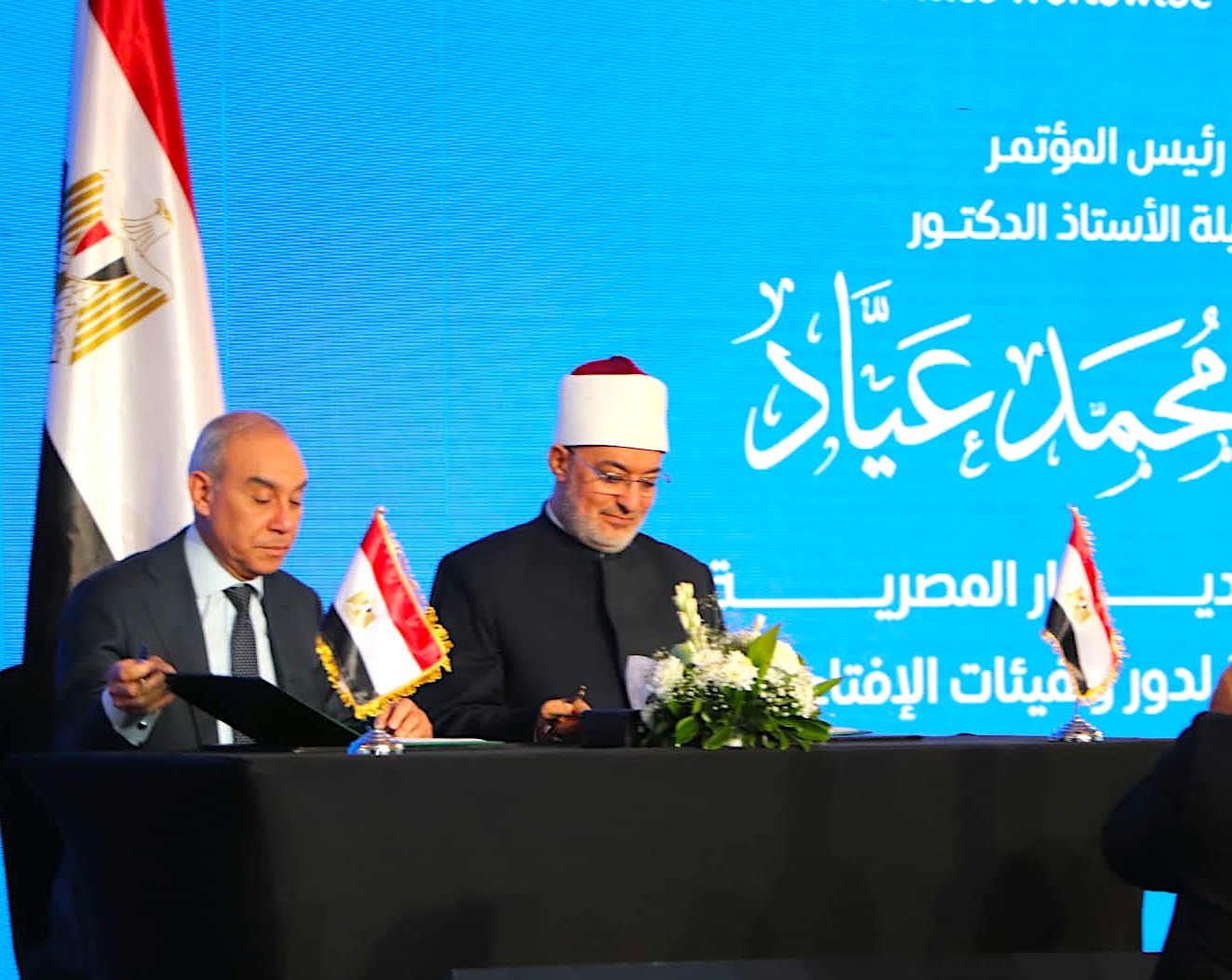
Egypt’s State Information Service (SIS) and Dar al-Ifta signed a joint cooperation protocol at the conclusion of the 11th International Conference of Fatwa Institutions Worldwide, held in Cairo on September 2–3 under the patronage of President Abdel Fattah el-Sisi.
The protocol aims to unify national efforts in the fields of media and public awareness, affirm the role of developmental and community media in building enlightened awareness, and promote the dissemination of rational religious discourse, thereby contributing to protecting family cohesion and safeguarding national identity.
Religious and Media Institutions
Dr. Nazir Ayyad, Grand Mufti of Egypt and President of the General Secretariat for Fatwa Authorities Worldwide, said that the signing of the protocol reflects Dar al-Ifta’s belief in the importance of integration between religious and media institutions in confronting current intellectual and societal challenges.
The Grand Mufti added that cooperation with the State Information Service is intended to provide enlightened public-awareness discourse that combines grounding in Islamic Sharia with an accurate understanding of reality, stressing that the media represents an essential partner in protecting the family, spreading proper awareness, and consolidating the values of moderation and social cohesion.
Dr. Ayyad noted that the protocol opens new avenues for producing public-awareness content addressing family and religious issues in clear and accessible language. It would contribute to countering rumors and extremist ideas, while supporting preventive efforts aimed at reducing the causes of family breakdown and safeguarding national identity.
The Correct “Understanding” of Religion
Ambassador Alaa Youssef, Chairman of the State Information Service, said that the protocol forms part of the SIS’s efforts to strengthen cooperation with Egypt’s Dar al-Ifta, thereby contributing to building public awareness of the correct understanding of religion (*), both domestically and abroad.
He added that, through its media tools and centers throughout Egypt’s governorates, as well as its continuous contacts with correspondents and foreign media outlets, the SIS would support the public-awareness messages produced by Dar al-Ifta and make specialized media content available in multiple foreign languages. The objective, he said, is to correct misconceptions, disseminate the values of moderation, and increase awareness of issues affecting the family and society.
Ambassador Youssef explained that the cooperation is intended to bring rational religious discourse to the widest possible audience and explain the efforts of the Egyptian state and its religious institutions to confront extremist ideas and misconceptions, thereby presenting what he described as “the correct image of Islam and its principlesbased on mercy, tolerance and respect for human beings.”
The protocol includes organizing joint seminars and events, preparing media and public-awareness programs and campaigns, and producing media materials highlighting issues affecting society as well as challenges associated with technological developments.
_______________
https://gate.ahram.org.eg/News/5920575.aspx
(*) The term (صحيح الدين) literally carries more ideological weight than the smoother “correct understanding of religion.” It effectively assumes that the state religious institution can determine what constitutes “correct” religion. That is particularly relevant here, because the agreement is precisely about Dar al-Ifta supplying the religious message and the State Information Service disseminating it through its domestic network and to foreign media.