
By KontraNews (*) –
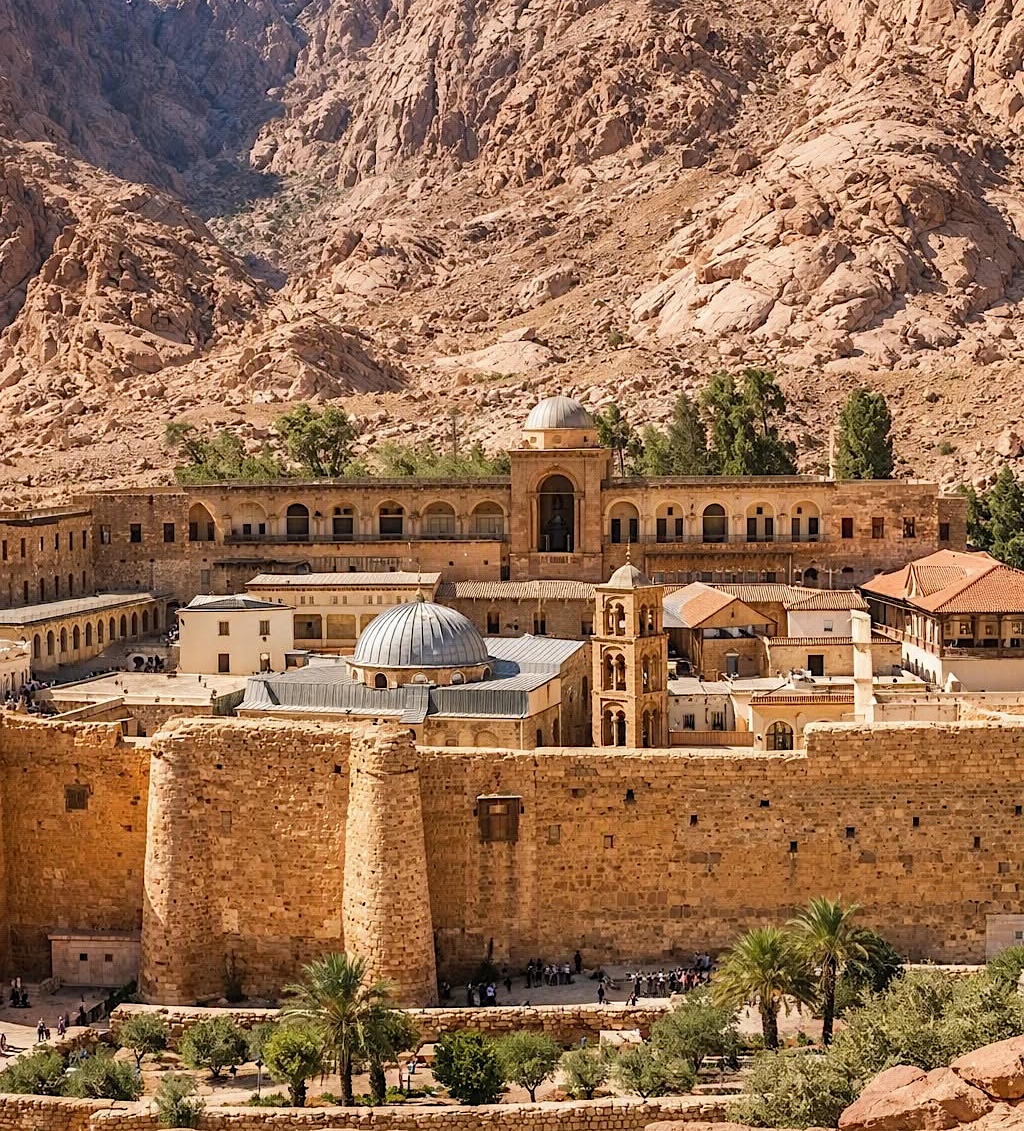
There is intense activity surrounding the Sinai Monastery and the fate of its properties, which are being claimed by the Egyptian state. Michael Rigas, the Greek-American U.S. Deputy Secretary of State, is already on his way to St. Catherine’s Monastery in the Sinai Peninsula in order to express U.S. support for the Monastery.
His visit was preceded by feverish consultations involving Cairo, Brussels and Washington, against the backdrop of the postponement of the judicial decision pending before Egypt’s Court of Cassation concerning ownership of the properties, whose history goes back to the sixth century AD.
Within Greece’s main opposition, the issue is regarded as one of major importance and as indicating the course Greek diplomacy should follow if Greece is to avoid finding itself, once again, confronted with unpleasant surprises.
PASOK (Panhellenic Socialist Movement) MEP Professor Nikolas Farantouris recently stressed that the critical issue is not simply for the monastic community to be granted use of the Monastery. What must be fully protected, he argued, is its ownership, founded upon an uninterrupted history of 1,600 years. Greece, he said, has an obligation to act decisively and neither compromise nor exert pressure in favor of a solution that would result in the permanent loss of ownership of the Monastery’s property.
At the same time, PASOK officials recall the written question submitted to the European Commission by four of the party’s MEPs. In it, they call for European intervention and express concern over Egypt’s failure to recognize the Monastery’s legal personality; the Egyptian authorities’ continuing refusal to grant state recognition to the elected Archbishop; the resulting inability of the Monastery to secure effective legal representation; and the need to protect its historic property status.
In any event, the postponement of the court decision may have been interpreted in Athens as a sign of greater flexibility on the Egyptian side, while Rigas’s arrival in the region is regarded as strengthening the Monastery’s position and objectives.
Nevertheless, many observers believe that the most likely outcome remains that Egypt will acquire, through the eventual court ruling, rights of “bare ownership” over the Monastery’s assets.
______________
(*) Summary translation from: