
By Dr. Wahid Hasaballah –
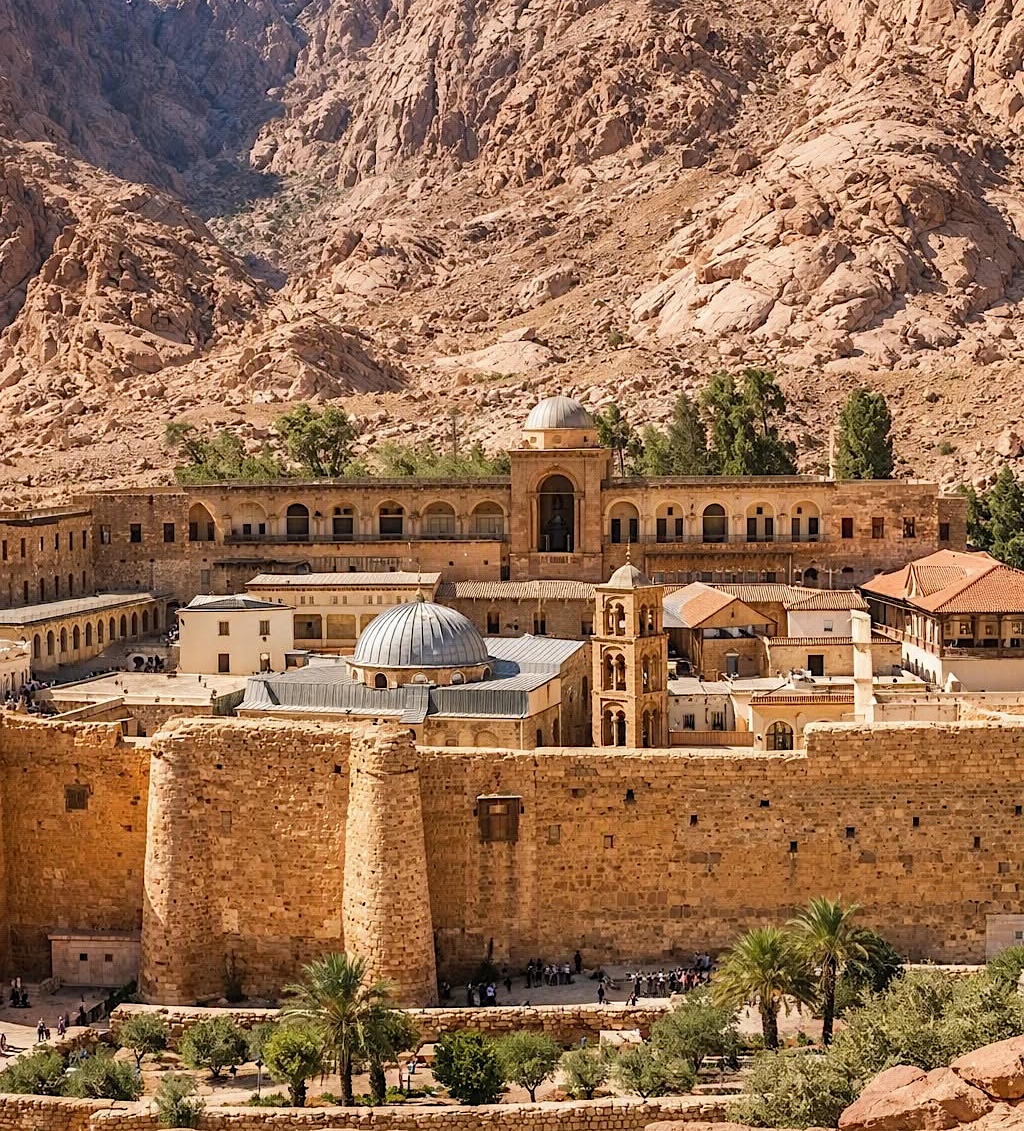
The tragedy of St. Catherine’s Monastery—and the silence of world public opinion in the face of attempts to destroy this great spiritual monument, which has stood for seventeen centuries—lies in the Egyptian state’s plans, backed by extremist investors seeking to erase the character of the Monastery by constructing hotels and investment developments on its lands.
I would like here to highlight the gravity of what is happening while awaiting the Egyptian judiciary’s decision following the postponement of the latest session. We know, of course, that the “lofty Islamic Egyptian judiciary” will rule that the land belongs to the state, since the state is the natural heir to the Arab-Islamic occupation dating from the seventh century.
Legal Memorandum on Protecting the Historic Lands Surrounding St. Catherine’s Monastery and Preventing Their Commercial Exploitation
I. Introduction
This memorandum seeks to clarify the legal, environmental and heritage status of the lands surrounding St. Catherine’s Monastery and to explain the risks arising from attempts by certain investors to exploit these lands for tourism or urban development. Such projects would threaten the spiritual and environmental character of the site and violate national and international laws governing the protection of world heritage.
II. Legal Status of the Lands Surrounding the Monastery
1. World Heritage Site
St. Catherine’s Monastery has been inscribed on UNESCO’s World Heritage List since 2002 under the 1972 Convention concerning the Protection of the World Cultural and Natural Heritage.
According to the memorandum, this designation encompasses not only the Monastery building itself, but also:
- the surrounding landscape;
- the spiritual environment;
- its ascetic character; and
- “tranquility and silence” as components of the site’s Outstanding Universal Value.
Consequently, any alteration of the lands surrounding the Monastery constitutes an alteration of the character of the heritage site and is prohibited under international law.
2. Archaeological Status under Egyptian Law
The St. Catherine area is subject to Egypt’s Antiquities Protection Law No. 117 of 1983, as amended. The law prohibits the construction of facilities within or adjacent to archaeological sites without the approval of the Supreme Council of Antiquities. It also prohibits alterations to the nature or use of land where these would harm an archaeological site, and treats encroachment upon the environment surrounding an archaeological site as a punishable offense.
Since the lands surrounding the Monastery fall within a protected archaeological zone, allocating them for tourism investment would constitute a direct violation of Egyptian law.
3. The Monastery’s Historic Possession
St. Catherine’s Monastery has historically possessed the surrounding lands since the fourth century AD. This possession is documented through:
- Byzantine decrees;
- the Prophet’s Covenant (Ashtiname);
- Ottoman documents;
- Church records;
- historical maps; and
- continuous, uninterrupted physical possession.
Although these documents may not constitute modern civil title deeds, the memorandum argues that they establish historic possession entitled to special protection under international heritage law.
III. Legal, Environmental and Spiritual Risks of Investment Projects
1. Damage to the Site’s Spiritual Character
Tranquility and silence are not secondary features of the Monastery but form part of its identity and are essential to monastic life. Intensive tourism would destroy its ascetic environment, distort its spiritual character, transform the Monastery into a commercial zone, and undermine the Outstanding Universal Value on which its UNESCO inscription was based.
2. Damage to the Natural Environment
St. Catherine is a unique nature reserve. Construction and urban expansion would damage its ecosystem and historic mountains, threaten wildlife, and alter its internationally protected landscape.
3. Violation of the 1972 UNESCO Convention
Under the Convention, Egypt is required to protect the site, prevent activities that alter its character, and inform UNESCO of projects that could affect it.
Failure to meet these obligations could, according to the memorandum, expose Egypt to international accountability, result in the site being placed on the List of World Heritage in Danger, or ultimately lead to the loss of its World Heritage status.
4. Exploiting Legal Loopholes Against a Historic Religious Institution
Attempts by investors to take control of these lands through investment legislation would, the memorandum argues, constitute an abuse of law, disregard for the archaeological character of the site, an encroachment upon a seventeen-century-old religious institution, and a threat to the spiritual peace of the area.
IV. Legal Grounds for Rejecting Investment Projects
The memorandum identifies five principal grounds:
- Egyptian Antiquities Protection Law, which prohibits construction or changes in land use within archaeological or protected zones.
- The World Heritage Convention, which requires the state to protect the site’s natural and spiritual landscape.
- Egyptian environmental law, which prohibits construction that alters the character of nature reserves.
- The principle of historic possession, which gives the Monastery a moral right to protect its surrounding lands.
- The principle of preventing harm to the spiritual and cultural public interest, since the Monastery is not merely a private institution but part of humanity’s world heritage.
V. Legitimate Legal Demands
On these grounds, the Monastery has the right to demand:
- an end to any allocation of surrounding lands for investment;
- reclassification of the surrounding lands as an archaeological and spiritual protection zone;
- formal notification to UNESCO of any proposed investment project;
- recognition of the Monastery’s right to spiritual and environmental use of the surrounding lands;
- a comprehensive environmental impact assessment before any project is undertaken; and
- a government decision designating the area as a “spiritual protection buffer zone.”
VI. Conclusion
Any attempt to exploit the lands surrounding St. Catherine’s Monastery for investment projects constitutes, according to the memorandum, a violation of Egyptian and international law and an assault upon the site’s spiritual and environmental heritage, distorting a cultural landscape that has endured for seventeen centuries without fundamental alteration.
The Monastery possesses a historic and spiritual right to the protection of these lands, while the Egyptian state is internationally obligated to preserve the site against any activity threatening its character.
____________________
Dr Hasaballah is a professor of Theology at Fribourg University, Switzerland.
Translated from: