
By EIPR –
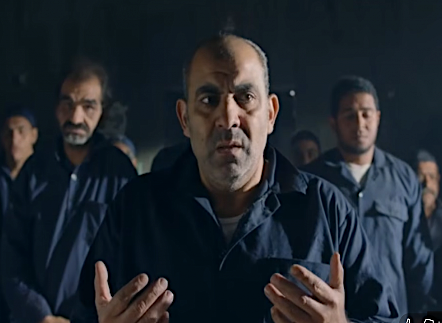
The Egyptian Initiative for Personal Rights (EIPR) condemned the arrest of six young Christians from Ezbet Tanious in the village of Taha al-Aamida, in Minya’s Samalout district, for posting a short video recreating a comedy scene from Khalawis, a film released in Egyptian cinemas in 2018. The scene shows a group of prisoners preparing to pray, none of whom knows the Quranic verses needed to perform the prayer.
The Supreme State Security Prosecution began questioning the six on Saturday, October 10, in Case No. 8430 of 2026 (State Security), and ordered their detention for four days pending investigation. On Sunday morning, October 11, a judge reviewing their detention at the Tagamoa court extended it for another 15 days.
During questioning, the six, including a child under 18, said they had filmed and posted the video on TikTok on a whim on October 4. They deleted it hours later after warnings from friends, but a village resident reposted it with comments condemning its content. Inflammatory comments followed, targeting the six young men, their families and all Christians in the village. Some called on the Interior Ministry to arrest the young men, while others explicitly incited violence against them and their families.
According to accounts obtained by EIPR from the village, the families and the church representatives handed five of the young men over to the Samalout Police Station on October 6 to prevent sectarian tensions from escalating, in exchange for a police promise to release them once the situation had calmed. One of the young men told prosecutors he had gone into hiding but turned himself in after police arrested his mother in his place.
A customary reconciliation session was held on Friday, October 9, attended by priests from the Diocese of Samalout, clerics from the Ministry of Religious Endowments and village elders. The diocese also issued a formal apology to the village’s Muslim residents.
Despite these steps, the families were shocked to learn that the six had been brought before the Supreme State Security Prosecution. Prosecutors accused them of exploiting religion to promote extremist ideas, contempt of religion and blasphemy by publishing a video mocking Muslim prayers.
The video was far from unique. Searching TikTok for the Arabic phrase “straighten the rows” brings up hundreds of videos recreating the same scene using the same audio track. EIPR stressed that posting a comedy clip on social media cannot justify detention, whether for these six or anyone else who has shared similar videos.
EIPR said that the escalation of sectarian tensions over a scene from a comedy film reflects deeper strains in relations between the village’s Muslim and Christian residents. The film continues to be aired on satellite television and has received approval from the censorship authorities before filming.
Arresting the six aggravates these tensions rather than resolving them. It sends the message that their actions warrant imprisonment and that the diocese’s apology is not enough to close the case.
EIPR warned of the consequences of the security agencies’ approach to such cases: settling local disputes by appeasing more powerful parties at the expense of less powerful groups’ individual rights, ostensibly to prevent further violence. This approach entrenches unequal power relations within local communities and undermines the rights of those with less power. It also reinforces the criminalization of free expression and legitimizes existing sectarian attitudes.
This response is consistent with the broader approach taken by security agencies and investigating authorities in cases involving freedom of religion and belief. EIPR has documented the targeting of at least 111 people for expressing their religious views and beliefs. Although some have been released, security agencies and prosecutors continue to pursue and detain others on the same grounds.
This approach insists on enforcing conformity in thought, belief, expression and conduct, regardless of a person’s religious affiliation or convictions. Any departure from these prescribed norms can expose a person to security prosecution, prolonged pretrial detention and prison sentences, even for a joke.
EIPR called on state authorities to stop punishing people for exercising their right to freedom of expression and to immediately release the six detained in Case No. 8430 of 2026 (State Security), along with everyone detained for expressing their beliefs.
_________________