
By Al-Aram –
Geuirguis Antoine at Its Opening: “Patients of All Faiths and Races Are Treated Here”
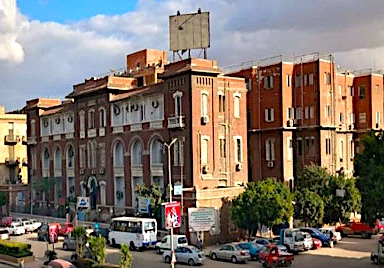
This year marks one hundred years since the laying of the foundation stone of the “Coptic Hospital,” a landmark institution that represented a major development in Coptic charitable work in Egypt and a remarkable achievement born of broad social cooperation in the early twentieth century to provide dignified and free healthcare to as many needy people as possible.
The hospital, established at its famous Ramses Street location in 1926, was preceded by a long and influential history of Coptic charitable activity. That tradition became institutionalized in 1881 with the founding of the “Charitable Endeavors Society” (Gam‘iyyat al-Masa‘i al-Khayriyya), initially created to assist poor Coptic families, before expanding its work to encompass various social fields and to serve people of all faiths and nationalities, as the history of the Coptic Hospital itself demonstrates.
Among the earliest reports announcing the anticipated medical institution were articles published in Al-Ahram in 1923 regarding the steady flow of donations intended to guarantee the project’s operation.
On March 27, 1923, Al-Ahram reported:
“The Anglo-Egyptian Bank in Egypt donated one hundred pounds to the Great Coptic Charitable Society in support of the new Coptic Hospital project.”
An earlier report from December 1922, published under the title “The Coptic Hospital,” announced that Dawoud Bey Tekla had donated forty pounds to cover the expenses of two hospital beds for the year 1923. This also provides an indication of the average cost of operating a hospital bed at that time, within the framework of the modest medical dispensary that had been established in the Clot Bey area in 1908 before undergoing successive phases of expansion and development.
From “Charitable Endeavors” to the “Great Coptic Charitable Society”
Before tracing the path that led to the founding and inauguration of the famous Coptic Hospital, the Al-Ahram article pauses at the history of the Charitable Endeavors Society, the organization behind the hospital.
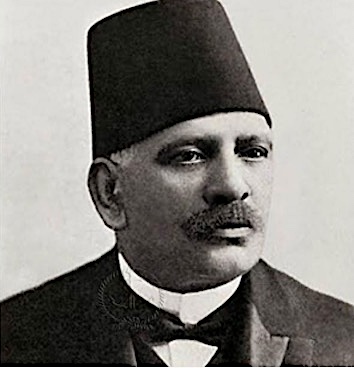
According to all major historical sources, the society was founded in 1881 following a large meeting held at the home of Youssef Effendi Muftah in the Azbakeya district. The gathering, attended primarily by leading Egyptian Coptic figures, also included the support of Sheikh Muhammad Abduh (1849–1905), while the renowned writer and orator Abdullah al-Nadim (1842–1896) delivered a speech endorsing the society’s goals.
The meeting concluded with the election of Boutros Pasha Ghali—who later held several ministerial positions and served as Prime Minister between 1908 and 1910—as the first president of the newly established society, considered one of the earliest Coptic charitable organizations in Egypt.
Over time, the society evolved significantly. Initially focused mainly on direct financial aid for poor Copts, its activities expanded to include healthcare, education, vocational training, and support for vulnerable families and individuals. By 1886 it had become known as the “Coptic Charitable Endeavors Society,” before later taking the name “The Great Coptic Charitable Society.”
An illuminating Al-Ahram report dated June 16, 1923, published forty-three years after the society’s establishment, provided detailed information about its membership, revenues, and expenditures. The newspaper wrote:
“We received the report of this charitable society concerning its activities during its forty-third year, which ended last March. The report opened with words of gratitude to several generous benefactors whose support enabled the society to grow and flourish.”
The report praised the society’s board for its service to the poor and noted that approximately thirty meetings had been held during the previous year.
It further stated that the society had 181 subscribers who donated a total of 163 pounds and 600 milliemes. The board worked actively to increase membership in order to expand assistance to the needy.
The report also detailed expenditures: 653 pounds and 200 milliemes were allocated to regular assistance for seventy poor families; temporary aid reached 139 pounds and 990 milliemes; 54 pounds and 840 milliemes were spent on patients; 20 pounds and 700 milliemes on burials, and 256 pounds and 465 milliemes on education.
Humanity is indivisible
The society’s humanitarian mission eventually culminated in the development of the modest Clot Bey dispensary into the large Coptic Hospital complex known today. Construction was completed in 1926, and the official inauguration took place in early 1927.
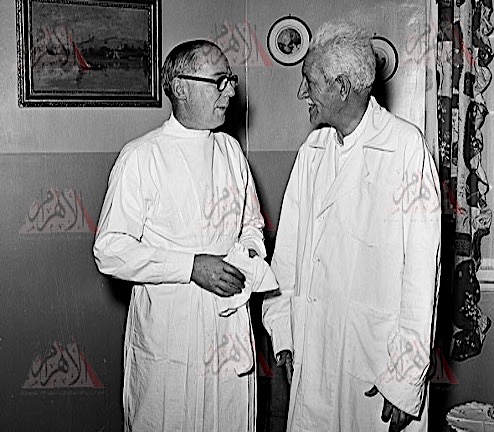
According to Al-Ahram’s March 20, 1927 edition, published under the headline “Celebration of the Opening of the Coptic Hospital,” the event was held in the presence of King Fuad I, senior state officials, foreign consuls, and representatives of Egypt’s various religious communities.
The newspaper described how a large ceremonial tent had been erected beside the hospital building and decorated with Egyptian flags and a portrait of King Fuad. A gilded chair was prepared for the monarch on an elevated platform.
Guirguis Antoine, then president of the Great Coptic Charitable Society and one of the leading figures of Egyptian charitable work, delivered the welcoming speech. Often described as the “spiritual father” of the Coptic Hospital project, he summarized the history of the society’s medical services:
“The society founded its charitable hospital in 1908. His Holiness Pope Kyrillos V generously granted a small house in Haret Shaq al-Thu‘ban on Clot Bey Street for this purpose, while the late Boutros Pasha, founder and first president of the society, donated the furnishings.”
Antoine continued by explaining that in 1913 the society rented a larger building on Queen Nazli Street equipped with appropriate furnishings and medical equipment, containing four first-class beds, thirteen second-class beds, and fourteen third-class beds, in addition to outpatient facilities.
He emphasized that the hospital operated according to the society’s guiding principle:
The hospital, he explained, treated “patients from all faiths and nationalities,” and was essentially “a general charitable hospital.” It carried the name “Coptic Hospital” only because it had been established by the Coptic charitable society.
Statistics cited during the inauguration indicated that in the preceding five years alone, 46,452 patients “from all faiths and nationalities” had received free treatment there.
Antoine also documented the next major stage in the project’s evolution. In 1918 the society decided to build a new hospital because the old facility had become too small. King Fuad placed the project under royal patronage, and the new building was completed in 1926.
The new hospital included: 20 first-class beds, 40 second-class beds, 60 third-class beds, outpatient clinics, bX-ray facilities, a bacteriological laboratory, operating rooms and related units, a milk sterilization laboratory, and a pathology museum.
Professional Management
Management of the institution was entrusted to Dr. Habib Khayyat Bey, one of Egypt’s most prominent physicians at the time, assisted by several department heads and medical teams.
Georges Antoine stated that construction and furnishing costs totaled 65,173 pounds, including 43,748 pounds from donations and other sources, 1,500 pounds borrowed from the Mortgage Bank, while the remaining amount was owed to contractors and suppliers.
The article further notes that large endowments were dedicated to the hospital. Among the major donors were Georgi Wissa Pasha and Felini Fahmi Pasha, who endowed twenty feddans of land to support the institution financially.
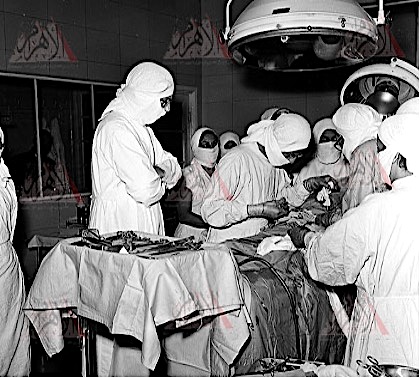
The hospital’s medical staff included six department heads, each assisted by two deputies. An English matron supervised the nursing service together with seven English nurses and twelve Egyptian nurses trained by the society itself—a significant contribution to the development of Egypt’s nursing profession during the early twentieth century.
Architecturally, Al-Ahram described the four-story hospital building as “a genuine artistic innovation.” Built with brick and cement, it featured marble staircases, mosaic floors, imported operating-room windows from England, tiled kitchens and bathrooms, electric elevators, an automatic telephone system, fully equipped operating theaters, and a kitchen capable of feeding two hundred people. Much of the furniture, linens, silverware, and utensils had been specially manufactured in Europe bearing the hospital’s emblem.
Such was the state of the Coptic Hospital at the time of its official inauguration. In the mid-1960s, the hospital came under the authority of Egypt’s Ministry of Health (i.e. nationalized), yet it continues to provide services to people of all faiths and nationalities as one of Egypt’s earliest major private hospitals.
__________________
Translated from: https://gate.ahram.org.eg/daily/NewsPrint/1018126.aspx