
By Coptic Solidarity-
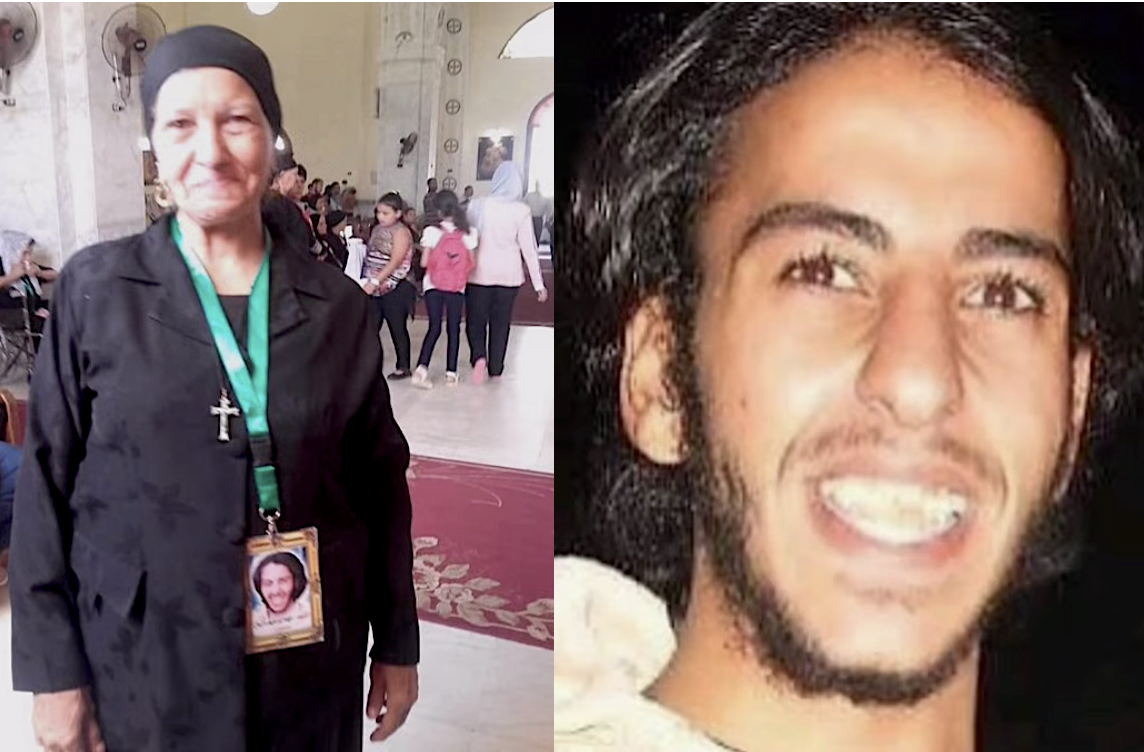
The death of Nadia Beshara, mother of slain activist Mina Danial, has revived urgent questions about one of the most serious and unresolved acts of state violence in Egypt’s modern history: the Maspero massacre of October 9, 2011, when Egyptian military forces killed at least 28 predominantly Christian protesters and injured hundreds more.
Beshara, who died on April 8, spent more than a decade demanding justice for her son and for the other victims. She died without seeing accountability.
Her passing is not only a personal loss. It underscores a broader and continuing failure: the absence of justice for a massacre carried out in full public view, and the persistence of a system in which such crimes can remain effectively unaddressed.
Mina, one of the most visible young figures of the January 25 Revolution, was killed during a peaceful protest that began in Cairo’s Shubra district and moved toward the Maspero state television building. Like thousands of others, he had joined demonstrations calling for basic rights—freedom of worship, equal treatment under the law, and protection from sectarian violence.
From Protest to Massacre
The protest was sparked by the destruction of a church in the village of al-Marinab in Aswan, following claims that it lacked official authorization—claims widely seen as a pretext. The incident, coupled with inflammatory statements by local officials, triggered nationwide demonstrations by Egyptian Christians demanding equal rights as citizens.
The response was swift and brutal.
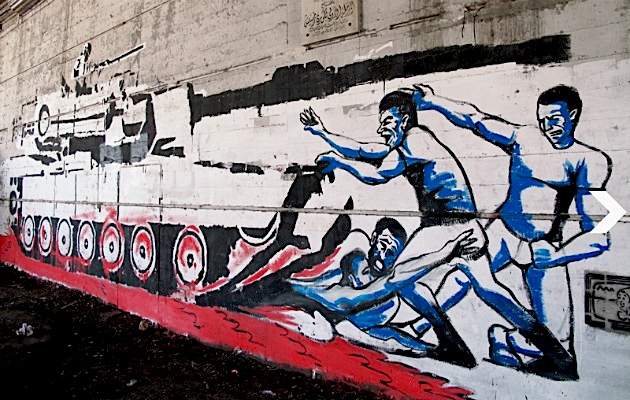
Security forces deployed live ammunition, tear gas, and armored vehicles against demonstrators. Video evidence and eyewitness testimony documented military vehicles driving directly into crowds, crushing protesters. By the end of the night, 28 people had been killed and more than 300 injured—almost all of them Copts.
At the same time, state television broadcast calls urging “honorable citizens” to defend the army against what it described as attacks by Christian protesters—effectively inciting hostility against the very victims of the violence.
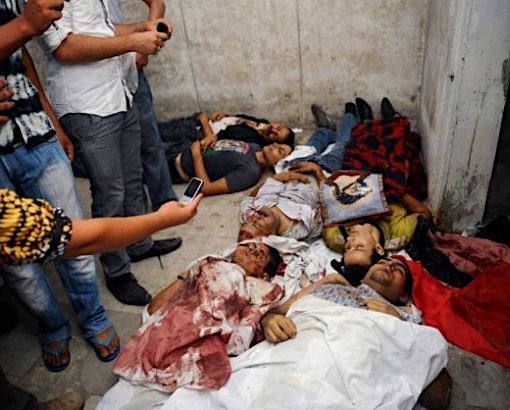
Taken together, these elements—lethal force, military deployment against civilians, and media incitement—constitute a pattern that goes beyond crowd control failure. They point to a coordinated response in which state institutions acted not to protect citizens, but to suppress and delegitimize them.
Justice Deferred, Equality Denied
Despite the scale and visibility of the killings, Egypt has failed to deliver meaningful accountability.
No comprehensive investigation has established responsibility in line with international standards. No process has addressed the chain of command. No serious judicial reckoning has matched the gravity of the crime.
For families like that of Mina Danial, the result has been a prolonged denial of justice.
“I demand just retribution for the sons of the revolution,” Nadia Beshara said repeatedly. “Those who killed them were supposed to defend Egypt, not kill its people.”
Her words captured a central contradiction: the very institutions tasked with protecting citizens became the source of their vulnerability.
That contradiction remains unresolved. Egypt’s Constitution states that “freedom of belief is absolute,” yet in practice, religious minorities—particularly those who challenge entrenched norms—continue to face systemic discrimination. More broadly, the principles of citizenship and equality remain unevenly applied, often functioning as formal declarations rather than enforceable rights.
The Maspero massacre made that gap visible. It demonstrated that equal citizenship can quickly give way to differential treatment when state power is brought to bear—especially against minority communities.
A Mother’s Voice, a System’s Silence
For more than a decade, Nadia Beshara refused to let that reality fade into silence. She appeared at commemorations, spoke to the media when possible, and continued to demand accountability at a time when public space for such demands was steadily shrinking.
Her persistence did not produce justice—but it preserved memory.
In the years following the massacre, she returned to Tahrir Square, seeking what she described as a continuation of her son’s cause. “I went to see Mina in the eyes of his friends,” she said, framing her presence as part of an unfinished struggle for dignity, freedom, and justice.
Her death highlights a painful reality: many of those who have borne the cost of political violence in Egypt have done so without recognition, without restitution, and without closure.
Memory Against Erasure
The depth of that loss is reflected in tributes from those who knew both Mina Danial and his mother.
Activist Alaa Abdel Fattah, who later spent years imprisoned, recalled a meeting with her during a memorial service in 2014. Overcome with grief, he withdrew from the crowd, only to be found and embraced by her.
He described how she held him “like a mother from Upper Egypt,” addressing him as “my brother,” a form of recognition that, in his words, carried a profound and unexpected dignity. As he struggled with the prospect of returning to prison, she offered neither reassurance nor denial. Instead, she told him that his path with injustice was only beginning—and repeated a phrase that stayed with him: “Blessed is the oppressed.”
Her words did not resolve injustice. They confronted it, naming it plainly while refusing to strip it of moral meaning.
More than a decade after Maspero, the conditions that made it possible have not been fully addressed.
The regulation of places of worship remains a source of tension. ‘Sectarian incidents’ continue to be managed through informal settlements rather than transparent legal processes. And the broader question of equal citizenship—central to the demands raised in 2011—remains unresolved in practice.
In this context, the absence of accountability for Maspero is not an isolated failure. It is part of a wider pattern in which state violence is neither fully investigated nor institutionally corrected.
Nadia Beshara’s death closes a chapter, but it does not close the case.
Her long and unfulfilled pursuit of justice stands as a reminder that the consequences of Maspero are ongoing. They persist in the lived experience of those who continue to navigate a system where rights are proclaimed but not consistently protected, and where the line between citizen and subject can still shift without warning.
If Maspero remains unresolved, it is not for lack of evidence, nor for lack of voices calling for justice. It is because the political and institutional will to confront it has yet to materialize.
Until it does, the questions raised on October 9, 2011—about accountability, equality, and the protection of citizens—will remain unanswered.