
By Maria Morcos (*) – Coptic Solidarity –
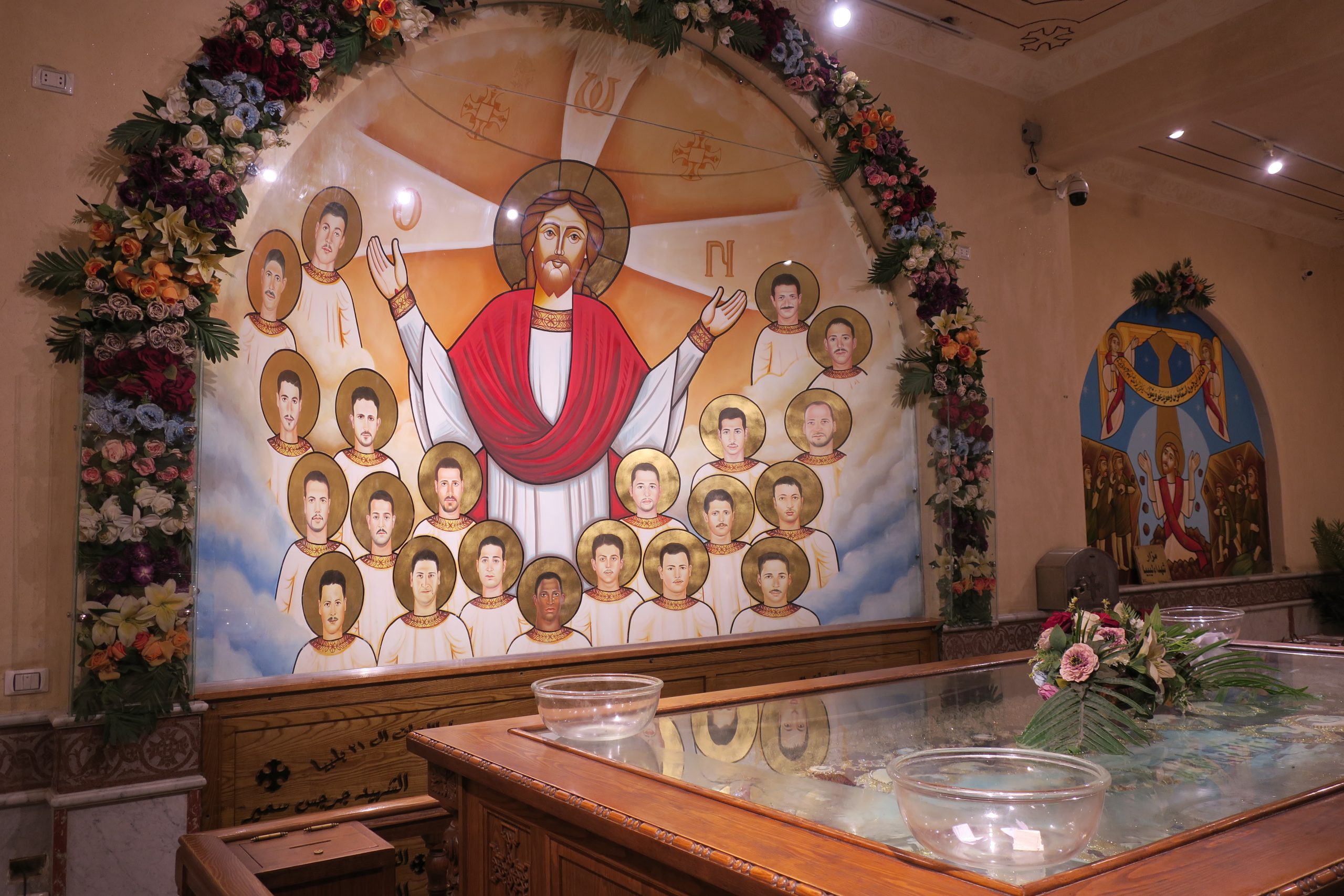
“Milad, Abanub, Maged, Youssef, Kirollos, Bishoy, Samuel, Malak, Tawadros, Gerges, Mina, Hany, Samuel, Ezzat, Luka, Gaber, Essam, Malak, Sameh, Gerges, and Matthew”
These are the 21, martyred in Libya by ISIS in 2015. By now, you may have heard of them. Even the infamous Jonathan Roomie, lead of “The Chosen,” recently directed the film “the 21” that premiered in 2025 honoring them. These 21 martyrs became symbols of incredible faith and martyrdom amongst Christians worldwide. They were not rich or powerful men, rather humble workers who had left Egypt seeking work in Libya to financially support their families. In 2015, these 20 Copts and 1 Ghanian who had been abducted by ISIS, were used by the terrorist organization in the creation of propaganda video for the terrorist organization of the men wearing orange jumpsuits led by masked ISIS members dressed in black. The 21, refusing to deny Christ, were subsequently beheaded on a beach near Sirte. What was particularly striking to all who viewed the video was the juxtaposition of the 21 martyrs who appeared amazingly calm and composed, their lips steadfastly uttering prayers, despite their terror-inducing impending death circumstances of humiliation and paralyzing fear.
After the barbaric incident, the 21 martyr’s names became petitions lifted before the throne of God, whispered in prayers of all Christian believers; their stories joined the church’s Synaxarium as symbols of astounding faith in the midst of the ongoing persecution faced by Copts. Outside their hometown of Al-Our in Egypt, a church was built to commemorate them.
Officially recognized as revered saints by both the Orthodox and the Catholic churches, their faith until the very last moment was strong enough to move mountains — and soften even the hearts of those in power that had long been hardened. Shortly after the release of the video of the beheading of the victims by ISIS, the Egyptian government expressed condemnation of terrorism and launched airstrikes at several ISIS targets in Libya. Additionally, the Egyptian government offered financial compensation to the families of the martyrs as a form of support for their grief.
As we approach the 11th anniversary of their martyrdom, we are reminded to not only honor their sacrifice, but to reflect on the current persecution still faced by Copts in their indigenous land of Egypt. We are reminded that Copts in Egypt continue to face discrimination, such as Dr. Augustinos Samaan, a comparative religions scholar , targeted for his videos defending Christianity, and charged with “defamation” claims for social media advocacy around such topics. Several prominent institutions including Amnesty International, the US Commission on International Religious Freedom, and the Cairo Institute for Human Rights Studies have all expressed concern over laws that restrict religious freedom in Egypt as well as concerns of uneven application of such laws. Coptic women continue to disappear followed by systematic conversions to Islam, with little to no governmental intervention or protection. Recent cases include that of Silvana Atef, a disabled Coptic minor who was abducted on October 28, 2025, in Al -Fayoum with a court ruling it “lacked jurisdiction” to resolve the case. To date, her family remains distraught, unable to locate their daughter.
Whereas the Egyptian government responded urgently to the plight of the 21 martyrs, definitively naming it terrorism, there is little public attention to the ongoing challenges and persecution faced by Copts daily in Egypt. These cases are often systematically disregarded even though this neglect perpetuates the systemic discrimination that threatens the Coptic community. In Egypt, virginity is a protected virtue and a woman who is raped culturally brings shame to her family. Knowing this, extremists target Coptic women, rape them, and torment them to believing that conversion to Islam and marriage is the only way out. Most of these women are never reunited with their families or friends because police responses in Egypt is dismissive and corrupt – the police are either complicit in the kidnapping or bribed into silence. This cycle is perpetuated with the government doing little to intervene, disheartening the families with the excuse that the women have “converted due to their own free will” despite various videos emerging of the women who look beaten and in extreme distress. This perpetuates generational trauma, increases religious and ethnic tensions in the region, and brings the broken-hearted family members to desperation as they continue to search for their daughters and wives. This raises a solemn question: To what extent can we truly honor the martyrdom of the 21 if we continue to overlook the conditions that allow such persecution to persist?
___________________
(*) Maria Morcos – is a Coptic Solidarity volunteer