
By Raymond Ibrahim – Coptic Solidarity –
Christian holidays in Egypt have once again exposed the deeper problem of how the state views its Christian citizens—not as equal citizens, but as tolerated religious categories arranged in a hierarchy. This time, the controversy, over and above the usual issues surrounding Christmas greetings or exam schedules, revolved around Labor Minister Mohammed Gobran’s Decree No. 346 of 2025, which purported to regulate paid religious holidays for Christian workers.
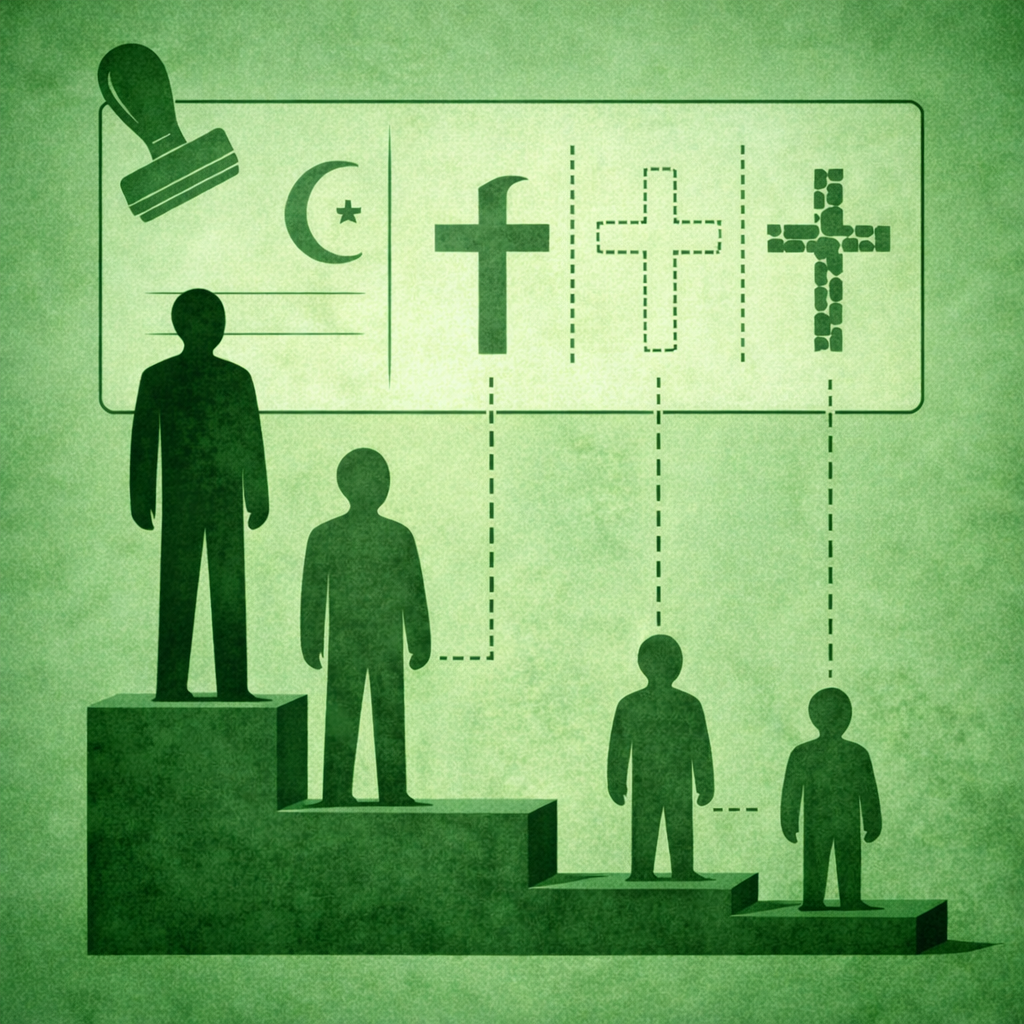
At first glance, the decree seemed progressive. It formally defined Christian holidays that entitle workers to paid leave, particularly in the private sector, thereby limiting employers’ arbitrary decisions. Orthodox Christians were granted five holidays, while Catholics, Protestants and other smaller denominations were given only three. Yet this apparent “recognition” quickly revealed itself as discrimination layered upon discrimination.
The core problem is not merely unequal days off. Rather, the decree reflects a worldview in which citizens are ranked by religion and sect. Muslims remain the unquestioned default; Among the dhimmi categories, the Orthodox Christians come first; Catholics and Protestants follow; and others—Jews, non-Christians, nonbelievers—are effectively invisible. The state does not see citizens with equal rights, but religious groups with varying degrees of tolerance.
Initially, the minister referred to Christians as “non-Muslims,” a revealing term enshrined in personal status and labor laws. After criticism, this was replaced with the phrase “Christian brothers” or “Coptic brothers.” Far from an improvement, this paternalistic language reinforces the old dhimmi framework: Christians are not citizens with rights, but some kind of remote “brothers” granted favors. Notably, no official document ever speaks of “Muslim brothers” but simply affirms their status as citizens.
Worse still, the decision limited Christians to only three denominations—Coptic Orthodox, Catholic, and Protestant—excluding numerous other smaller denominations officially recognized by the state. This reduces Christianity to a handful of approved sects, reinforcing the idea that the government determines religious legitimacy.
Instead of consulting churches (who would indeed do themselves good by trying to unify their holidays), or applying modern constitutional principles, the government copied a cabinet decision from 1953, as though 72 years of legal and social evolution had never occurred. This outdated approach ignored the fact that Coptic Orthodox Christmas has already been a public holiday since 2002, and inexplicably granted New Year’s Day to some Christians but not others.
The decree also raises a dangerous practical question: how will a worker’s denomination be determined? Egyptian IDs list religion, not sect. Will churches issue certificates? Will employers interrogate employees’ beliefs? Such scenarios invite abuse, harassment, and needless labor disputes, all in the service of bureaucratic micromanagement of faith.
Ultimately, this decision reveals a state mentality still rooted in Ottoman-era assumptions, under the melli regimes. Religious holidays are treated as privileges dispensed by authority, not as rights flowing from citizenship and freedom of belief. True equality would require unified Christian holidays, neutral legal language, and a recognition that Egypt is no longer a caliphate ruling over religious subjects, but a modern state accountable to its constitution.
Until that mindset changes, such “reforms” will continue to expose the same old reality—discrimination dressed up as accommodation.