
By Joseph Puder – The American Thinker –
In the United States and in the West in general, Islamophobia is a hate crime, and even non-offenders of Islam dread an accusation of Islamophobia. Conversely, in the Muslim-majority states, particularly in the Middle East, Christians have been persecuted, discriminated against, and abused. The judicial system in most of these states encourage anti-Christian persecution.
In Western capitals, where religion has become an individual matter and multiculturalism a virtue, Muslims have taken control the streets of London, Paris, Rome, and Berlin at will. However, one would be hard pressed to find any instances of Christians parading — in the name of Christianity — in Baghdad, Cairo, Damascus, Gaza, Istanbul, Tehran, Doha, or Riyadh.
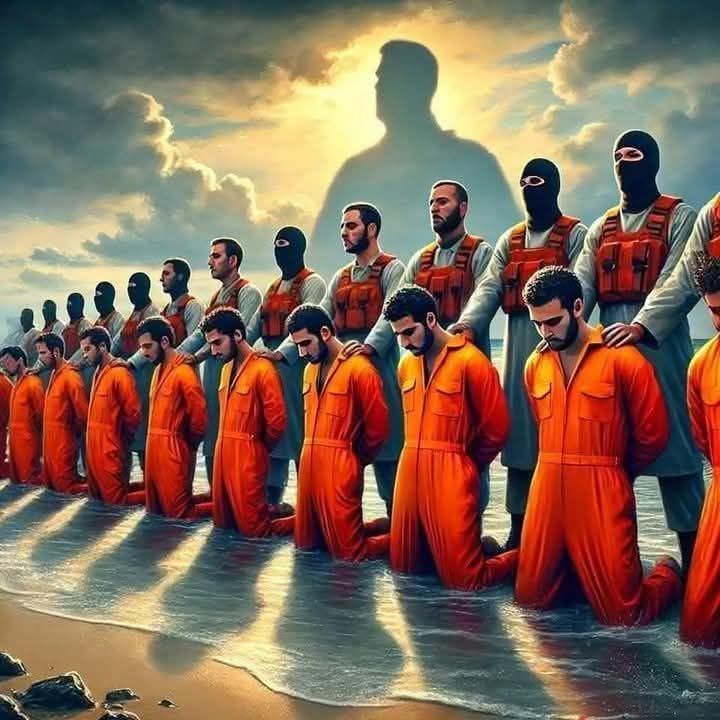
Western politicians seem to be ignoring the suffering of Christians in the Middle East. Christian persecution is currently characterized by a “threshold genocide“ status, resulting from a combination of extremist violence, legal discrimination, and mass displacement. Christians in the Middle East were 12.7% of the region’s population in 1900 and are 4.1% in 2025.
Genocide Watch, quoting Al-Monitor (June 27, 2024), reported that “Coptic Christians in Egypt have faced attacks in the past week, raising concerns about the minority group’s safety in the country.” Several Coptic homes were burned in the village of Fawakher in Egypt’s northern Minya governorate while residents were still inside. Al-Arabiya and The New Arab reported that the attack came in response to purported plans to build a new church in the area.
There is a long history of persecution and violence against Copts in Egypt, especially in Minya. In 2018, a police officer was charged with murder over the shooting of two Copts. The following year, Al-Monitor reported from Minya that some Coptic places of worship had been forced to close due to violence and intimidation. Egypt is a major recipient of U.S. economic and military aid. Yet Cairo’s officials look the other way when young Coptic girls are kidnapped and forcibly converted to Islam.
In Iraq, the Christian population has plummeted from approximately 1.5 million in 2003 to roughly 150,000 today. Although ISIS has been largely defeated, its “aftershocks” remain, and many families are still unable to return to destroyed homes in the Nineveh Plains.
Iran’s Christians, especially those who have converted from Islam, are treated as “national security threats.” As of early 2026, many continue to be sentenced to long prison terms (often 5–10 years) for “propaganda” or practicing their faith in underground house churches.
Under the rule of Ahmed al-Sharaa (Abu Mohammed al-Julani), the jihadist leader of Hayat Tahrir al-Sham and now the president of Syria following the fall of the Assad regime in late 2024, Christians in Syria face heightened insecurity. The transitional government’s reliance on Islamist factions is creating risks of targeted violence and societal and religious marginalization. Key examples include the 2025 bombing of a major church in Damascus and intimidation by armed jihadists.
The 2025 Open Doors World Watch List ranked Turkey 41 among the 50 countries where Christians face the most challenges in practicing their faith. Regarding Turkey, this year’s findings highlight a troubling mix of cultural, legal, and social challenges that continue to marginalize the Christian population, which includes the deportation of foreign Christian workers considered to be a “security threat.” In 1915, Turkey perpetrated a genocide by murdering 1.5 million Christian Armenians. More than a century later, Turkey’s current Islamist dictator, Recep Tayyip Erdoğan, still holds Christians in dangerously low regard.
Christians in the West Bank and Gaza are facing significant persecution and hardship, which has resulted in a dwindling population (less than 2% in the West Bank, around 1,000 individuals in Gaza as of 2025). In Gaza, Christians experience violence and coercion to convert. In Bethlehem, Jesus’s birthplace, Christians made up the majority until the late ’80s. Today, Christians account for less than 10% of its population. When in 1991, this reporter interviewed the Christian mayor of Bethlehem, Elias Freij, and asked him where the Christian population was, he responded by pointing his finger westward and said, “Santiago de Chile.”
Qatari Christians living inside the country must use extreme caution when gathering for worship, while Christians who are not citizens must worship in a government-controlled compound that is closed to Qatari citizens. About 65 percent of the country’s population is composed of foreign workers — mostly Filipinos. Foreign Christians in Qatar have been deported for evangelistic activities among native Qataris.
Saudi Arabia severely restricts Christian practice and bans public worship, churches, and proselytizing. Those who openly practice or convert from Islam are at risk of arrest, detention, and deportation. Christians, especially converts, face surveillance, discrimination, and mistreatment.
The demise of ideologies such as pan-Arabism and secular socialism in the Arab world opened the door for Islamism to thrive once again. Islamism in Iran and Yemen made Christian life in these states virtually impossible. The situation in the rest of the Muslim Middle East is not much better; the mixture of hatred for the West, which is identified with Christianity, has placed the decreasing number of Christians in the region at risk. Fearing to offend authoritarian Arab regimes, and feeling colonial guilt, Western states have done little to alleviate the poor condition of Christians in the region.
Ironically, Western guilt has also manifested by allowing millions of Middle Eastern Muslims to come to Europe and America, rather than being absorbed in the vast oil-rich lands of Saudi Arabia, Libya, and Algeria.
Although antisemitism in the Muslim Middle East is rife, there are hardly any Jews left in the region. Thus, the next best target for the Islamist regimes are the Christian believers. It is high time for the U.S. and its Western allies to settle on reciprocity. Treat Jihad-inclined Muslims in the West as Christians are being treated in the Middle East.
________________