
By Ishaq Ibrahim – Al-Manassa
Christian holidays have increasingly become occasions for controversial practices and statements. This time, the controversy did not arise—as it often has—over scheduling mid-year exams on the day before or after Christmas, as a form of “annoyance” to students and their families, nor over debates about whether it is religously forbidden to offer Christmas greetings. Instead, the spotlight fell on the Minister of Manpower, Mohamed Gibran, following Ministerial Decree No. 346 of 2025 concerning the “amendment of leave regulations for Christian brothers,” under which an employee is entitled to full pay in addition to official holidays.
The decree included five occasions for Orthodox Christians: Christmas, Epiphany, Palm Sunday, Maundy Thursday, and Easter. It specified three days for Catholic and Protestant Christians: New Year’s Day, Christmas, and Easter.
Discrimination Within Discrimination!
At first glance, it may seem that the crisis was merely about poor wording, or by arguing that two fewer days of leave for some Christians do not warrant such an outcry, especially since the minister could later correct the matter. But the issue is far more complex and consequential.
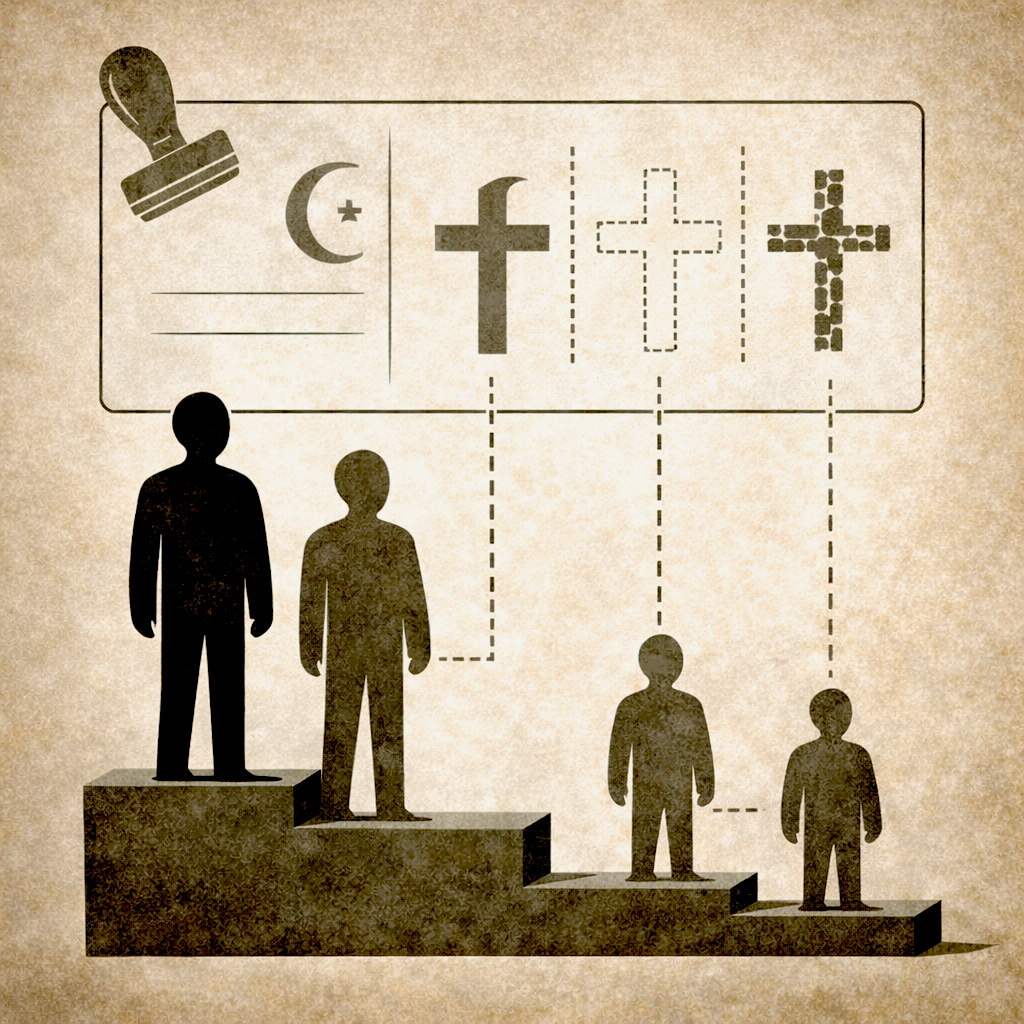
The decree is merely a revealing example of how many state institutions view their citizens, of the reference framework they rely on in determining their rights, and of the method of discriminating among them—not only on the basis of religion, but also on the basis of sect and church affiliation. It is as though the state is conceived as a hierarchy: Muslims at the top, then Orthodox Christians, followed by Catholic and Protestant Christians—while, naturally, there is no place for Baha’is or for non-believers.
In theory, the decree could be considered a positive step toward specifying the religious holidays and occasions for which employees are entitled to full pay, particularly in the private sector, which is governed by the new Labour Law No. 14 of 2025. This could help avoid disputes over Christian employees’ leave during their religious occasions and prevent employers from abusing their authority when granting leave or alternatives when work necessities arise.
An Incomplete Decree That Ignores Some Subject to Labour Law
In practice, however, the decree contains constitutional and legal violations that reflect ignorance, carelessness, and bias, in addition to the negative message it conveys—stripping it of its intended purpose and creating administrative complications in its implementation.
As the saying goes, “the answer shows in the title.” The government, represented by the Ministry of Manpower, appeared confused and did not adopt the decision through careful study; as a result, it was incomplete and ignored certain categories subject to labour law.
The Minister of Manpower initially spoke of leave for “non-Muslims,” the term used in labour law, yet he was referring only to Christian holidays—ignoring the status of those who belong neither to Islam nor Christianity. There are Egyptian Jews whose rights must be regulated by law, even if their numbers are small or if none are currently subject to it. Moreover, working foreign nationals are also subject to labour law, and among them are, naturally, followers of other religions and beliefs. How, then, will leave be determined for them?
Citizens or Subjects?
When the minister’s decree was met with sharp criticism—particularly from Christian activists—due to its indirect description of Christians as merely “non-Muslims,” he retreated and issued a new decree whose title referred to determining religious leave for “Christian brothers.” Yet its content was limited to Coptic Orthodox, Coptic Catholic, and Coptic Protestant believers—thereby excluding members of other Christian denominations with officially recognized churches, whether Egyptian or foreign. These include Greek Orthodox, Armenian Orthodox, Syriac Orthodox, Greek Catholics, Syriac Catholics, Armenian Catholics, Maronites (Catholic), Chaldeans (Catholic), and Latins (Catholic).
The use of the terms “Christian brothers” and “Coptic brothers” in the decree—regardless of the linguistic distinction between religious designation (Christians) and ethnic designation (Copts)—is informal language, meant to convey affection and fraternity. It may be appropriate in personal exchanges or in speeches by officials addressing their audiences, but it is certainly not the language of legislation, laws, administrative decisions, or official correspondence.
If Christians are “brothers” here, who, then, are the non-brothers? This language entrenches the concept of dhimmi status, guardianship, and discrimination, and constitutes an assault on citizenship rights. We have never heard or read of an official addressing or issuing a formal document that includes the phrase “Muslim brothers”; even when presidents use similar wording, it is typically followed by “citizens.”
The Meaning of “Sect” Conflicts with Constitutional Citizenship
Was this decree an unintended mistake, or does it express a particular vision that still sees the modern state as an extension of the Ottoman Caliphate, viewing Copts as its subjects?
What is certain is that the use of language so distant from the values and principles of citizenship is not an exception. Two incidents illustrate this. The first was the use of the phrase “the Christian sect” when referring to Christians during parliamentary discussions of the church-building law submitted by the government in September 2016.
Beyond the negative connotations of the word “sect,” its political and social meaning contradicts the citizenship rights enshrined in the Constitution. Using this term reflects the state’s preferred way of dealing with Copts as a religious group and subjects—a long-criticized approach that runs counter to citizenship values.
The second incident occurred last year, when Prime Minister Mostafa Madbouly issued a decree to move the Labour Day holiday to the following Sunday, which coincided with Easter, thus making the holiday Sunday and Monday. While this decision was commendable, it did not mention that Sunday coincided with Easter—as if there were fear of angering those who oppose celebrating or offering greetings for this holiday.
Resurrecting an Old Decree
The problems stemming from the recent decree (by the Minister of Manpower) are not limited to its title, but extend to its content. Instead of applying what is currently recognized as Christian religious occasions, or formally consulting the churches, the government rummaged through old files and copied a Cabinet decree issued on 1 July 1953 that specified permitted leave days for Christian and Jewish employees—without regard for the 72 years that have passed, during which the relationship between citizens and the state has evolved, along with concepts of citizenship and the significance of religious occasions.
The decree divided “Copts” according to their affiliations and discriminated among them by sect: granting Orthodox believers five days, while Catholics and Protestants received only three. This prompted the Catholic Church to issue a statement expressing regret that full equality had not been achieved, in a manner inconsistent with citizenship and justice, and noting its communication with the Prime Minister and the Minister of Manpower to clarify matters related to official church holidays. Similarly, the Evangelical community announced that it had sent a letter to the Prime Minister emphasizing the importance of unifying holidays.
The decree granted Catholics and Protestants leave on New Year’s Day, but not to Orthodox—despite the fact that New Year’s Day is not a religious occasion in the literal sense, and most of the world celebrates it socially and culturally regardless of religion or belief. In Egypt, most churches hold prayers and celebrations extending into the early hours of the new year.
The decision also ignored the fact that Orthodox Christmas has been included among general public holidays since 2002.
A New “Sect” Box?
On what basis will a person’s sect be determined? Official identification documents include a religion field, but no sect field. All available means of determining a person’s affiliation are unconstitutional, harmful, and serve no one’s interest.
Instead of abolishing the religion field from official documents, will some demand that the government add a new field for sect? Will churches be required to issue affiliation certificates for workers to submit to their employers? Or will employers conduct doctrinal tests to determine an employee’s denomination? And if an employee declares an affiliation, can it be changed without difficulties? What if one lies and states something untrue, will they face administrative penalties?
Differentiating Christian holidays by denomination opens the door to practical problems, as noted. Outside matters of personal status such as marriage and divorce, Christians are not required to prove their sect or denomination in any official documents. The decree could also generate unnecessary labour disputes: employers have an interest in minimizing leave days, while workers have an interest in increasing them.
It would have been more appropriate to approve holidays as they are commonly recognized. The government should also review its language and formulations, and realize that we live under constitutional principles and rights of citizenship. We no longer live in the era of Ottoman caliphs who bestowed limited rights on their non-Muslim subjects. Granting leave for religious holidays is a well-established right rooted in respect for freedom of belief and the practice of religious rites—not a gift or favor from the government, an employer, or any official.
______________