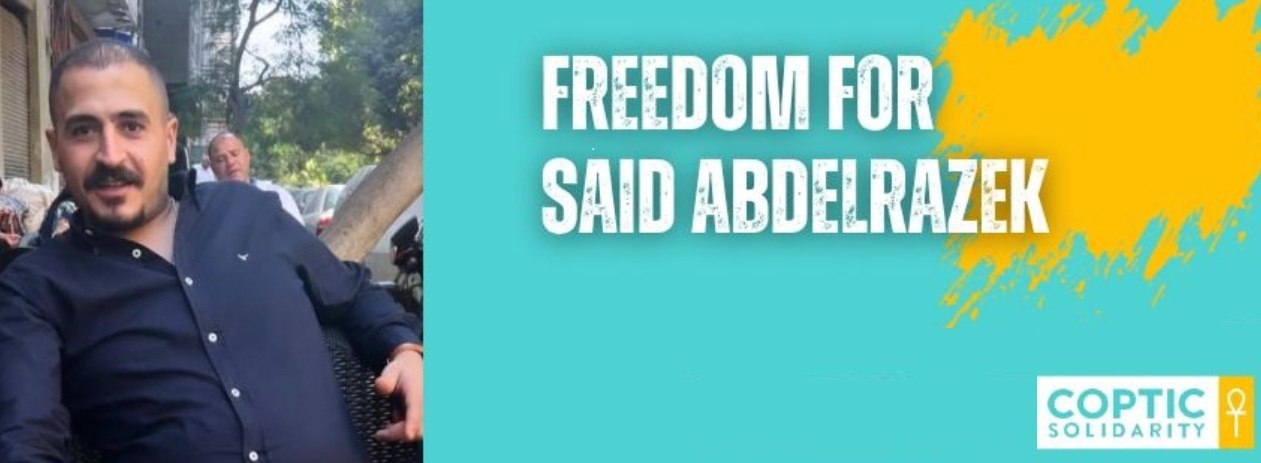

Coptic Solidarity is intensifying its advocacy on behalf of Said Mansour Rezk Abdelrazek, an Egyptian Christian convert who remains imprisoned in Egypt on fabricated “terrorism” charges solely for peacefully exercising his freedom of belief.
Said has now spent years cycling through arbitrary detention, repeated renewals of imprisonment without due process, and severe abuse at the hands of Egypt’s National Security services. He has endured torture, denial of legal access, forced divorce, separation from his child, and ongoing punishment simply for converting to Christianity.
Despite Egypt’s constitutional claim that “freedom of belief is absolute,” that guarantee does not extend to those who leave Islam. Converts to Christianity are routinely treated as security threats rather than citizens with rights. Said’s case is a stark illustration of this systemic abuse.
Launch of of a New Advocacy Campaign Targeting Australia’s Minister for Home Affairs
Coptic Solidarity has launched a new international advocacy campaign urging the Australian Government to take immediate diplomatic and humanitarian action on Said’s behalf.
Through this campaign, supporters are calling on Australia to act in line with its longstanding commitment to human rights, refugee protection, and freedom of conscience.
Specifically, we urge the Australian Government to:
- Publicly demand the immediate and unconditional release of Said Mansour Rezk Abdelrazek from detention in Egypt;
- Raise his case directly with Egyptian authorities at the highest diplomatic levels, emphasizing Egypt’s obligations under international human rights law;
- Grant Said a humanitarian or protection visa, allowing him to reunite with his Australian fiancée and live safely, free from persecution.
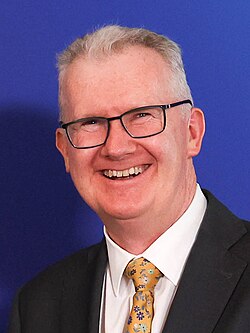
By filling out the advocacy form, supporter’s messages will be sent directly to Tony Burke, Minister for Home Affairs, and copied to HE Dr. Kevin Rudd, Australian Ambassador to the UN.
Background on Said’s Case

Said Abdelrazek (30) converted to Christianity in 2016. Since that time, he has been relentlessly targeted by Egyptian authorities, including arbitrary detention, torture, prolonged surveillance, and repeated attempts to coerce him into renouncing his faith.
After fleeing Egypt, Said formally joined the Orthodox Church while in Russia and received UNHCR documentation recognizing his need for international protection. Nevertheless, he was deported back to Egypt in 2024. Upon return, he was immediately detained, abused, and threatened by National Security officials.
In July 2025, after attempting to lawfully update his identity documents to reflect his faith—a right theoretically guaranteed under Egyptian law—Said was arrested yet again. He was charged with “terrorism” without credible evidence, while his lawyer was denied access to his case file. His detention has since been repeatedly renewed without due process.
Said’s fiancée is an Australian citizen who continues to wait anxiously for his release and reunification. Australia therefore has both a clear humanitarian interest and a moral opportunity to intervene on behalf of a man whose only “crime” is choosing his faith.