
The recent papal visit to Algeria has been presented as a gesture of dialogue and openness, a return—however symbolic—to the land of Augustine of Hippo, one of the foundational figures of Christianity. Official discourse has emphasized coexistence, peace, and mutual understanding between religions.
Yet this carefully curated image obscures a far more restrictive reality. Christianity in Algeria survives not as a freely practiced faith among citizens, but as a tightly circumscribed presence tolerated under specific conditions. What is tolerated is not Christianity as such, but a foreign, contained, and discreet Christianity, largely confined to expatriates and clergy who refrain from any public expression beyond strictly regulated worship.
The Catholic Church, with its limited network of parishes and charitable institutions, operates within this narrow space. Its activities are accepted precisely because they remain socially unobtrusive and politically neutral. Even so, its institutional presence remains fragile, as illustrated by the closure of Caritas in 2022 and the broader restrictions affecting civil society organizations.
This form of tolerance is therefore conditional. It does not reflect an acceptance of religious plurality as a principle, but rather a pragmatic accommodation of a residual presence that poses no perceived challenge to the religious identity of the state.
The Erasure of a Living Tradition
The limited space afforded to Christianity today stands in stark contrast to Algeria’s historical reality. Once a major center of Christian thought and life, the region that gave rise to Augustine has seen its Christian heritage largely removed from the public sphere.
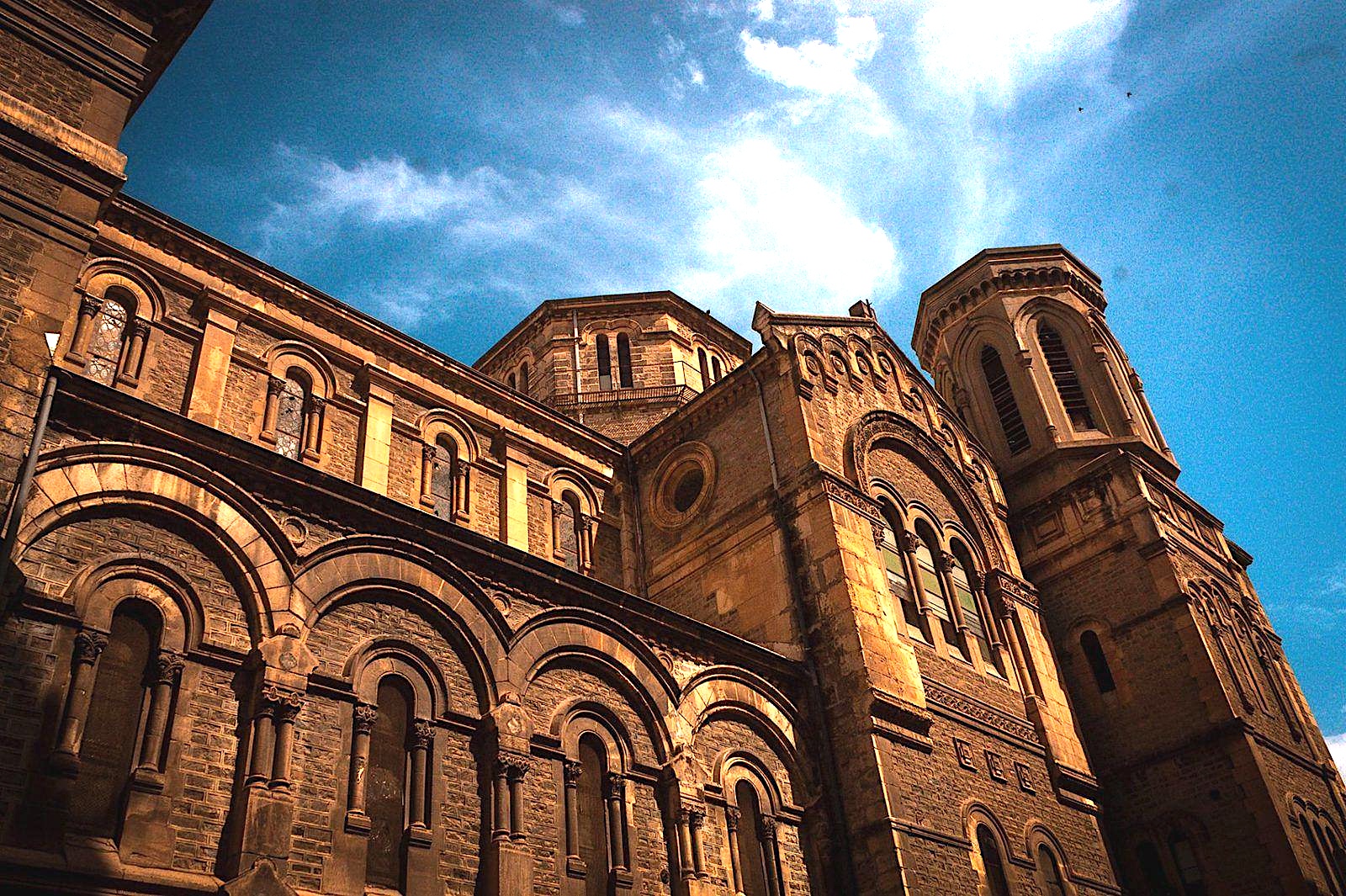
This transformation is visible not only in demography but in the physical landscape itself. Churches that once served thriving communities have been systematically repurposed—converted into mosques, libraries, or public buildings. What remains of Christianity is thus framed as a relic of the past, rather than a legitimate component of the country’s present.
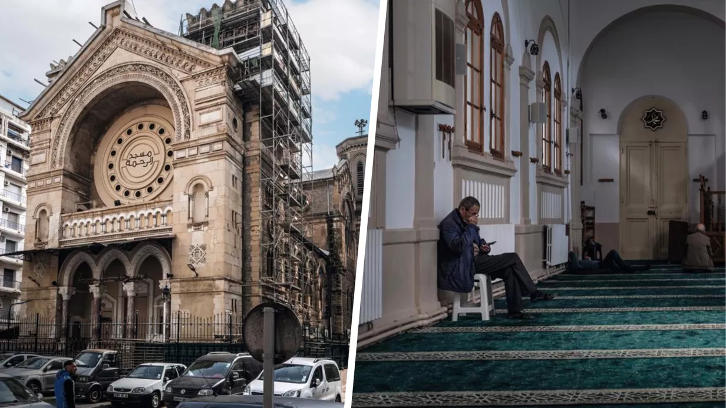
The frequent invocation of Augustine in official narratives risks functioning as a symbolic gesture detached from contemporary realities. It evokes a legacy that is acknowledged historically but constrained in practice.
Conversion as a Red Line
The limits of Algeria’s approach to religious freedom become most visible in the treatment of Algerians who convert to Christianity.
While foreign Christians may worship within prescribed boundaries, Algerian converts occupy a fundamentally different and far more precarious position. Their existence challenges the implicit equation between national identity and Islam—an equation reinforced both legally and socially.
The Protestant evangelical community, composed largely of such converts, has been particularly affected. Of dozens of churches once in operation, only one remains open. The rest have been closed for lack of official authorization, forcing believers to gather discreetly, often in private settings.
This distinction is not incidental. It reflects a system in which religious identity is tolerated when inherited, but contested when chosen.
The consequences are both institutional and personal. Legal provisions regulating non-Muslim worship are applied in ways that disproportionately affect converts, while accusations such as “offending Islam” provide a flexible tool for restriction. At the same time, social pressures—family rejection, isolation, and, in some cases, violence—reinforce the boundaries imposed by the state.
Cases such as that of Slimane Bouhafs, imprisoned multiple times and forcibly returned from abroad despite asylum protections, illustrate the risks faced by those who openly assert a Christian identity.
Tolerance Without Equality
Algeria continues to project an image of openness through carefully managed gestures: meetings with representatives of different religious communities, restoration of selected churches, and high-profile visits such as that of the Pope.
Yet these gestures coexist with the closure of places of worship, the restriction of religious activity, and the marginalization of converts. The contrast suggests a system in which tolerance is not a right, but a controlled exception—extended selectively and withdrawn when it appears to challenge established boundaries.
This duality raises a broader question about citizenship. If foreign Christians may practice their faith under strict conditions while Algerian citizens face pressure or punishment for adopting that same faith, then religious freedom is not being applied as a universal principle. It is conditioned by origin, identity, and conformity.
In this sense, the issue extends beyond religion to the nature of equality before the law. While constitutional language affirms freedom of worship, the lived experience of many suggests that both religious freedom and equal citizenship remain partial and unevenly enforced.
This pattern—of formal guarantees coexisting with restrictive practices, of outward openness paired with internal control—finds echoes elsewhere in the region. The Algerian case thus forms part of a broader landscape in which the boundaries of belief, identity, and citizenship continue to be negotiated, often to the detriment of those who cross them.
In the land of Augustine, Christianity endures—but under conditions that reveal less a space of shared citizenship than a hierarchy of permissible belief.
___________________
Source:
Main photo: Al-Rahma Mosque in Algiers, formerly the Church of Saint Mary–Saint Charles before 1962.