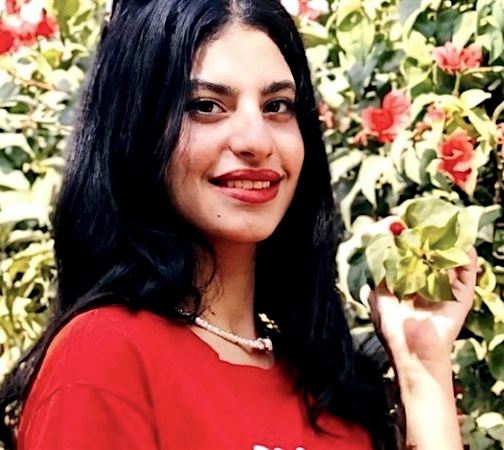

The Tamiyah Prosecution in Fayoum ordered that the minor girl Silvana Atef Fanous be placed in a care home affiliated with the Ministry of Social Solidarity, following widespread anger among her family and supporters over the exploitation of a minor whom Egyptian law classifies as a child, as she has not yet reached the age of 18. This was described as a blatant violation of the law, given that the girl had not been returned to her family since she was found on October 28, following family disputes.
Despite having been presented to investigative authorities, she was not handed over to her legal guardian as required by law. Instead, the girl went to live with a stranger family under the pretext of changing her religion, even though the law prohibits any religious conversion before reaching legal majority. This occurred despite documents submitted by the family indicating psychological disorders and a lack of full mental awareness.
Continued Appeals
The family’s appeals continued throughout this period. Maged Younan, the family’s lawyer, filed a case before the Family Court seeking the return of the girl to her family on the grounds that she is a minor, or alternatively her placement in a care home. However, the court dismissed the case for lack of jurisdiction.
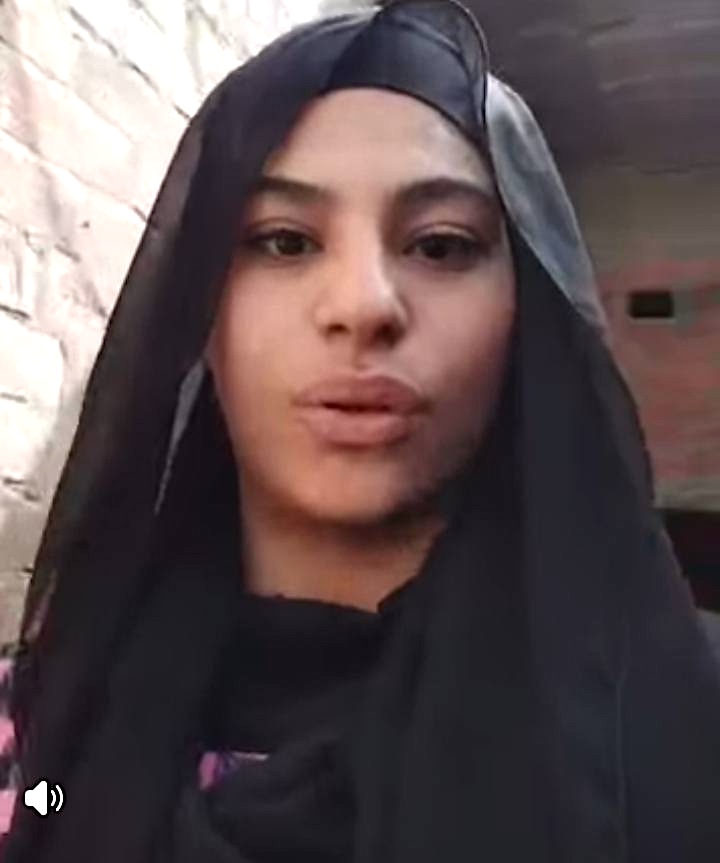
The shock came with the appearance of the girl in a video declaring her conversion to Islam and claiming it was of her own free will, while a woman behind the camera was audibly prompting her. The video ended with the girl describing her Christian family as kuffar (infidels), based on the woman’s coaching—an episode that exposed her childishness, in addition to her exploitation through the broadcasting of this clip in violation of the law. No minor has the right to change any personal data or matters relating to their legal status without the consent of a legal guardian. She was also used to express contempt for Christianity by labeling Christians as infidels, based on what she had been prompted to say.
A Suspicious Video
The girl later appeared in another video that stirred widespread sympathy and revealed her childishness and a clear disturbance in her behavior. She was seen with an elderly man holding a cigarette, hugging him and behaving in a childlike manner marked by innocence. This led many to conclude that she lacked emotional and behavioral stability. The scene triggered waves of anger on social media over the exploitation of this child in videos that disturbed public opinion and inflamed sectarian tensions, causing profound distress.
Following the broadcast of these clips, the girl’s family staged a sit-in in front of the Tamiyah Court Complex, appealing directly to the Presidency of the Republic to intervene on the child’s behalf. Her mother collapsed during the protest and was taken to Tamiyah Hospital for treatment.
Subsequently, the Prosecution issued a decision—according to lawyer Maged Younan—to place the child in a care home, allow her family to visit her, permit a church priest to follow up on her condition, and work toward resolving the family issues that are said to have led to her running away and the exploitation of her vulnerability to prevent her return home.
Legal Clarification
Lawyer Maged Younan stated that the girl was born in March 2008 and is therefore legally subject to Egypt’s Child Law until she reaches the age of 18. He stressed that placing her in a care home is a positive step taken by investigative authorities to “contain the situation” and correct previous errors.
He explained that she should have been returned to her family from the outset and should never have been allowed to live with a stranger family at such an age. He described the current decision as a relatively positive step that allows the family to sit with their daughter and underscores the importance of the family’s role in embracing and supporting her.
He further stressed that family disputes should not be encouraged in such cases, as problems of this kind at such an age are not uncommon. However, religion must never be exploited in matters involving a child who does not understand religious differences—especially if she suffers from psychological difficulties. He emphasized the importance of preserving social peace, protecting the family, avoiding the instrumentalization of religion in such incidents, and thanked the official authorities that worked to correct the situation.
Background
Silvana is not an ordinary teenager; she suffers from a documented disability, according to Ministry of Health reports, classified as “intellectual disability and learning difficulties,” and she attends an inclusive (integration) school.
The tragedy began on October 28, when she suddenly disappeared from in front of her home in Hadayek October following a minor argument with her sister. She then fell into the hands of a person identified as “M. S.,” who later claimed she was his wife—an incident that flagrantly violates the Child Law, which prohibits child marriage, as well as the Law on Persons with Disabilities, which protects those lacking legal capacity.
On November 1, police summoned the family, who found their daughter at the Tamiyah Police Station in Fayoum, wearing a niqab and stating that she did not wish to return home. A crowd was present, attempting to turn the matter into a religious dispute, celebrating the child’s alleged “conversion” to Islam.
Despite the family’s careful pursuit of lawful procedures—from administrative reports (No. 4266 Hadayek October and No. 5961 Tamiyah) to the Child Protection Office and prosecution petitions—the Public Prosecution formally excluded the “suspicion of kidnapping” and released the girl without informing her family of her whereabouts, leaving her in a deeply troubling legal vacuum.
When the family turned to urgent judicial proceedings to demand the child’s return—or at least her placement in a qualified care home as a precautionary measure—the court ruled that it lacked subject-matter jurisdiction without referring the case to the competent authority. According to counselor Maged Younan, this did not constitute a substantive judicial ruling so much as a withdrawal from confronting a crisis involving a child who lacks full mental awareness.
The International Justice Center for Human Rights Studies and Intellectual Development issued an urgent human-rights statement expressing grave concern over the case of the minor Silvana Atef, who suffers from an intellectual disability, describing the incident as a serious violation of Egypt’s child-protection and disability-protection framework.
The Center called for immediate intervention by the competent authorities to provide legal and social protection for the child and to open a comprehensive investigation into all those who exploited her or carried out illegal procedures in her case, emphasizing that protecting minors and persons with disabilities is a true test of respect for the rule of law.
____________
Source: