
By Abdulmesih BarAbraham – seyfocenter –
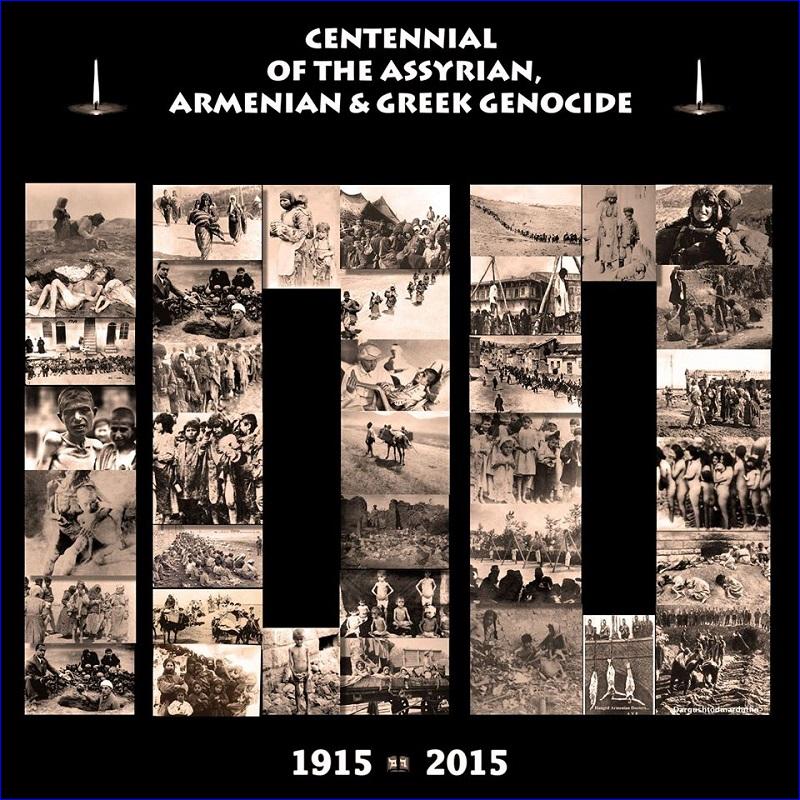
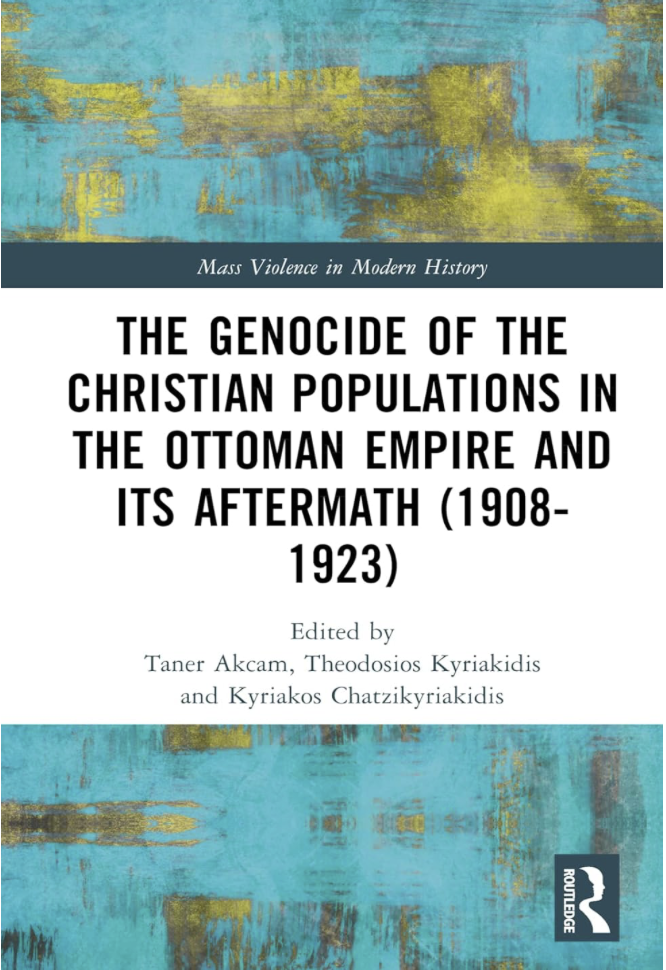
The Genocide of the Christian Populations in the Ottoman Empire and Its Aftermath (1908–1923) is a major interdisciplinary scholarly volume examining the destruction of Armenian, Greek, and Assyrian Christian communities during the final decades of the Ottoman Empire and the early years of the Turkish Republic. Edited following a 2019 international conference at Aristotle University of Thessaloniki, the book situates these mass atrocities within the broader historical processes of imperial collapse, nationalist transformation, and state formation.
A Comparative Approach to the Destruction of Ottoman Christians
A central aim of the volume is to overcome the historiographical fragmentation that has traditionally treated the Armenian, Greek, and Assyrian genocides as separate or unrelated events. Instead, the editors adopt a comparative and integrative framework that conceptualizes these atrocities as interconnected components of a sustained genocidal process directed against Ottoman Christian populations. This approach builds on and extends earlier scholarship by Taner Akçam, Benny Morris and Dror Ze’evi, George Shirinian, and others who have argued for an “ecumenical” understanding of late Ottoman state violence—one that recognizes shared ideologies, structures, and mechanisms while preserving the distinct experiences of each victim group.
The preface sets out the volume’s key historiographical intervention: genocide against Ottoman Christians should be understood as a long-term, multi-phased process rather than a single event confined to 1915. By emphasizing continuity from the late nineteenth century through the early Republican period, the editors legitimize the use of concepts such as “Ottoman genocide” within scholarly discourse. While acknowledging the centrality of the Armenian Genocide, the volume argues that exclusive focus on it has obscured Greek and especially Assyrian experiences. The book therefore contributes significantly to comparative genocide studies by integrating diverse archival sources, survivor testimonies, and theoretical perspectives across national and disciplinary boundaries.
The “Ottoman Genocide” as a Long-Term Historical Process
The volume opens with an introductory chapter by Taner Akçam, who proposes the concept of an “Ottoman Genocide” unfolding between approximately 1876 and 1924. Akçam distinguishes between the broader genocidal process and specific genocidal moments, situating the Armenian Genocide as the most intense episode within a longer continuum of violence. His framework rests on three interrelated dynamics: persistent Muslim–Turkish intolerance toward non-Muslims, the destabilizing transition from empire to nation-state, and recurring cycles of reform demands, massacres, foreign intervention, and territorial loss. This conceptual model provides the analytical backbone of the volume, even where its application across individual cases is uneven.
The book is organized into three thematic sections. Part I focuses on documentation and historical perspectives, presenting newly utilized archival materials from Greek, American, French, German, and Polish sources. These chapters shed light on both local and international dimensions of anti-Christian violence and reassess the roles of Ottoman state actors, foreign observers, missionaries, and military planners. Part II addresses issues of memory, recognition, and denial, with particular attention to the delayed international acknowledgment of the Assyrian Genocide, survivor memory, diaspora cultural production, and mechanisms of Turkish state-sponsored denial. Part III examines legal and human-rights dimensions, situating the genocides within early international legal debates, emerging concepts of crimes against humanity, and postwar efforts by bodies such as the League of Nations to address the fate of women, children, and refugees.
While the volume as a whole enriches the empirical and theoretical foundations of Ottoman genocide studies, particular attention is devoted to the Assyrian Genocide, one of the least studied components of this historical process. Two chapters stand out in this regard.
In “Late Recognition of the Assyrian Genocide,” David Gaunt investigates why the mass destruction of Assyrians during World War I—despite extensive contemporary documentation and catastrophic demographic impact—remained largely unrecognized for much of the twentieth century. Gaunt estimates that up to half of the Assyrian population of the Ottoman and Persian Empires perished through killings, forced displacement, and destruction. He explains the prolonged silence through the sociological theory of collective trauma, emphasizing that recognition depends not only on historical facts but on the existence of a cohesive “carrier group” capable of producing and sustaining a unified narrative. In the Assyrian case, ecclesiastical, linguistic, and regional fragmentation, institutional silence—particularly by the Syriac Orthodox Church—and geopolitical marginalization after the Treaty of Lausanne prevented the emergence of such a narrative for decades.
Gaunt argues that Assyrian genocide memory survived primarily through family oral traditions, songs, and village narratives rather than through formal commemoration or political advocacy. A turning point occurred in the late twentieth century with the growth of the Assyrian diaspora in Europe, especially from Tur Abdin. The revival and standardization of the term Sayfo (“the year of the sword”), combined with increased scholarly engagement and coalition-building with Armenian and Greek organizations, enabled the gradual internationalization of Assyrian genocide recognition from the 1990s onward.
The Assyrian Genocide: Recognition, Memory, and Cultural Survival
Mary Akdemir’s chapter, “Big Secrets, Small Villages,” complements Gaunt’s political and institutional analysis by focusing on cultural transmission of genocide memory. Drawing on oral history, music, and attachment to place among Assyrians from Tur Abdin, Akdemir shows how memory persists and evolves even after physical displacement. Using Pierre Nora’s concept of lieux de mémoire (“sites of memory”), she argues that villages, churches, and landscapes function as symbolic repositories of genocide memory. Her analysis of diaspora music demonstrates how collective trauma, resistance, and identity are transmitted across generations, transforming cultural expression into both commemoration and political critique in the face of ongoing denial and marginalization.
Overall, the volume’s principal strength lies in its comparative, integrative approach, which moves genocide studies beyond nationally segmented narratives. Its engagement with memory, denial, and cultural afterlives of genocide adds an important sociological and cultural dimension to historical analysis, while the legal chapters illuminate the long-term implications of Ottoman atrocities for international law and human-rights discourse.
In conclusion, The Genocide of the Christian Populations in the Ottoman Empire and Its Aftermath is a significant contribution to comparative genocide studies. By insisting on continuity, interconnectedness, and inclusion of underrepresented Assyrian perspectives, the volume deepens understanding of how genocide is perpetrated, remembered, silenced, and resisted across generations. It provides a strong foundation for future research on the Assyrian Genocide and its place within the broader history of mass violence in the late Ottoman world.
___________________________
Abridged from:
http://www.aina.org/news/20260108020648.htm / https://seyfocenter.com