
By Reuters (*) –
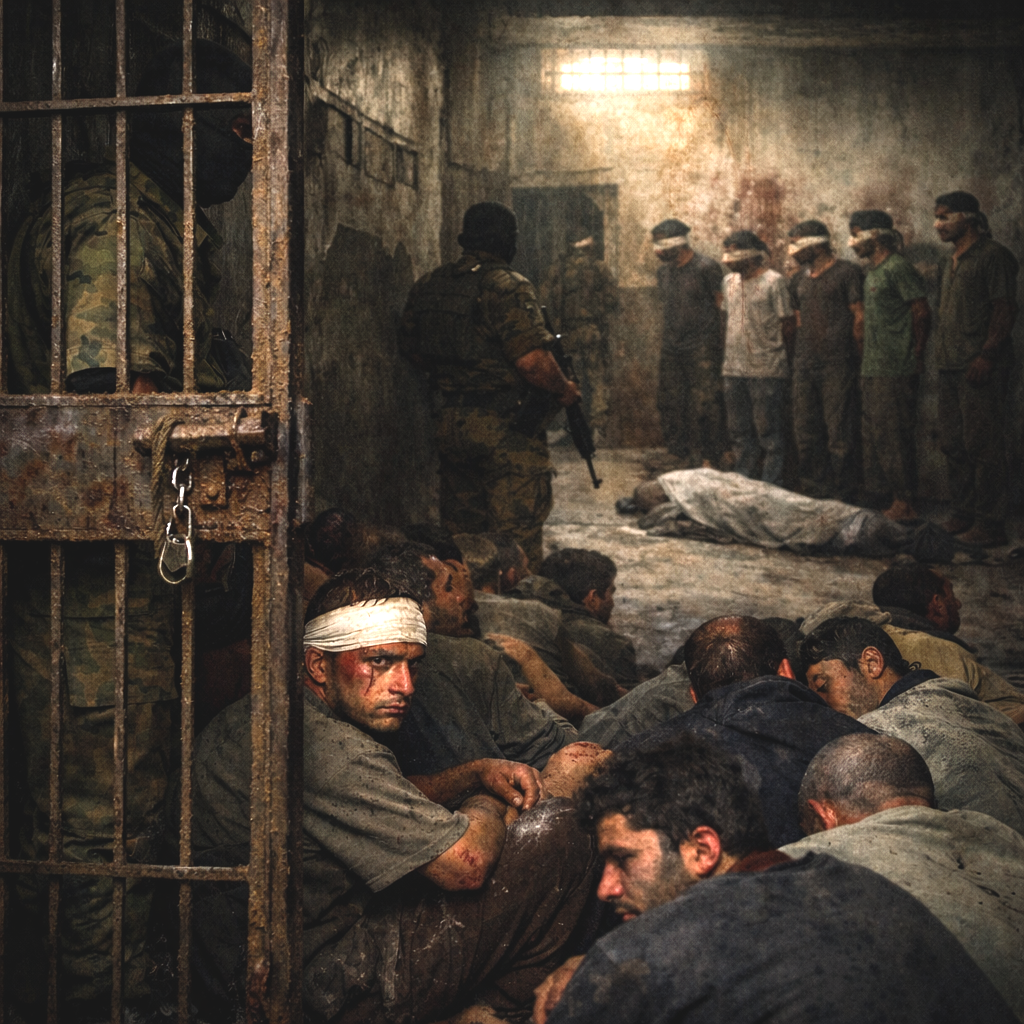
One year after the fall of Bashar al-Assad, Syria’s prisons—once synonymous with mass torture, disappearance, and death—are once again filling up. Although Syrians initially celebrated the opening of detention centers and the release of thousands of prisoners, a Reuters investigation reveals that the country’s new authorities have resumed widespread security detentions, reopened many Assad-era facilities, and presided over renewed patterns of abuse, extortion, and deaths in custody. These developments underscore the difficulty of dismantling a repressive system while attempting to establish a stable post-Assad order.
From Liberation to Renewed Detention
When Assad’s regime collapsed in December 2024, victorious rebel forces flung open the doors of notorious prisons such as Sednaya. Ordinary Syrians rushed in to search for relatives who had vanished during the civil war. At the same time, however, the first wave of detentions under the new order began almost immediately. Thousands of Assad’s soldiers—both officers and conscripts who had abandoned their posts—were captured by rebel forces and placed in custody, often without formal status or publicly available records.
A second, more sectarian wave followed in late winter, when hundreds of men from the Alawite community were detained across the country. These arrests intensified after a brief uprising along Syria’s Mediterranean coast in March, which killed dozens of security personnel and triggered reprisals that left nearly 1,500 Alawites dead. Arrests from this community have continued since then. In summer, a third round of mass detentions targeted the Druze minority in southern Syria following outbreaks of sectarian violence that killed hundreds, with government forces accused of summary executions and other abuses.
Beyond these waves, the new authorities have carried out arrests across all religious and social groups under the broad banner of “security.” Those detained include Sunnis accused of vague links to the former regime, human rights activists, Christians reporting shakedowns for money or information, and Shi’ites stopped at checkpoints and accused of ties to Iran or Hezbollah. Many are held without formal charges, documentation, or access to legal remedies.
Reuters identified at least 829 people detained on security grounds since Assad’s fall, based on interviews with detainees and their families and lists compiled by people organizing family visits to prisons. Journalists caution that this number is likely a significant undercount. Families often lose track of detainees for months, public charges are rarely filed, and the government has not published comprehensive lists or detention figures.
Prisons Reopen as Abuse and Extortion Resurface
At least 28 prisons and lockups used during the Assad era have been operational again over the past year, despite President Ahmed al-Sharaa’s December 2024 pledge to close the former dictator’s notorious prisons. These facilities range from major prisons such as Adra near Damascus to intelligence-run detention complexes and small lockups at checkpoints and police stations. Some detainees are also being held in prisons formerly run by rebel factions, including forces once led by Sharaa himself in Idlib province.
Conditions inside these facilities, while not matching the industrial-scale brutality of Assad’s rule, are described as harsh and degrading. Former detainees and families recount severe overcrowding, insufficient food, lack of medical care, and outbreaks of disease due to unsanitary conditions. Many inmates are forced to sleep on their sides because cells are packed. Abuse and neglect are reported to be widespread, particularly in lockups, with interrogations involving beatings, humiliation, and torture methods familiar from the Assad era.
Reuters documented at least 11 deaths in custody. In several cases, families learned of their relatives’ deaths only after burial, with no official notification or documentation. Interviews and photographic evidence suggest that torture or severe abuse contributed to some of these deaths, though the government disputes or downplays such claims.
Extortion has also reemerged as a defining feature of the detention system. Fourteen families and multiple lawyers described being asked to pay money in exchange for a detainee’s release. Demands range from hundreds to tens of thousands of dollars, with wealthier or well-connected families asked for much more—sometimes the equivalent of $90,000 or more. In some cases, payments did not secure release, and families were left without information on whether detainees were alive.
Individual testimonies illustrate the human cost of these practices. Former detainees describe being flogged with cables, suspended by their wrists, forced to endure “welcome parties” of beatings upon arrival, or humiliated with sectarian insults. Others recount being blindfolded, made to sign unknown documents, or released abruptly without explanation, paperwork, or assurances that they will not be detained again.
One particularly troubling category involves former Assad soldiers, many of whom were conscripts. Some have been released through informal mediation by community leaders or the government’s civil peace committee, but even those freed often lack official clearance documents and live in fear of re-arrest. The government has not clarified whether detained soldiers are considered prisoners of war or how many remain in custody.
The Syrian government argues that many detentions are necessary to bring perpetrators of Assad-era crimes to justice and to preserve security during a fragile transition. Officials acknowledge institutional weaknesses and say abuses reflect temporary “vacuum” conditions as legal and security systems are rebuilt. They report disciplining dozens of security personnel for extortion and violence and note that far more Syrians have been released than remain detained, though they provide no figures.
A Shadow Over Syria’s Transition
Human rights advocates remain unconvinced. They warn that arbitrary detention, secrecy, and abuse risk reproducing the very system Syrians rose up against. The UN Office of the High Commissioner for Human Rights has documented credible allegations of summary executions, abductions, and killings since Assad’s fall, while Syrian rights groups continue to report deaths in detention under the new authorities.
International implications loom large. The United States has embraced Sharaa’s government as a partner for regional stability and counterterrorism, while urging a unified and peaceful Syria. Yet the persistence of mass detentions and abuse threatens the legitimacy of the new leadership and undermines its promise to move the country beyond five decades of family dictatorship.
The investigation concludes that while today’s prisons are not yet the death factories of Assad’s era—during which more than 100,000 people disappeared and hundreds of thousands of civilians were killed—the return of arbitrary detention, torture practices, and enforced disappearances casts a long shadow over Syria’s transition. As one former detainee put it, Assad’s prisons may have been emptied, but they are being refilled with new inmates under a different authority, raising fears that the architecture of repression has survived the regime that built it.
______________
Summarized from this report: https://www.reuters.com/investigates/section/syria-after-assad/