
By Dimokratia (Gr) –
Speaking to Dimokratia, the newly enthroned Archbishop Symeon emphasized that, despite intense diplomatic activity and continuous consultations with the Egyptian side, the way in which the monastery will be allowed to function has not yet been secured.
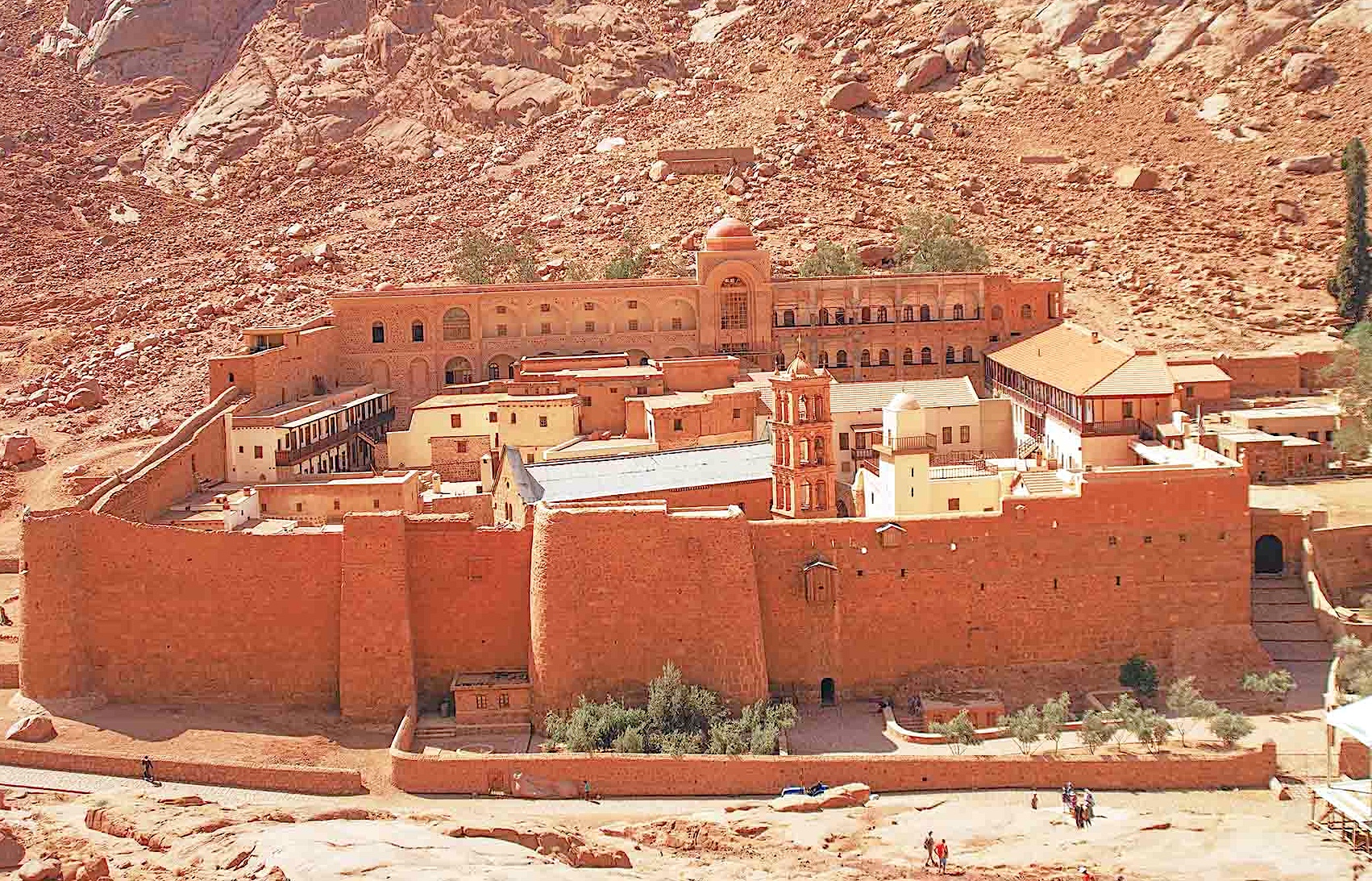
Although several months have passed since the enthronement of the new archbishop in the historic Monastery of Sinai, the information reaching Greece regarding developments in the area remains sporadic and often confusing. At the same time, foreign media—such as a recent report in the French newspaper Libération—describe rapid moves by the Egyptian government toward a strategy of large-scale tourism development.
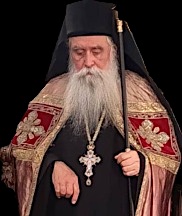
Dimokratia contacted Archbishop Symeon of Sinai in an effort to uncover the reality behind this apparent silence and to determine whether the issue has, in some sense, “frozen.” The archbishop informed us of a particularly critical meeting that took place last Sunday between the Greek and Egyptian sides. From his statements emerges a picture of intense activity and negotiations which, although carried out in the shadow of the Ismailia court ruling of May 29, 2025, nevertheless sustain hope that dialogue may lead to an outcome that safeguards the monastery and its property.
Caution in Negotiations
Despite the intense activity of recent months, Archbishop Symeon reveals that the meticulous pace of negotiations is part of a deliberate effort to lay the foundations for a stable and indisputable solution: “This has been underway since September, when I took up my duties and was elected. There is a process that we ourselves are deliberately slowing down. The monastery is taking more time because it wants everything to be done with greater detail and care. The Greek state understands this and we thank it for that.”
The archbishop explains that precise documentation is an essential tool for resolving outstanding issues: “We wanted to conduct a more thorough inventory, with the help of experts, of all our assets—our landholdings, the small hermitages (kathismata) scattered throughout the desert and elsewhere. A great deal of work has been done. It is true that we may have fallen behind in time, but substantial progress has been made. We are now waiting to see whether technical committees from both sides will be established to verify, one by one, the elements we have gathered. In any case, in order to resume meaningful dialogue, everything had to be documented in detail. These are the reasons for the delays.”
Development Projects
Regarding development projects in the area, Archbishop Symeon adopts a realistic stance, acknowledging Egypt’s right to develop its “heavy industry,” tourism, while also setting clear parameters for the protection of the sacred site: “Tourism is Egypt’s heavy industry. The places that attract the greatest interest are the pyramids, Alexandria, Hurghada—and perhaps more than all of them, Sinai. However, this creates certain difficulties for monastic life. We have never categorically rejected tourism development. We serve it. What we do ask is that the immediate surroundings of the monastery be preserved and that the presence of visitors be controlled.”
For the archbishop, Sinai’s value lies in its spiritual vitality, not in its commercialization: “This place is far more attractive when it is alive, rather than a closed museum. Ordinary tourists are far more inclined to photograph the silhouette of a robed monk than the relics or buildings on site.”
He adds: “Things are moving. I do not yet know what the final outcome will be, but there is momentum. Perhaps in the near future you will hear developments publicly—not from us, but from the appropriate Greek and Egyptian circles. We place our hope in dialogue and in the belief that the consultations will lead to a position of respect, ensuring the continuation of monastic life, exactly as foreseen in the first part of the Ismailia court’s decision.”
Global Interest in St. Catherine’s Legacy
The fate of the Monastery of Sinai has long ceased to be a narrowly bilateral issue and has evolved into a matter of global concern. The ruling of the Ismailia court—which threatens the property and autonomy of the oldest continuously operating Christian monastery in the world—has triggered a wave of international support that transcends doctrines and borders.
A central role in this mobilization is played by “Churches for Peace in the Middle East,” a coalition of 30 national church communities, which in coordination with Archbishop Elpidophoros of America issued an appeal in 2025 urging the Egyptian government to respect its long-standing commitments.
Describing the monastery as a “living witness of interreligious coexistence,” religious leaders warn that any alteration of the integrity of Saint Catherine’s Monastery would constitute a blow to the spiritual heritage of humanity. For this reason, the international community is closely monitoring the negotiations taking place in Egypt, seeking assurances that both the functioning of the Monastery of Sinai and its imprint on the region—and on the global Christian world—will not be diminished.
Environmental Dimensions
Beyond issues of property and monastic life, the Sinai Peninsula faces a crisis with uncontrolled environmental dimensions due to the ambitious “Great Transfiguration Project.” The area, which is protected as a UNESCO World Heritage Site not only for its historical and religious significance but also for its unique and pristine natural beauty, is now the target of aggressive tourism development.
The construction of modern road networks, infrastructure to accommodate thousands of visitors, and the gradual urbanization of the desert are dramatically transforming the landscape. Scientists and international organizations warn that the violent integration of the area into a mass-tourism network could have irreversible consequences.
The environmental footprint of these projects is enormous and threatens to destroy the ecosystem that for centuries sustained the eremitic and solitary monastic life. The “holy mountain” risks being transformed into an urban center in the heart of the desert, stripping it of the very essence that makes it a global symbol of isolation, contemplation, and spirituality. Faced with this wave of change, the monastery calls for a dialogue that takes into account not only economic development but also the preservation of the site’s natural and spiritual heritage.
A Geopolitical Minefield
At the heart of a peninsula that has historically functioned as a geopolitical and religious crossroads, the management of the crisis at the Monastery of Sinai is not a simple administrative matter but an exercise in high-level strategy. In this sensitive region, balances are not imposed through Western-style legal confrontation, but are cultivated through deep knowledge of local realities.
From the safe distance of a Western rule-of-law state, it is easy to interpret the silence of those directly involved as inaction or retreat. This, however, is a dangerous misinterpretation. Those on the “front line” of the desert know that public rhetoric can act as a spark in a powder keg. For this reason, extreme caution is required.
This survival philosophy imposes a particular code of discretion. Those directly involved cannot—and perhaps should not—speak openly. Every word is weighed on delicate diplomatic scales, as an “incautious” statement in a Western context may be perceived as an insult in an Eastern one, causing irreparable damage on the ground.
In a period of extreme geopolitical instability, this silence acts as the monastery’s shield. Those who judge events through the lens of Western everyday norms fail to understand that, in the East, truth often lies behind patience and the avoidance of confrontation. Hope for a solution does not pass through head-on collision, but through slow, meticulous, and discreet dialogue, where preserving appearances is often the only guarantee of preserving substance.
The Presidential Decree and the Challenge of Recognition
At the heart of the administrative puzzle concerning the future of the Monastery of Sinai lies a formally procedural yet substantively critical act: the issuance of an official presidential decree by the Egyptian presidency confirming the appointment and granting citizenship to the new archbishop.
Although months have passed since Symeon’s election and enthronement, the document that would formalize his institutional status vis-à-vis the authorities in Cairo remains unsigned. This administrative delay is not merely bureaucratic; it is inextricably linked to the monastery’s special legal status.
In the current context, the delay in issuing the recognition decree reflects the delicate balances being sought following the Ismailia court ruling. According to reports, “official sources” in Cairo assure that the decree is ready, and that the delay is due to the complexity of the comprehensive agreement being pursued.
The recognition of the archbishop constitutes the final thread in a negotiation that includes the full documentation of the monastery’s assets and the safeguarding of the status quo.
Until the signatures are affixed, the monastery remains in a state of limbo, with Athens closely monitoring developments, fully aware that the institutional consolidation of Sinai’s leadership is the necessary and sufficient condition for closing the chapter of uncertainty and allowing the monastery to return to a rhythm of “normality” in which the wounds of recent months may begin to heal.
________________________
Translated from (with added subtitles)